

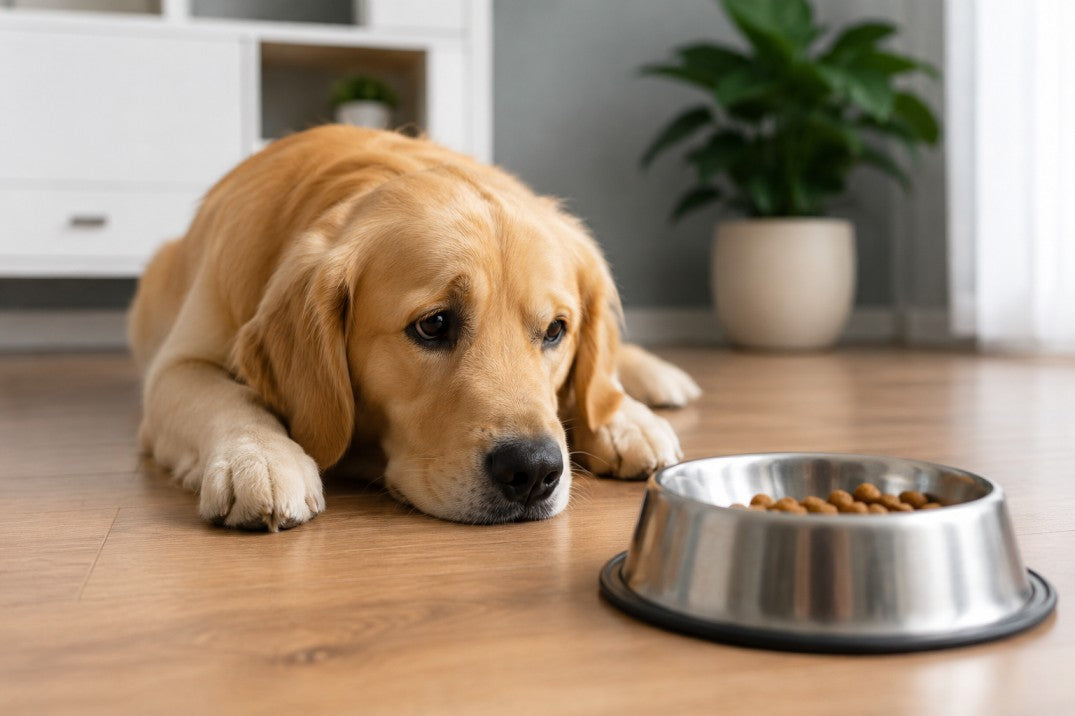
If your dog’s food bowl is returning home fuller than usual, don’t panic. Anyone who has ever owned a dog has learned that an occasional missed meal is nothing to worry about – until such moments become a regular occurrence. Why is my dog not eating? Should I pay attention to this or should I just shrug it off?
In reality, it depends on the individual case. There are a lot of reasons why a dog doesn’t want to eat his or her food, ranging from rather insignificant and temporary (a very hot day, a change of diet, some kind of stress) to those requiring professional assistance from a veterinarian (painful teeth, disease, or digestive troubles).
The following guide will help you understand the seven main causes of canine lack of appetite, what to do in each particular case, and how to distinguish what needs more time and attention and what has to be addressed right away. We will also show you how correct dog care and proper diet can help your dog become a healthy and happy eater.
Why Is My Dog Not Eating His Food? A Quick Overview
It’s important first to know how canine hunger functions to get an answer to why my dog is not eating his food. A healthy adult dog can fast from 24 to 48 hours without having any health problems, but this number is greatly decreased for puppies, old dogs, and those that belong to toy breeds since their risk of having low levels of blood sugar is extremely high. If the answer to “why is my dog not eating his food?” lies in a single skipped meal, then it doesn’t matter much. But when this time becomes longer or combined with other problems, then it’s time for action.
Here are the seven most common reasons for appetite loss in dogs.
1. Underlying Illness or Infection
Anorexia in dogs is one of the earliest symptoms that may appear when there is a health problem because this symptom is not specific, it could be a consequence of everything, starting from simple gastroenteritis to some complicated diseases like kidney or liver malfunction, pancreatitis, and various infections. Inflammation, nausea, pain, and fever are only a few reasons why a dog stops eating.
What to do: Take notice of any other symptoms, such as vomiting, diarrhoea, lethargy, increased thirst and/or urine output, and hunching down. When your dog shows no interest in eating and has some of these symptoms or stops eating for more than 24 hours, you should visit a vet.
2. Dental Pain or Mouth Issues
While your pet dog cannot complain about having an aching tooth, a painful mouth is a rather common problem that goes unaddressed and causes your furry friend to avoid eating. There could be many reasons why a dog avoids eating food, including broken teeth, gum infections, abscesses, or having some foreign object stuck inside the mouth.
What to do: The presence of symptoms such as bad breath, excessive drooling, pawing the mouth area, lack of appetite, and attempts to chew the food from one side only are indicators of dental issues. You should feed your dog soft and moist food. The problem will not disappear by itself, and you have to see a vet dentist.
3. Stress, Anxiety, or a Change in Environment
Dogs are pets that require stability, and thus any form of disturbance such as a change of residence, adding a new pet or baby, construction works, thunderstorms, crackers, or even a change of position in the same room can lead to a temporary loss of appetite in a dog. Separation anxiety and travelling anxiety are some of the most common causes of refusal to eat anything by a dog.
What to do: It will be wise to find out the reason behind the stress and remove it whenever possible. Feeding the dog in a quiet spot, following a regular feeding schedule, and providing a stress-free environment before feeding are some things that can be done. But if the dog doesn't regain his appetite a few days after removal of stress, then it is advisable to take him to the vet.
4. Recent Vaccination or Medication Side Effects
It is natural for a dog to feel somewhat off, including decreased food intake, up to 24 to 48 hours following an inoculation, just like humans tend to feel slightly unwell following an inoculation. There are several types of medications, such as antibiotics, painkillers, and chemotherapeutic agents, which are associated with nausea or poor appetite as side effects.
What to do: It is not anything that you should worry about if a slight loss of appetite is noticed for up to two days after visiting the vet. You will need to give your dog something easily digestible like boiled chicken with rice and fresh water. If there is no improvement within two days, then you will need to visit the vet again. This applies even more so if it is after taking any medication.
5. Picky Eating or Food Boredom
It can be simply a matter of being more discriminating about what your dog likes, and your pet's appetite may suffer when it tires of the same flavour or texture all the time, or even when a slight change occurs in the recipe or source of the food you feed your dog. Too many snacks in between feeding times can also spoil your dog’s appetite for its usual meals since there is no need to eat much if it already had snacks.
What to do: Start by assessing how many snacks and treats your dog eats during the day, which is a very simple step. You may also consider rotating your dog’s diet with other high-quality proteins, using a topper on its food, or heating its food a little bit to bring out more smell. This is where the right choice makes all the difference: Zoomies Dog Food & Treats are well-formulated to be both appealing and nutritious.
6. New Food Transition Done Too Quickly
A drastic change of diet – even to a better one – may hurt your dog. Any radical changes in protein intake, food texture, and fibre content may irritate the dog's stomach and cause him to eat less as a result of such irritation.
What to do: Introduce a new diet to your dog step-by-step, gradually increasing the amount of new food and reducing the amount of old food. Should you decide to introduce Zoomies dog food and treats, the process must be done the same way. The probability that your dog would react to the new food in any way is extremely low.
7. Heat, Age, or Reduced Activity
Like humans, dogs tend to eat less when it is warm outside since their body systems are trying to cope with regulating temperature instead of digesting a large meal. In addition, old dogs and inactive dogs simply need fewer calories, meaning "eating too little" could be perfectly fine and natural for those specific individuals. In addition, old dogs might experience a decrease in the level of their smell or taste, and thus lose their appetite for food they used to love.
What to do: Provide feeding during cold times of the day during warm weather; ensure availability of water. When it comes to old or inactive dogs, you should consult your vet to find out if there is really anything to be done regarding calories in the dog's diet or even food he should be eating.
When to See a Vet
Even though most of the reasons for lack of appetite are treatable at home, there are instances when professional help is needed. It is time to contact your veterinarian if:
-
Your dog has not eaten for more than 24 hours (12 hours for puppies, toy breeds, and dogs with health issues)
-
Lack of appetite is combined with vomiting, diarrhoea, lethargy, or weight loss
-
Your dog looks painful, drools a lot, or refuses both water and food
-
There is noticeable abdominal swelling or distention (it may be critical in case of deep-chested breeds)
-
Lack of appetite appeared after the introduction of some new medications
Remember that you know your pet best. If something does not seem right – make an immediate call to your veterinarian.
Helping Your Dog Rediscover Mealtime
After excluding any underlying medical condition in the dog, the solution in rekindling the dog's interest in its food is as simple as having regular feeding hours, using quality food products, and a stress-free atmosphere when feeding the dog. This means feeding the dog regularly, feeding the dog limited treats throughout the day, and feeding the dog exciting food.
Here is when Zoomies dog food and treats can come in handy. Designed to give dogs food made of high-protein ingredients and food dogs naturally get excited about, Zoomies is food designed to make your dogs look forward to their meals no matter what: picky eaters, a change in diet, adding some variety with toppers and treats, you name it.
The Bottom Line
If your dog skips a few meals, there is generally no need to be alarmed. However, if you find yourself constantly wondering why your dog is not eating food, you may need to consider a change to their diet and rule out some simpler causes such as stress, heat, recently administered shots, or simply the fact that the dog got bored with their regular food. Whatever the case may be, when in doubt, you should definitely see your veterinarian. Meanwhile, feeding them healthy and delicious food such as Zoomies Dog Foods is definitely an excellent choice.
FAQs
-
Why is my dog not eating food?
Many factors can cause a dog to have no appetite, such as sudden dietary changes, stress, toothache, digestive problems, illness, some medications, or infections. However, if a dog loses its appetite for more than 24 hours, accompanied by other signs like vomiting, diarrhoea, fatigue, and weight loss, then you should seek a vet’s opinion.
-
Why is my dog not eating his food but acting normal?
If the dog appears active and healthy otherwise, then the problem might be temporary, resulting from a preference for certain foods, changes in diet, stress, or reduced physical activity. On the other hand, if the abnormality persists beyond one or two days, and the dog displays other symptoms, then veterinary care is required.
-
What should I do if my dog refuses to eat?
Firstly, you should consider whether your pet’s food is fresh and if there have been any changes in his eating habits that may have caused him to stop eating. Make sure your pet has plenty of drinking water. If your dog does not eat after 24 hours (12 hours for puppies), consult a veterinarian.
-
Can dental problems cause a dog to stop eating?
Yes. Dental disease, broken teeth, gum infections, oral injuries, or mouth pain can affect appetite because eating becomes uncomfortable for pets. This can be determined through an oral exam conducted by a veterinarian.
-
When should I take my dog to the veterinarian for not eating?
An appointment with a veterinarian is needed if your dog does not eat for over 24 hours, your puppy stops eating for over 12 hours, or there is a refusal to eat along with vomiting, diarrhoea, fever, abdominal pain, trouble swallowing, lethargy, or unusual behaviour. Timely detection can help to avoid other problems.
Share:
Why High-Protein Cat Food Is Essential for Your Cat's Health
Dog Food Feeding Chart: How Much Food Does Your Dog Really Need?