

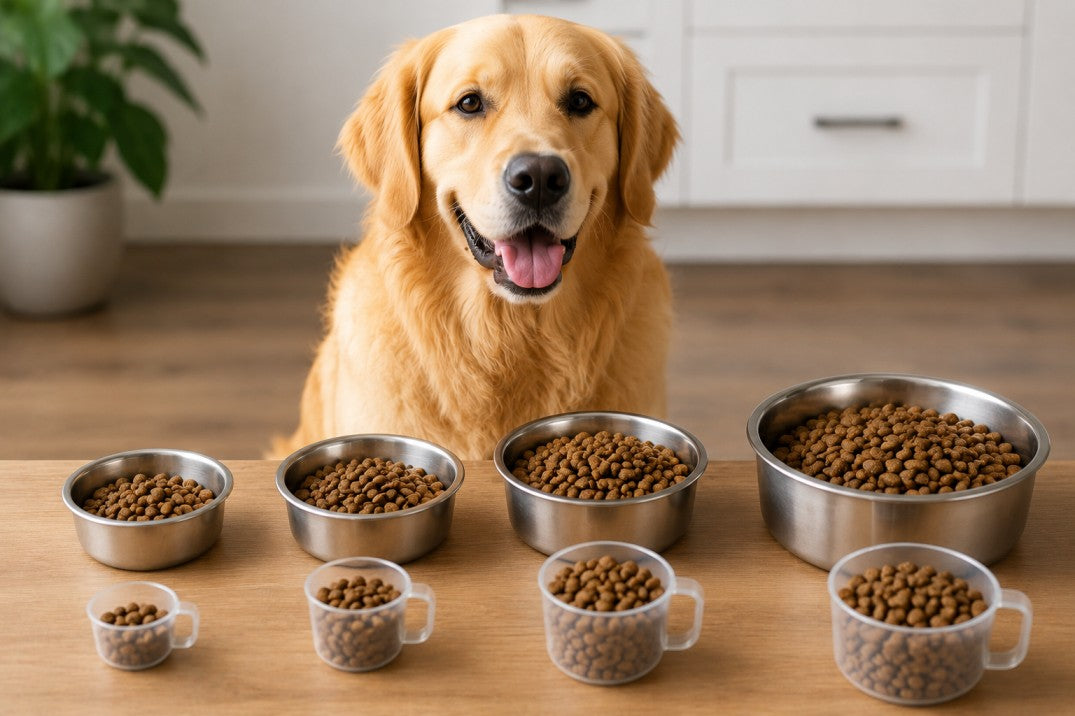
How much you should feed your puppy is probably one of the most common pet-parenting inquiries. There's a number printed on the bag of dog food, but that's just the beginning of the equation. Your 30-pound lazy couch potato dog and your 30-pound working dog have vastly different caloric needs, and feeding them the same amount will quietly result in one dog gaining weight while the other loses.
Which is why a dog food chart can be very helpful, as a tool to get the basic idea of the portion sizes, after which you can tweak it according to your dog's age, activity levels, and physical shape. Here, we'll take a look at how exactly portion size is calculated, review the dog food chart based on weight and the dogs' life stages, go through dog treat serving sizes and end with our comprehensive dog food chart.
Why a Single Feeding Chart Doesn't Fit Every Dog
Without delving into the numbers, it is important to understand why feeding guidelines come in range form. Several variables affect how many calories a dog needs daily:
-
Body weight and size. Larger dogs require more calories overall, but smaller dogs actually require more calories for each pound of body weight, as smaller animals require higher rates of metabolism for their body size.
-
Age and life stage. Puppies require far more calories per pound than adult dogs to support growth, whereas senior dogs require fewer calories as their metabolism and activity decrease.
-
Activity levels. A dog used for work, a dog from a herding/sporting breed, and a dog who gets daily exercise will expend much more energy than a sedentary dog.
-
Intact versus spayed/neutered. Spayed and neutered dogs tend to require fewer calories compared to intact dogs of the same body type.
-
Body condition score. If the dog already carries excess weight, then the feeding quantity differs from what a dog of the same breed and body type should receive when maintaining ideal weight.
Due to the above-mentioned factors, all dog food charts, including those that will be mentioned further on in this paper, should be considered preliminary estimates. The true test is your dog’s body condition, which means that it must be possible to feel your dog’s ribs with a light touch while they remain invisible, and the dog must have a waistline when seen from above.
How Vets Calculate Calorie Needs
A veterinary nutritionist would begin by determining the Resting Energy Requirement (RER), which represents the energy required to support vital metabolic processes without any physical activity in dogs, by using the equation below.
RER = 70 × (body weight in kg)0.75
Following the determination of RER, it is then multiplied by the activity factor to obtain the Maintenance Energy Requirement (MER). Some of the general multipliers used by veterinary nutrition recommendations are:
-
Intact adult dogs: RER × 1.8
-
Neutered/spayed adult dogs: RER × 1.6
-
For weight loss: RER × 1.0
-
For weight gain: RER × 1.2-1.8
-
Active working dogs: RER × 2-5
-
For puppies up to 4 months old: RER × 3
-
For puppies 4 months to adult size: RER × 2
There is no need for you to calculate this equation each day because most of the good dog foods, such as Zoomies dog food and treats, have feeding guides on their packages using the same principles. However, knowing how these values were calculated will give an insight into why there are such differences in amounts needed between different brands and dog food formulas.
General Dog Food Feeding Chart by Weight (Adult Dogs)
The table presented below provides approximate values for feeding adult dogs on average dry dog food containing around 350-400 calories per cup. They are only starting values and should be changed according to your dog's particular formula of food, its physical activities, and weight - always look at the guaranteed analysis and number of calories on your dog's package.
|
Adult Dog Weight |
Approximate Daily Food Amount* |
Approximate Daily Calories |
|
5-10 lbs |
1/3 - 2/3 cup |
200-275 |
|
11-20 lbs |
2/3 - 1 1/4 cups |
275-450 |
|
21-35 lbs |
1 1/4 - 1 3/4 cups |
450-630 |
|
36-50 lbs |
1 3/4 - 2 1/4 cups |
630-900 |
|
51-75 lbs |
2 1/4 - 3 1/3 cups |
900-1,300 |
|
76-100 lbs |
3 1/3 - 4 1/4 cups |
1,300-1,600 |
|
Over 100 lbs |
4 1/4 cups |
1,600 |
*Split into two meals per day is generally recommended for adult dogs, rather than one large meal, which supports digestion and helps prevent bloat in larger, deep-chested breeds.
Puppy Feeding Chart
Puppies have greater energy and nutrient demands compared to the size of the animal because of the growth of bone and muscle tissues. The feeding of puppies' food (and not adult food) is very significant at this period because it has to be divided to three or four portions per day.
|
Puppy Weight (adult size) |
Age |
Meals Per Day |
Approximate Daily Food Amount |
|
Small breed (under 20 lbs adult) |
6-12 weeks |
4 |
1/2 - 1 cup |
|
Small breed (under 20 lbs adult) |
3-6 months |
3 |
1 - 1 1/2 cups |
|
Medium breed (20-50 lbs adult) |
6-12 weeks |
4 |
1 - 2 cups |
|
Medium breed (20-50 lbs adult) |
3-6 months |
3 |
2 - 3 cups |
|
Large breed (50+ lbs adult) |
6-12 weeks |
4 |
1 1/2 - 2 1/2 cups |
|
Large breed (50+ lbs adult) |
3-6 months |
3 |
2 1/2 - 4 cups |
Always follow the specific feeding guidelines on your puppy food's packaging, since calorie density varies by brand and recipe, and large-breed puppies in particular need controlled growth rates to protect developing joints.
Senior Dog Feeding Chart
Older dogs (typically 7 years and above in most breeds, but earlier in giant breeds) require about 20% fewer calories as compared to when they were younger, owing to reduced energy levels and decreased metabolism rate. However, for those old dogs experiencing muscle wasting and other health problems, reduction in calories alone may not be enough; their diet will need to be altered in terms of protein intake.
|
Senior Dog Weight |
Approximate Daily Food Amount* |
|
5-10 lbs |
1/4 - 1/2 cup |
|
11-20 lbs |
1/2 - 1 cup |
|
21-35 lbs |
1 - 1 1/2 cups |
|
36-50 lbs |
1 1/2 - 2 cups |
|
51-75 lbs |
2 - 2 3/4 cups |
|
76-100 lbs |
2 3/4 - 3 1/2 cups |
Senior dogs benefit from monitoring body condition closely and adjusting portions in small increments (about 10%) if you notice weight gain or loss over several weeks.
Where Treats Fit In
Giving your dog treats is a perfectly acceptable practice for training and bonding, but it does mean an increase in caloric consumption that needs to be taken into account when creating your dog's feeding schedule. As a rule of thumb from the veterinarians' perspective, it is the 10% ratio - no more than 10% of daily calories should come from treats, while the other 90% comes from the dog's balanced diet.
Again, it is another situation where it all depends on the quality of the ingredients used. Treats based on natural and nutritionally rich ingredients, like Zoomies dog food and treats, work much more efficiently than those consisting mainly of fillers. Your daily calorie quota will not be wasted on poor-quality ingredients that way. In case your dog gets too many treats during training sessions, you can always cut them into smaller pieces or reduce the portions of the meals.
Dog Safe Food Chart: What Human Foods Are Okay to Share?
Many pet owners wish to offer table food or homemade food products as treats for their dogs at times; however, not all human food is safe for dogs. The dog-safe food list below gives information on some of the more popular questions people have regarding which human foods are safe for their dogs to eat.
Generally Safe in Moderation
|
Food |
Notes |
|
Plain cooked chicken (no bones, no seasoning) |
Good lean protein source |
|
Plain cooked turkey |
Avoid skin and seasoned/processed deli versions |
|
Carrots |
Low-calorie, good for teeth; can be served raw or cooked |
|
Green beans |
Low-calorie, fibre-rich |
|
Blueberries |
Antioxidant-rich, safe in small amounts |
|
Plain cooked pumpkin (not pie filling) |
Can support digestion |
|
Plain cooked rice |
Bland, easy to digest; useful during mild stomach upset |
|
Peanut butter (xylitol-free) |
Check label carefully — some brands add xylitol, which is toxic |
|
Plain cooked eggs |
Good protein source, should be fully cooked |
|
Apples (no seeds, no core) |
Seeds contain trace cyanide compounds; remove first |
|
Watermelon (no seeds or rind) |
Hydrating, low-calorie |
|
Plain yoghurt (no artificial sweeteners) |
In small amounts, for dogs that tolerate dairy |
Foods to Avoid Completely
|
Food |
Why It's Unsafe |
|
Chocolate |
Contains theobromine and caffeine, toxic to dogs; darker chocolate is more dangerous |
|
Grapes and raisins |
Linked to acute kidney failure in dogs, even in small amounts |
|
Onions, garlic, and chives |
Can damage red blood cells and cause anaemia |
|
Xylitol (in gum, some peanut butters, baked goods) |
Causes a rapid, dangerous drop in blood sugar and can lead to liver failure |
|
Macadamia nuts |
Can cause weakness, vomiting, and elevated body temperature |
|
Alcohol |
Even small amounts can cause serious poisoning |
|
Cooked bones |
Can splinter and cause choking or internal injury |
|
Avocado |
Contains persin, which can cause digestive upset in dogs |
|
Raw yeast dough |
Can expand in the stomach and produce alcohol as it ferments |
|
Caffeine (coffee, tea, energy drinks) |
Toxic in similar ways to chocolate |
|
Salty or processed snack foods |
Excess salt can lead to sodium ion poisoning in large amounts |
If your dog eats something from the "avoid" list, contact your veterinarian or a pet poison control hotline right away rather than waiting to see if symptoms develop — some of these, like grapes, onions, and xylitol, can cause serious harm well before obvious symptoms appear.
Reading a Dog Food Label the Right Way
The feeding chart will only be as accurate as the food itself, so it's useful to know how to understand food labels properly. Look for:
-
Calories per cup or per can, which can be found in either the guaranteed analysis or the "calorie content" section
-
An AAFCO statement saying that the food is complete and balanced at the right life stage (growing, adult, all life stages)
-
Specific named proteins (e.g., chicken or salmon meal), not just meat meal, byproducts, or generic wording
-
Feeding instructions by weight; these will generally be expressed as ranges because each dog is different
The Zoomies dog food and treats contain named proteins with feeding instructions on the label, which makes it easier to use your chart information for your dog's needs.
Adjusting the Chart to Your Dog
The chart will never substitute for observing your own dog. Here's a better way to use the chart:
-
First, determine the amount suggested on the chart for your dog’s weight and age.
-
Monitor your dog’s body condition every few weeks - you should be able to feel his ribs, see a waistline, and observe for any noticeable shifts in energy or coat condition.
-
Make small adjustments. If your dog’s gaining or losing weight unexpectedly, increase or decrease his daily intake by 10%, then wait two to three weeks to see what happens.
-
Take other foods into account. If your dog is getting many training treats, leftovers, or a daily Zoomies reward, cut back on the amount in his regular food.
-
Include your veterinarian in any changes. Sudden weight change, unexpected appetite fluctuations, and other digestive issues are signs that require a conversation, especially for puppies, seniors, and dogs with existing health conditions.
The Bottom Line
The dog food chart provides you with a strong scientific base to start from, although the appropriate amount for your dog is going to be somewhat more individual than a simple figure provided on the packaging. Utilise the feeding charts above as your initial guide, keep monitoring the body condition of your pet, and use the 10% rule while considering treats. Whether you are portioning out the food or providing your dog with a treat from Zoomies, small and gradual changes in accordance with the actual body condition of the dog will work better than any wild guesswork.
FAQs
1. What is a dog food chart?
A dog feeding chart indicates recommended portions of food that your dog should consume every day according to his/her age, weight, activity, and food.
2. What is a dog safe food chart?
A dog safe food chart indicates those food products that are allowed to be eaten by dogs and also points out those products which are prohibited due to toxicity and/or harm.
3. How to use a dog food feeding chart?
Follow the indications of a feeding chart as an initial guide but still take into account body condition, activity, health condition of your dog, and consult a veterinarian.
4. Can any dog use the same feeding chart?
No, all dogs cannot follow the same feeding chart since feeding depends on the dog's breed, age, size, metabolism, activity, and other diseases.
5. Why do we need a dog safe food chart?
We need a dog-safe food chart to make a proper choice of food for our pets, not to include some toxic components like chocolate, grapes, onion, and xylitol in it.
Share:
Why Is My Dog Not Eating? 7 Common Reasons and What to Do
Top 10 Healthy Foods That Help Your Dog Stay Active