

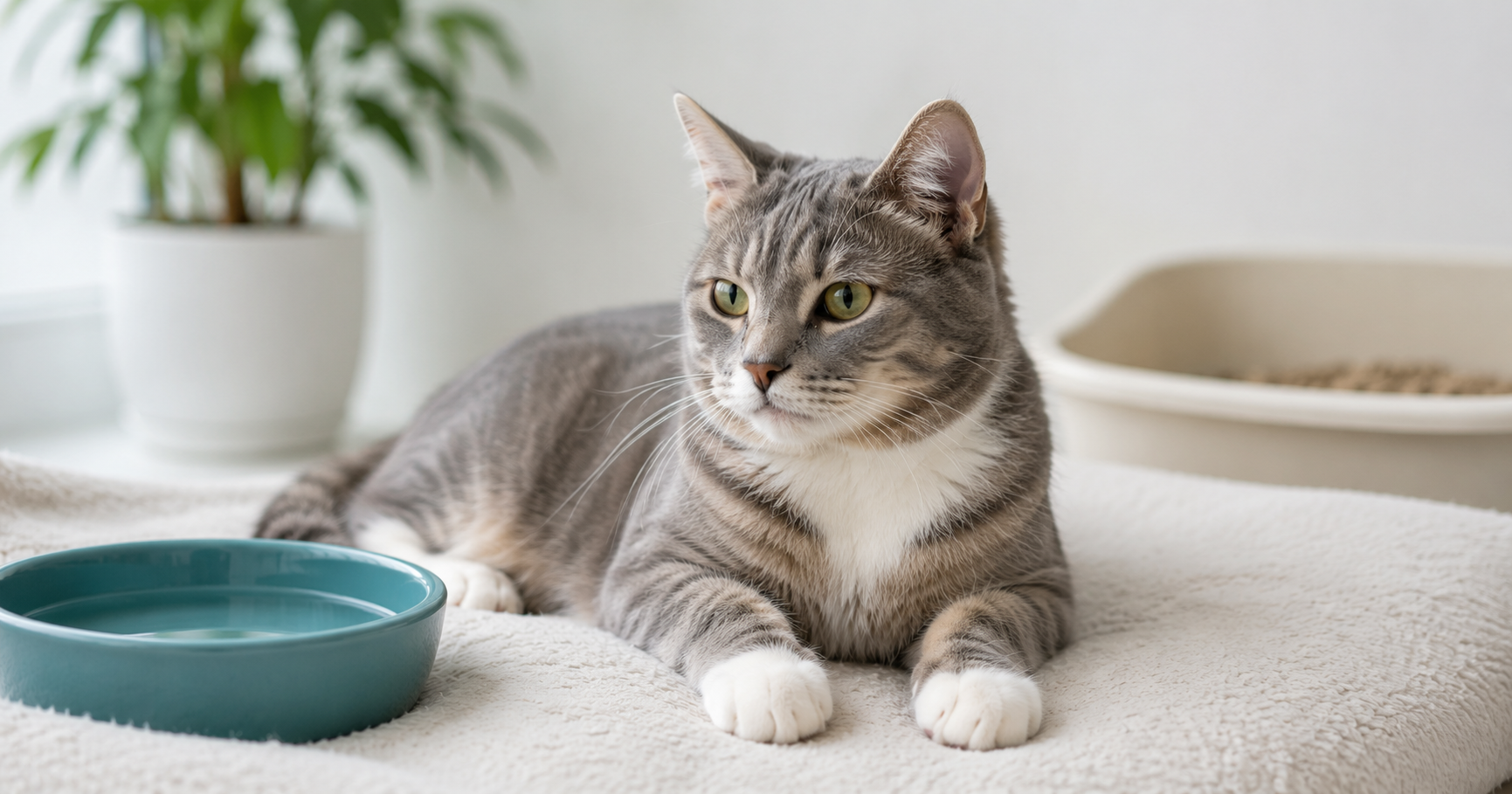
A Cat UTI, or a urinary tract infection in your cat, is one of the most prevalent conditions and can become quite dangerous in a matter of days. Zoomies receive calls almost daily from concerned cat owners who noticed an unusual pattern of their pet's visits to the toilet and didn't know if they had to stay put or go to a doctor immediately. We've got all your answers straight from veterinarians here.
We'll show you how to identify cat UTI symptoms while there's still time to act, tell you what's happening to your cat's body, discuss all existing treatments and preventive methods, including your vet's prescription and natural home remedies, explore how diet affects cats' urinary health, and provide you with a step-by-step plan to prevent future episodes of your cat's UTIs.
What Is a Cat UTI? Everything You Need to Know
Cat UTI refers to bacterial infections that affect the urinary tract system of felines – more specifically, infections of the lower part, such as the bladder (cystitis), and occasionally the urethra. As the name itself indicates, bacteria enter the urinary tract via the urethra and settle in the bladder. As a consequence, this causes inflammation, pain, and even the need to urinate continuously.
What many Indian cat owners fail to realise is that the chances of bacterial cat UTIs are lower than those of Feline Idiopathic Cystitis (FIC). FIC consists of felines showing similar symptoms but is not caused by any infection. The reasons include stress, dehydration, dietary, and environmental factors. Why is it important to know about it? Understanding both these cases is essential since, while the former case involves antibiotics, the latter case doesn’t.
How to Treat UTI in Cats: The Veterinary Approach
Treating UTI in cats starts by making sure there is indeed an infection, which requires a diagnosis. First, the vet performs a urinalysis, which involves checking the sample of urine to identify whether there is any bacteria present, white blood cells, red blood cells, crystals, and the pH levels. When an infection is found, or suspected, other tests like the urine culture and sensitivity test will be performed. It is important to perform the test because the use of the wrong antibiotic makes matters worse.
Cat UTI Symptoms: What to Watch For
Catching cat UTI symptoms early is one of the most useful things you can do as a cat owner. The faster you act, the less pain your cat endures and the more straightforward the treatment. Here are the signs that should prompt attention:
|
Symptom |
What You Will See |
|
Frequent urination attempts |
Visits litter box every few minutes; little or no urine produced |
|
Straining or crying in litter box |
Crouching with visible effort; vocalising in pain while trying to go |
|
Blood in urine (haematuria) |
Pink, red, or brown tinge to urine; red spots visible in the litter |
|
Urinating outside the litter box |
Choosing cool hard surfaces like tiles or bathtubs; cat is avoiding the box due to pain |
|
Excessive genital licking |
Repeated licking of the urinary opening; sign of local irritation |
|
Lethargy and reduced appetite |
Less active than usual; disinterested in food or play |
|
Unusually strong-smelling urine |
Urine smells stronger or more ammonia-heavy than normal |
|
Complete inability to urinate |
Cat strains for several minutes with zero output; abdomen may feel firm or distended |
UTI Treatment for Cats: Cat UTI Medicine
In a situation where there is a proven bacterial infection in your feline friend, antibiotics become one of the main components of the cat UTI treatment process.
Some of the commonly used drugs to fight this disease include co-amoxiclav, Trimethoprim-Sulfamethoxazole, and Enrofloxacin; but other medications can also be recommended depending upon the result of the urine culture test and general health of your pet. The duration of the medication ranges between 7 and 14 days. You must continue it to completion in order to avoid the growth of resistant bacteria.
Pain Relievers and Anti-inflammatories
In addition to antibiotic treatment, the vet might prescribe a course of anti-inflammatory drugs or analgesics for reducing pain while urinating caused by UTIs. Meloxicam is the most commonly recommended NSAID by vets in India for treating feline pain. Meloxicam should be used very cautiously as cats metabolise NSAIDs extremely slowly. Never administer any kind of human NSAID like ibuprofen or aspirin to your kitty, as they are extremely dangerous for cats.
Treatment for Feline Idiopathic Cystitis
When the diagnosis is FIC rather than bacterial infection, cat UTI treatment shifts away from antibiotics entirely. The treatment will focus on the alleviation of stress, increasing water intake through diet and providing more stimuli in the environment, as well as taking urinary tract supplements. In case your cat is severely stressed, some veterinarians may prescribe short-term anti-anxiety medications.
Home Remedies for Cat UTI: What Actually Helps
Much has been said and discussed on the Internet regarding home remedies for cat UTI. And the straightforward answer is that they can assist in getting rid of a UTI and significantly decrease its likelihood in the future, but there is no way to completely cure a bacterial infection at home. If your cat experiences symptoms, you will have to take it to a veterinary surgeon first. However, here is what you should do along with that:
Drink More Water
This is the single best remedy that can be used in your home to provide treatment for a cat UTI. Drinking more water results in more diluted urine, which will help eliminate bacteria in a much more effective manner from the bladder while also making the irritant effect less likely due to less irritation caused by concentrated urine. Practical steps: change the cat's diet by giving wet food or adding water to its dry food, buy a pet fountain for water, and put more than one water bowl in various places around the house except near the food bowl.
D-Mannose
D-Mannose is a sugar that appears to be somewhat effective in reducing E. coli adhesion to the walls of urinary tracts in human and rodent studies. Studies specific to cats remain few and far between, but D-Mannose is deemed relatively safe and is included in many commercially available feline urinary health supplements sold in India. Consider it an adjunct therapy, alongside veterinary treatment, and never a replacement.
Reduce Stress
For FIC specifically, stress reduction is not a vague suggestion; it is the primary home remedy for cat UTI that makes a documented difference. At a minimum, provide one litter box per cat and one additional; clean the litter boxes daily, give vertical places and hiding spots for the cat; employ a Feliway pheromone diffuser; and try to have a consistent schedule for meals and bedtime for your cat.
Diet and Cat UTI: The Connection Is Direct
Diet is one of the best weapons at your disposal to help you manage your cat's UTIs and keep them at bay. The connection between food and urinary tract health in cats has been extensively studied, and there are many ways to see the results in action.
Moisture Is the Most Important Factor
The more water is consumed by cats, the less concentrated their urine becomes. Concentration increases irritation in the lining of the bladder and leads to higher mineral saturation, causing crystal formation. Partial consumption of wet foods results in a positive impact on health parameters.
Urinary pH and Crystal Formation
Depending on its pH value, different types of crystals appear. For example, struvite forms in alkaline urine with a pH of over 6.8 and is prevalent in younger cats. Calcium oxalate crystals are formed in acidic urine with a pH level lower than 6.0 and appear more often in older cats. Urine acidification can be naturally achieved thanks to high protein content; the normal pH level of urine in cats is 6.0–6.5. This is among the reasons behind the importance of dietary protein.
Cat UTI Prevention: Daily Habits That Make a Real Difference
The best strategy for cat UTI prevention starts well before issues occur. The following daily practices have been shown to lower the risks involved:
Prioritize Hydration
Come back to this point whenever thinking about cat UTI prevention. Cat UTIs require diluted urine for prevention. Provide wet cat food at least once a day, ensure your water bowls remain clean, and invest in a water fountain for your cat. In case your cat only eats dry food, you may put some warm water or low-sodium, unseasoned broth in its bowl.
Litter Box Management is Important
When a cat stays away from a poorly maintained litter box, it will hold its urine inside. This allows bacteria to multiply and increases the concentration of the urine. There should be at least one more litter box than there are cats with daily cleaning, and the litter boxes should be thoroughly cleaned once a week. Placement is another factor; a cat will not use litter boxes that are next to noisy appliances, in high-traffic zones or where there is no way out.
When to Go to the Vet Immediately
While mild cat UTI symptoms in an otherwise healthy cat can sometimes be watched for 12 to 24 hours, certain signs demand immediate professional attention:
-
No urine produced despite repeated straining; potential blockage
-
Male cat straining with no output for more than two hours
-
Crying, howling, or obvious distress when attempting to urinate
-
Visible blood in urine combined with straining
-
Complete lethargy, vomiting, or refusal to eat alongside urinary symptoms
-
A distended or unusually firm abdomen
Cat UTIs should never be approached by taking guesses since proper treatment requires an accurate diagnosis of whether the cause is a bacterial infection, FIC, urinary crystals or obstruction. After getting your cat diagnosed, the treatment process of cat UTIs can become pretty simple as long as it's done in time.
At Zoomies, we strongly feel that effective cat UTI prevention should be achieved via the right nutrition selected before problems occur. In our collection of carefully chosen products, we prioritise foods with a high moisture content in the form of wet food, dry kibbles with high protein content from reputable manufacturers with named proteins being the first item in the ingredients list, and formulas with urinary support that we analyse ourselves. Lastly, we have cat water fountains, which are among the most helpful purchases made by Indian cat parents ever.
FAQs
Can a cat UTI go away on its own?
In cases of idiopathic cystitis, a mild condition can be managed in about five to seven days; a bacterial UTI requires antibiotic treatment and cannot resolve on its own. In males, an apparently mild infection may develop into a potentially fatal obstruction rapidly, so you should seek veterinary attention immediately.
How long does cat UTI treatment take?
Typically, a course of treatment for cat UTI medication lasts seven to fourteen days. You should see a response to the appropriate medication in 48 to 72 hours; continue the entire course even if your cat seems better before completing the medication. FIC will typically self-cure in five to seven days.
Is a cat UTI contagious to other animals or humans?
No, it is not contagious. The bacterium associated with a cat UTI cannot be spread between humans and cats in a regular household setting. Other cats are not directly threatened by the presence of a UTI in their companion; however, if multiple cats use the same litter box, it should be cleaned more often.
What should I feed a cat recovering from a UTI?
Ensure that your cat has access to only wet food since it will help the cat maintain fluid levels. Consider following your vet's advice about giving your cat the correct dietary support during the period. Don’t consider giving your cat only dry food until your vet advises you after performing another urinalysis. After recovery, consult your vet for any special foods required for maintaining proper urinary health for your cat.
Can male cats get UTIs just like female cats?
Females have higher chances of getting UTIs compared to males because of the anatomy of the reproductive system. Bacterial UTIs are less common among males due to their narrow urethra. They face a high risk of developing UTIs in the form of urinary obstruction. They suffer equally as much from FIC as females.
Share:
How to Keep Your Dog Hydrated: Signs of Dehydration, Risks, and Solutions
UTI in Dogs: Symptoms, Causes, Treatment, and Prevention Guide