

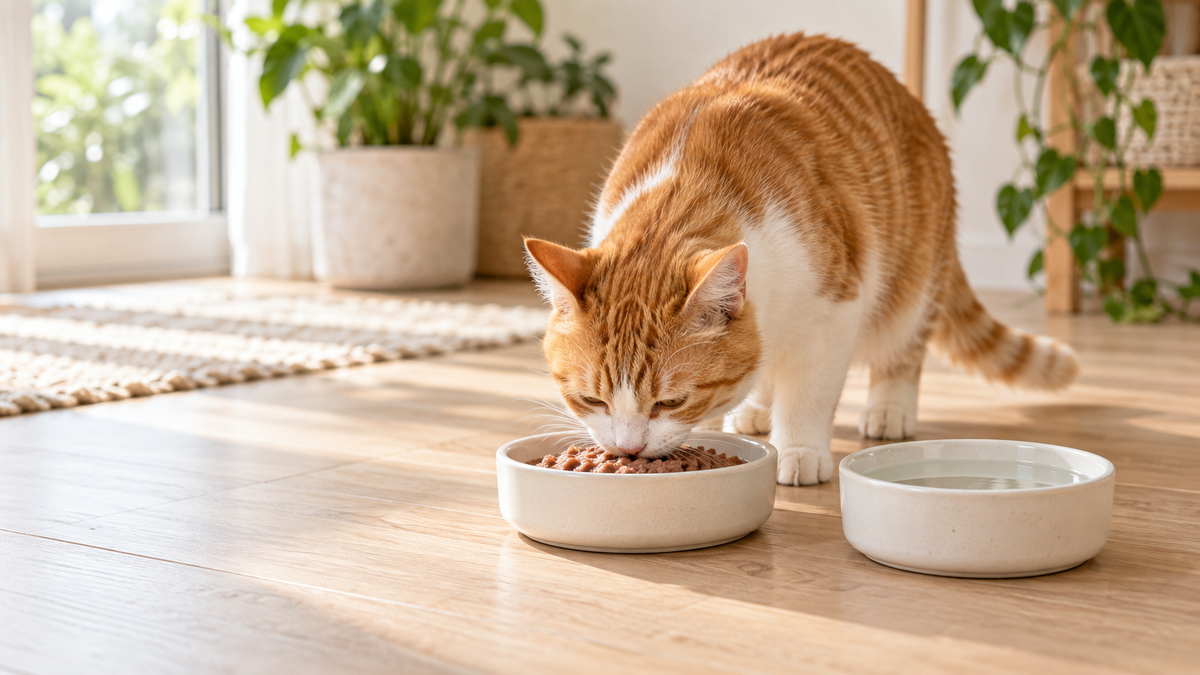
If your cat rarely visits the water bowl, you're not imagining it – and you're definitely not alone. Cats are famously poor drinkers, and that quiet habit can quietly affect their health over time. One of the simplest, most effective ways to support your cat's hydration isn't about changing their water bowl at all – it's about changing what's on their plate. High-moisture cat food is one of the most practical tools cat parents have for keeping their feline well-hydrated, day after day, without a fight over the water dish.
At Zoomies, hydration is one of the core pillars we build our recipes around. In this guide, we'll walk through why cats need more moisture than they naturally seek out, how high-moisture cat food helps close that gap, and what to look for when choosing a hydrating cat food for your cat's daily routine.
Why Cats Struggle to Stay Hydrated
To understand why high-moisture cat food matters so much, it helps to look back at where cats came from. Domestic cats descend from desert-dwelling ancestors who got the vast majority of their moisture from prey – not from standing water. Because of this evolutionary history, cats never developed a particularly strong thirst drive. Their bodies are wired to expect moisture to come from food, not from drinking.
This means many modern cats, especially those eating primarily dry kibble, simply don't make up the difference by drinking more water on their own. Over time, this low-level, chronic under-hydration can contribute to issues like urinary tract problems, constipation, and added strain on the kidneys – organs that rely heavily on adequate fluid intake to function properly.
This is exactly why high-moisture cat food has become such an important part of feline nutrition conversations. Rather than relying on a cat to change its natural drinking habits, high-moisture cat food delivers hydration through the one channel cats are biologically wired to use: their meals.
Dry Food vs. High-Moisture Cat Food: A Side-by-Side Look
The difference in moisture content between dry and wet food is larger than most cat parents realize – and it's the core reason high-moisture cat food plays such an important hydration role.
|
Food Type |
Typical Moisture Content |
Hydration Contribution |
Best Use Case |
|
Dry kibble |
6% – 10% |
Minimal; requires significant additional water intake |
Convenience feeding, free-feeding schedules |
|
High-moisture cat food (wet/canned) |
70% – 82% |
Significant; closely mimics moisture from natural prey |
Daily hydration support, urinary health, low water-drinking cats |
|
Fresh/raw diets |
65% – 75% |
High; naturally moisture-rich |
Cats needing variety alongside high-moisture cat food |
|
Broths and toppers |
90%+ |
Supplemental hydration boost |
Adding to any base diet for extra moisture |
As the table shows, a cat eating primarily dry kibble may need to actively seek out and drink several times more water than a cat eating moisture-rich cat food just to reach the same total daily fluid intake. Given how naturally low a cat's thirst drive is, that's a gap most cats simply never close on their own – which is exactly the gap high-moisture cat food is designed to fill.
The Real Health Benefits of High-Moisture Cat Food
1. Supports Urinary and Kidney Health
Adequate hydration helps dilute urine and encourages more frequent urination, both of which play a supportive role in reducing the risk of urinary crystals, blockages, and lower urinary tract discomfort. For cats prone to urinary issues, high-moisture cat food is frequently one of the first dietary changes recommended, precisely because it addresses hydration at the source – every single meal.
2. Eases the Workload on the Kidneys
Cats' kidneys work continuously to concentrate urine and conserve water, a trait inherited from their desert ancestry. Feeding high-moisture cat food reduces how hard the kidneys need to work to manage limited fluid intake, which can be especially valuable for senior cats or those with early-stage kidney concerns, always in coordination with veterinary guidance.
3. Supports Healthy Digestion
Moisture plays an important role in digestion, helping food move smoothly through the digestive tract. Cats eating wet cat food for hydration often experience more regular digestion and are less prone to the mild constipation that can affect cats on very low-moisture diets.
4. Helps Maintain a Healthy Weight
Because wet food is more filling per calorie than dry kibble, largely due to its high water content, high-moisture cat food can support healthy portion control and weight management, helping cats feel satisfied without excess caloric intake.
5. Naturally Encourages Better Eating Habits
The rich aroma and soft texture of natural wet cat food often make mealtime more appealing, which is especially helpful for cats who are picky eaters or who tend to graze inconsistently throughout the day.
Signs Your Cat May Not Be Getting Enough Moisture
While every cat's needs are individual, a few general signs can suggest your cat could benefit from more hydration support through their diet:
-
Infrequent trips to the water bowl
-
Small, hard, or infrequent stools
-
Dark yellow, strong-smelling urine
-
A history of urinary tract issues
-
Reluctance to drink from standing water bowls
If you notice any of these patterns, introducing more high-moisture cat food into your cat's diet – alongside a conversation with your veterinarian – is a simple, low-risk place to start.
How Much Moisture Do Cats Actually Need?
Cats generally need around 50 to 60 milliliters of water per kilogram of body weight each day, though this varies based on activity level, climate, and overall diet. When a significant portion of that comes from moisture-rich cat food rather than drinking alone, cats are far more likely to meet their daily hydration needs consistently, without relying on inconsistent drinking habits.
This is part of why many veterinarians recommend at least partially incorporating high-moisture cat food into a cat's daily diet, even for otherwise healthy cats – it's a proactive way to support long-term kidney and urinary health, rather than waiting to address hydration only after a problem develops.
Introducing the Zoomies high-moisture Cat Food
At Zoomies, we built our high-moisture Cat Food line specifically around this principle: hydration shouldn't depend on whether your cat feels like drinking water that day. Every recipe in the Zoomies high-moisture Cat Food range is formulated with a rich, natural broth base and real, named protein sources, delivering the kind of moisture content that closely mirrors what a cat would naturally get from prey in the wild.
What sets Zoomies high-moisture Cat Food apart:
-
High water content in every recipe, formulated to actively support daily hydration rather than just deliver calories
-
Real, named proteins first, like chicken, salmon, or turkey, for a nutrient-dense, palatable base
-
No artificial fillers or unnecessary additives, keeping the recipe as close to a natural wet cat food as possible
-
A rich, savory broth texture that appeals to picky eaters while delivering meaningful hydration support with every bite
-
Consistent quality across every batch, so your cat gets the same trusted taste and texture meal after meal
Whether your cat is prone to urinary issues, tends to avoid the water bowl, or you're simply looking for a proactive way to support their long-term health, Zoomies high-moisture Cat Food is designed to make hydration part of every meal – not an extra task on your to-do list.
How to Transition Your Cat to High-Moisture Cat Food
If your cat has been primarily eating dry kibble, switching to high-moisture cat food should be done gradually to avoid digestive upset and to give your cat time to adjust to the new texture and aroma. A simple approach:
-
Days 1–3: Mix a small amount of high-moisture cat food (about 25%) with your cat's regular food.
-
Days 4–6: Increase the ratio to about 50% high-moisture cat food.
-
Days 7–9: Move to roughly 75% high-moisture cat food.
-
Day 10 onward: Transition fully, if desired, or maintain a wet-and-dry combination based on your cat's preference and your vet's recommendation.
Throughout the transition, keep an eye on your cat's appetite, stool consistency, and overall comfort, adjusting the pace as needed. Every cat adjusts a little differently, and there's no need to rush the process.
Combining High-Moisture Cat Food With Other Hydration Strategies
While high-moisture cat food is one of the most effective hydration tools available, it works even better alongside a few complementary habits:
-
Multiple water stations placed around the home, since some cats prefer to drink away from their food
-
Pet fountains, which appeal to many cats' natural preference for moving water over still water
-
Wide, shallow bowls to avoid whisker discomfort that can discourage drinking
-
Occasional broth toppers, which can add an extra hydration boost on top of a wet food base
Together, these strategies create multiple, reinforcing opportunities for your cat to stay well-hydrated – with high-moisture cat food doing the heavy lifting at every mealtime.
Final Thoughts
Hydration is one of the most overlooked pillars of feline health, largely because cats are so good at hiding that they're not getting enough of it. Rather than relying on a cat's naturally low thirst drive to close that gap, high-moisture cat food offers a simple, consistent, and biologically appropriate way to support hydration at every meal.
Whether you're managing an existing urinary or kidney concern, trying to encourage a picky eater, or simply want to build healthy long-term habits, incorporating high-moisture cat food into your cat's routine is one of the easiest, most impactful changes you can make. And with Zoomies high-moisture Cat Food, that support comes in a recipe your cat will genuinely look forward to at mealtime – real ingredients, real moisture, and real care in every bowl.
FAQs
1. What is high-moisture cat food?
High-moisture cat food refers to wet or canned cat food with a moisture content typically between 70% and 82%, compared to just 6–10% in dry kibble. This higher water content closely mimics the natural moisture cats would get from prey in the wild, making it one of the most effective ways to support daily hydration through diet rather than drinking alone.
2. Why do cats need hydrating cat food instead of just more water?
Cats descend from desert-dwelling ancestors and never developed a strong thirst drive, since they historically got most of their moisture from prey rather than standing water. Because of this, many cats simply don't drink enough on their own to stay properly hydrated – which is why hydrating cat food that delivers moisture through meals is often more effective than relying on a water bowl alone.
3. Can wet cat food for hydration help with urinary or kidney issues?
Yes – adequate hydration helps dilute urine and supports more frequent urination, both of which play a supportive role in reducing the risk of urinary crystals and blockages, while also easing the workload on the kidneys. This is why wet cat food for hydration is frequently one of the first dietary changes recommended for cats prone to urinary or early kidney concerns, always alongside veterinary guidance.
4. How is moisture-rich cat food different from adding water to dry kibble?
While adding water to kibble can offer some benefit, moisture-rich cat food is formulated as a complete, balanced diet with moisture built into its natural composition – including broth, protein, and nutrients that dissolve or blend into that moisture. Simply adding water to dry food doesn't replicate the same nutrient density, palatability, or consistent hydration support that a true high-moisture cat food recipe provides.
5. Is natural wet cat food safe to feed every day?
Yes, natural wet cat food made with real, named protein sources and without unnecessary fillers or artificial additives is safe and often beneficial as a daily diet for most healthy cats. Many veterinarians recommend incorporating high-moisture cat food into a cat's everyday routine as a proactive way to support long-term hydration, digestion, and urinary health – not just as an occasional treat.
Share:
Bone Broth for Cats: Benefits, Serving Size, and How to Feed It
How to Choose Clean-Label Cat Food: The Ingredient Checklist