
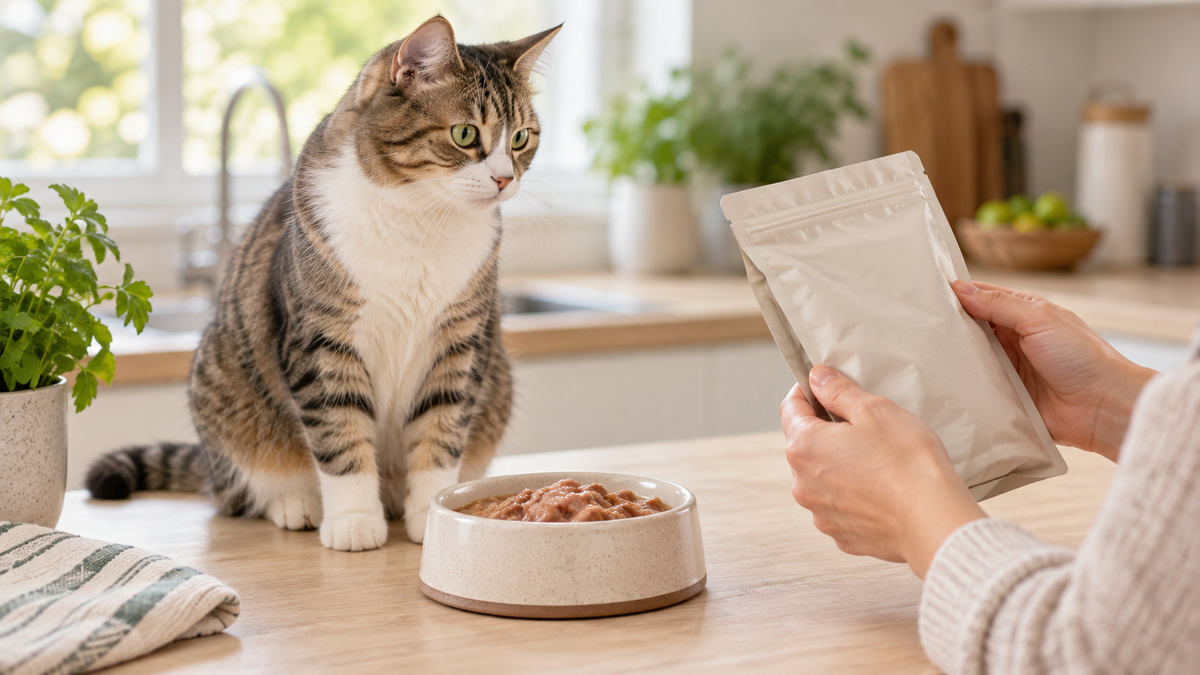
Flip over almost any bag of cat food, and you'll find a list of ingredients that can be genuinely hard to decode – unfamiliar additives, vague protein sources, and preservatives with names longer than the nutrition claims on the front of the package. More and more cat parents are asking a simple question: what am I actually feeding my cat? That question is exactly what clean label cat food is designed to answer honestly.
At Zoomies, we believe you shouldn't need a chemistry degree to understand what's in your cat's bowl. In this guide, we'll walk through what clean label cat food actually means, why it matters for your cat's long-term health, and exactly what to look for – and avoid – the next time you're standing in the pet food aisle.
What Does "Clean Label" Actually Mean?
Clean label cat food refers to pet food made with recognizable, minimally processed ingredients, free from unnecessary artificial additives, synthetic preservatives, and vague filler ingredients. The term borrows from the human food industry's "clean eating" movement, where consumers increasingly want to understand – and pronounce – everything on an ingredient label.
Unlike some marketing terms in the pet food industry, "clean label" isn't a legally regulated claim in most markets, which means it's important to evaluate what's actually inside the bag or can, not just the label's messaging. True clean label cat food should hold up to scrutiny on its own ingredient list, not just its packaging.
Why Clean Label Cat Food Matters for Your Cat's Health
Cats are obligate carnivores with digestive systems built to process animal protein efficiently – not synthetic additives or excessive fillers. Over time, low-quality ingredients, unnecessary preservatives, and vague protein sources can contribute to digestive sensitivity, allergic reactions, and inconsistent nutrition. Choosing clean label cat food is one of the most direct ways to reduce your cat's exposure to ingredients that offer little nutritional benefit and, in some cases, may cause sensitivities over time.
Beyond digestion, ingredient quality also affects coat condition, energy levels, and long-term organ health. A cat consistently eating clean-label cat food built around real, identifiable ingredients is generally getting a diet that's easier for their body to recognize, digest, and use efficiently – compared to a diet reliant on heavily processed fillers and synthetic additives.
The Clean-Label Cat Food Ingredient Checklist
Here's exactly what to look for – and watch out for – when evaluating whether a product qualifies as genuine clean-label cat food.
1. A Named, Real Protein Source First
The first ingredient should be a specific, named animal protein – chicken, salmon, turkey, or lamb – not a vague term like "meat meal" or "animal derivatives." Real-meat cat food lists exactly which animal the protein comes from, giving you clarity on both quality and potential allergens.
2. No Artificial Colors
Artificial dyes serve no nutritional purpose for cats – cats don't select food based on color the way humans do. Their presence in a formula is almost always about visual appeal for the pet parent, not the pet, which makes them one of the easiest red flags to spot on a label.
3. No Artificial Preservatives
Look for cat food without preservatives like BHA, BHT, and ethoxyquin – synthetic preservatives that have raised long-term safety questions in some studies. Genuine clean label formulas instead rely on natural preservation methods, such as mixed tocopherols (a natural form of vitamin E) or vacuum-sealed packaging, to maintain freshness.
4. Minimal, Recognizable Ingredients
A shorter ingredient list isn't automatically better, but every ingredient should serve a clear, identifiable purpose. If you can't reasonably explain why an ingredient is in the formula, it's worth questioning whether it needs to be there at all.
5. No Unnecessary Fillers
Ingredients like corn, wheat, and soy are sometimes used as inexpensive bulking agents rather than for meaningful nutritional value. While not inherently harmful in small amounts for every cat, their presence as a primary ingredient is a sign the formula is prioritizing cost over quality.
6. Clear Sourcing Transparency
Brands genuinely committed to clean label cat food are typically transparent about where their ingredients come from and how the product is made – not vague or evasive when asked directly.
7. No Artificial Flavor Enhancers
Real, high-quality protein has its own natural aroma and flavor. Reliance on artificial flavor enhancers can be a sign that the base recipe isn't appealing enough for cats on its own merit.
8. Third-Party or Regulatory Quality Assurance
Look for products that meet recognized quality and safety standards. In India, this includes compliance with FSSAI (Food Safety and Standards Authority of India) pet food guidelines, which is an important marker of a legitimate, quality-focused natural cat food India brand.
Clean Label vs. Conventional Cat Food: A Side-by-Side Comparison
|
Feature |
Conventional Cat Food |
Clean Label Cat Food |
|
Primary protein source |
Often vague ("meat meal," "animal by-products") |
Named, specific protein (e.g., chicken, salmon) |
|
Preservatives |
Frequently synthetic (BHA, BHT, ethoxyquin) |
Natural (mixed tocopherols, vacuum sealing) |
|
Colors and flavors |
Often artificial |
None, or naturally derived |
|
Fillers |
Common (corn, wheat, soy as primary bulking agents) |
Minimal to none; ingredients serve a clear purpose |
|
Ingredient transparency |
Often limited or generic |
Clear, specific, and traceable |
|
Label readability |
Long list of unfamiliar terms |
Short, recognizable ingredient list |
Common Ingredients to Avoid
When scanning a label, a few ingredients consistently signal that a product doesn't meet true clean label cat food standards:
-
BHA and BHT – synthetic preservatives linked to potential long-term health concerns
-
Ethoxyquin – a chemical preservative banned or restricted in some countries' human food supplies
-
Artificial food dyes (e.g., Red 40, Yellow 5) – added purely for visual appeal to pet parents
-
Meat by-products or meat meal without a named source animal – a sign of lower ingredient traceability
-
Propylene glycol – a humectant used in some semi-moist foods that has raised safety concerns for cats specifically
-
Excessive plant-based fillers – corn, wheat, or soy used primarily as inexpensive bulking agents rather than nutrition
What "Additive-Free" Really Means
The term additive-free cat food can be somewhat misleading, since all cat food requires some level of formulation to be nutritionally complete and safe for storage. What genuine additive-free or clean label products avoid isn't all additives – it's unnecessary synthetic additives that serve marketing or shelf-life purposes rather than your cat's health. Natural preservation methods, functional ingredients like taurine (essential for feline heart and eye health), and minimal processing are still present in truly clean formulas – they're just derived from recognizable, natural sources rather than synthetic chemistry.
The Growing Demand for Natural Cat Food in India
The shift toward natural cat food India consumers are looking for reflects a broader global trend: pet parents increasingly treating their cats' nutrition with the same scrutiny they apply to their own food choices. As awareness of ingredient quality grows, more Indian pet parents are reading labels closely, asking brands direct questions about sourcing, and choosing clean label cat food over conventional formulas that rely heavily on fillers and synthetic additives.
This shift has also pushed pet food brands in India to be more transparent about formulation, sourcing, and manufacturing standards – a positive development for cat parents trying to make informed choices in a market that has historically had less ingredient transparency than more mature pet food markets.
How Zoomies Approaches Clean Label Cat Food
At Zoomies, clean label isn't a marketing claim we apply after the fact – it's the standard we formulate every recipe around from the very first ingredient. Every Zoomies recipe is built on:
-
Real, named protein sources as the first ingredient, never vague meat meal or by-products
-
No artificial colors, flavors, or flavor enhancers, letting real ingredients speak for themselves
-
Natural preservation methods, avoiding synthetic preservatives like BHA, BHT, and ethoxyquin
-
Minimal, purposeful ingredient lists, so every item on the label is there for a clear reason
-
Transparent sourcing, so pet parents always know what they're feeding their cat and why
Our goal is simple: give cats the kind of real-meat, minimally processed nutrition they're biologically built to thrive on – and give pet parents an ingredient label they can actually read and trust without guesswork.
How to Start Transitioning to Clean Label Cat Food
If you're switching your cat from a conventional formula to clean label cat food, a gradual transition over 7 to 10 days helps avoid digestive upset:
-
Days 1–3: Mix roughly 25% new food with 75% current food.
-
Days 4–6: Move to a 50/50 mix.
-
Days 7–9: Increase to roughly 75% new food.
-
Day 10 onward: Complete the transition to full clean label cat food, monitoring appetite and stool consistency along the way.
Final Thoughts
Choosing clean label cat food ultimately comes down to a simple principle: your cat's food should be something you can look at, understand, and feel confident about – ingredient by ingredient. From named protein sources and natural preservation to the absence of artificial colors and unnecessary fillers, every item on this checklist exists to help you make a more informed choice at the pet food aisle.
At Zoomies, we've built our entire approach around that same principle – real ingredients, honest labels, and food your cat's body actually recognizes as nourishment. Because clean label cat food shouldn't be a premium exception; it should be the standard every cat deserves.
FAQs
1. What is clean label cat food?
Clean label cat food refers to pet food made with recognizable, minimally processed ingredients, free from unnecessary artificial colors, synthetic preservatives, and vague filler ingredients. It typically starts with a named, real protein source and avoids additives that serve marketing purposes rather than nutritional value.
2. Why should I choose cat food without preservatives?
Cat food without preservatives that rely on synthetic chemicals like BHA, BHT, or ethoxyquin instead uses natural preservation methods such as mixed tocopherols (vitamin E) or vacuum sealing. Avoiding synthetic preservatives can reduce your cat's long-term exposure to additives that some studies have raised safety questions about.
3. How can I tell if a cat food is truly additive-free?
Genuine additive-free cat food avoids unnecessary synthetic ingredients – like artificial colors, flavor enhancers, and chemical preservatives – while still including natural, functional ingredients like taurine that are essential for feline health. Check the ingredient list for recognizable, minimally processed items rather than relying on front-of-package marketing claims alone.
4. What does real-meat cat food mean on an ingredient label?
Real-meat cat food lists a specific, named animal protein – such as chicken, salmon, or turkey – as the first ingredient, rather than vague terms like "meat meal" or "animal by-products." This gives pet parents clarity on exactly what protein source their cat is eating and makes it easier to identify potential allergens.
5. Is natural cat food widely available in India?
Yes, demand for natural cat food in India has grown significantly as pet parents pay closer attention to ingredient quality and transparency. More Indian pet food brands are now formulating clean label options and aligning with FSSAI pet food guidelines, making it easier to find natural, additive-free options than in past years.
Share:
High-Moisture Cat Food: Why Wet Food Supports Daily Hydration