

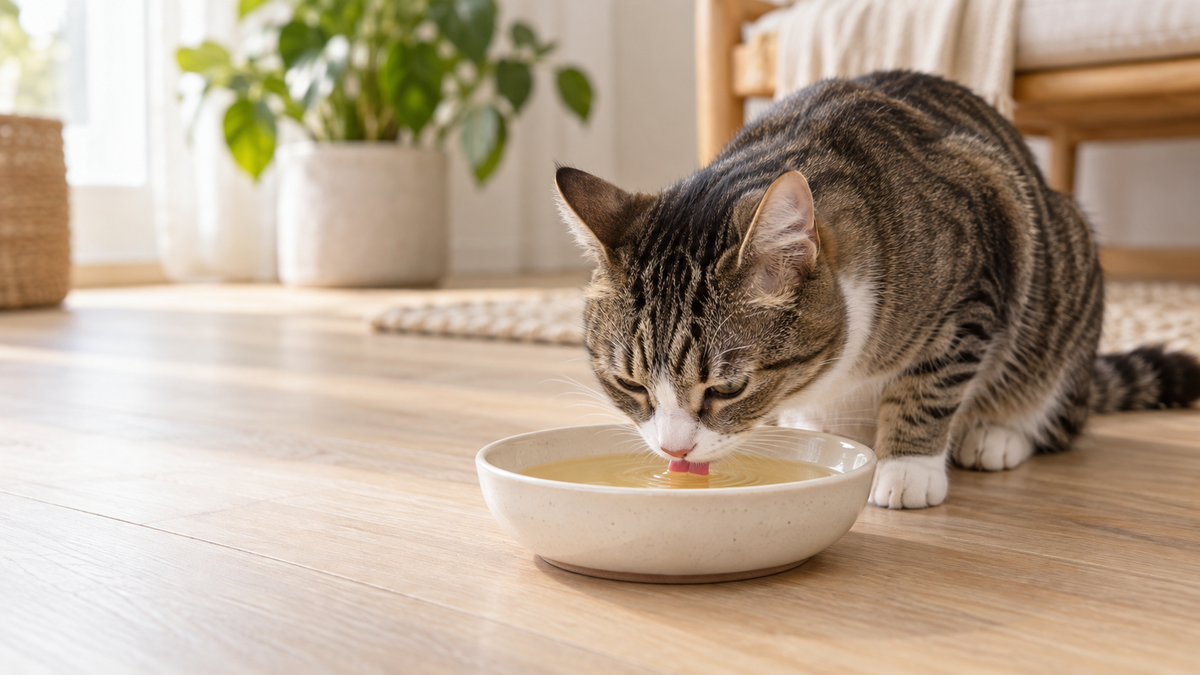
If you've spent any time in the pet aisle lately, you've probably noticed bone broth popping up next to the wet food and treats. It's not just a trend for humans anymore - more cat parents are turning to bone broth for cats as a simple way to support hydration, digestion, and overall well-being. But what exactly is it, how much should you feed, and is it actually good for your cat?
We've put together this complete guide covering everything from its nutritional benefits to safe serving sizes and feeding tips - so you can decide whether it belongs in your cat's bowl.
What Is Bone Broth for Cats?
Bone broth is a savory liquid made by slowly simmering animal bones - typically chicken, turkey, or beef - along with connective tissue, in water for an extended period, often 8 to 24 hours. This slow cooking process draws out nutrients like collagen, gelatin, amino acids, and minerals from the bones and connective tissue into the liquid.
Unlike stock, which is cooked for a shorter time, bone broth's long simmer allows for a richer nutrient profile. When made specifically for pets, it's prepared without salt, onion, garlic, or other seasonings that are toxic to cats - which is an important distinction from broths made for human consumption.
Chicken broth for cats is one of the most popular varieties, prized for its mild flavor and easy digestibility, though beef and turkey bone broths are also widely available and well tolerated by most cats.
Is Bone Broth Safe for Cats?
Generally, yes - plain, unseasoned bone broth made specifically for pets is considered safe for most healthy cats. However, a few important safety notes apply:
-
Avoid broths with onion or garlic. These are toxic to cats and can cause serious health issues, including damage to red blood cells.
-
Watch the sodium content. Human-grade broths often contain added salt, which isn't appropriate for cats. Always choose broths labeled specifically for pets, or make your own without seasoning.
-
Check for bone fragments. Properly strained broth should contain no bone pieces, which can pose a choking or digestive hazard.
-
Introduce gradually. As with any new food, start with small amounts to make sure your cat tolerates it well, particularly if they have a sensitive stomach.
If your cat has kidney disease or is on a restricted-protein or restricted-sodium diet, it's worth checking with your veterinarian before adding bone broth to their routine, since individual health conditions can change what's appropriate.
The Benefits of Bone Broth for Cats
So why are so many cat parents adding this to mealtime? Let's look at the real, practical benefits of bone broth for cats.
1. Supports Hydration
Cats are notoriously poor water drinkers - a trait believed to stem from their desert-dwelling ancestors. Because bone broth is almost entirely liquid, it serves as an excellent cat hydration food, encouraging fluid intake in cats who might otherwise turn their nose up at a water bowl. This is especially valuable for cats prone to urinary tract issues or kidney concerns, where adequate hydration plays a supportive role in overall wellness.
2. Encourages Appetite in Picky or Reluctant Eaters
The rich aroma of bone broth can be a game-changer for cats who are uninterested in their regular meals. A small drizzle over dry or wet food often makes the dish more enticing, making it a useful tool as a broth for picky cats. The scent alone can be enough to draw a hesitant cat back to the bowl.
3. Supports Joint Health
Bone broth is naturally rich in collagen and glucosamine - compounds that are often associated with joint and cartilage support. While bone broth shouldn't replace a formulated joint supplement for cats with diagnosed conditions like arthritis, it can be a gentle, food-based addition to their overall routine, particularly for senior cats.
4. Gentle on the Digestive System
Because bone broth is easy to digest and low in fat, it can be a soothing option for cats recovering from an upset stomach, mild illness, or a recent vet procedure. Many veterinarians recommend bland, easily digestible foods during recovery periods, and bone broth often fits that need well - always following your vet's specific guidance for your cat's situation.
5. Adds Variety Without Overloading Calories
Bone broth is naturally low in calories, which makes it a good way to add flavor and moisture to meals without significantly increasing your cat's daily caloric intake - useful for cats who need to maintain a healthy weight while still enjoying variety.
6. May Support Skin and Coat Health
The amino acids found in bone broth, including glycine and proline, play a role in collagen production, which can contribute to skin elasticity and coat condition over time as part of a balanced diet.
How Much Bone Broth Should You Feed a Cat?
Serving size depends on your cat's size, health status, and how the broth is being used - as a treat, a topper, or a hydration boost. As a general guideline:
-
As a topper or flavor enhancer: 1–2 tablespoons mixed into regular meals, once or twice daily.
-
As a standalone treat: No more than 2–4 tablespoons per serving for an average adult cat, offered a few times a week rather than as a daily meal replacement.
-
For hydration support: Small amounts offered throughout the day, either on its own in a shallow bowl or added to drinking water to encourage intake.
Bone broth should complement your cat's regular, nutritionally complete diet - not replace it. Cats have specific dietary needs that must be met through a balanced commercial or vet-formulated diet, and broth alone doesn't provide complete nutrition.
As with any dietary addition, it's a good idea to start with a small amount and observe how your cat responds over the following day, adjusting the serving based on their individual needs and any guidance from your veterinarian.
How to Feed Bone Broth to Your Cat
There are several easy ways to work bone broth into your cat's routine:
1. As a Meal Topper
Simply pour a small amount over your cat's usual wet or dry food. This is one of the easiest ways to introduce broth, especially for cats who are hesitant about trying something new on its own.
2. Served on Its Own
Offer bone broth in a separate shallow dish, slightly warmed to room temperature to enhance its aroma. Many cats enjoy lapping it up between meals.
3. Mixed Into Water
For cats who are reluctant to drink enough water, adding a small amount of broth to their water bowl can make hydration more appealing without forcing a big dietary change.
4. Frozen Into Treats
Freezing small portions of bone broth in an ice cube tray creates a refreshing, slow-melting treat - particularly popular during warmer months.
5. As Part of a Recovery Diet
After illness, surgery, or a low-appetite period, warmed bone broth can be a gentle way to encourage eating again, always in line with any specific dietary instructions from your vet.
Choosing the Right Bone Broth for Your Cat
Not all bone broths are created equal, and the quality of the product matters. When choosing a broth, look for:
-
No added salt, onion, or garlic
-
Made specifically for pets, not repurposed human broth
-
Simple, recognizable ingredients - ideally just bones, water, and perhaps a small amount of apple cider vinegar (used in the cooking process to help draw out nutrients)
-
A trusted, transparent brand that lists sourcing and preparation methods clearly
Zoomies bone broth is crafted with cats in mind from the very first ingredient - no seasoning, no fillers, just a simple, nutrient-rich broth your cat can enjoy safely as part of their daily routine.
Making Your Own Bone Broth at Home
If you'd rather make bone broth yourself, it's a fairly simple process:
-
Use raw or cooked bones from chicken, turkey, or beef (avoid cooked bones that are brittle and prone to splintering, such as small cooked poultry bones, when handling and straining).
-
Cover the bones with water in a large pot or slow cooker.
-
Add a small splash of apple cider vinegar, which may help draw minerals out of the bones during cooking.
-
Simmer on low for 8–24 hours, skimming off any fat that rises to the top.
-
Strain thoroughly to remove all bone fragments and let it cool completely.
-
Store in the refrigerator for up to 4–5 days, or freeze in small portions for longer storage.
Never season homemade broth with salt, onion, garlic, or other seasonings, no matter how flavorful they might make it for humans - these ingredients aren't safe for cats.
Final Thoughts
Bone broth can be a simple, nourishing addition to your cat's routine - supporting hydration, encouraging appetite, and adding a little extra comfort to mealtime. Whether you're using it as a broth for picky cats, a gentle way to support hydration, or simply a tasty topper your cat looks forward to, it's worth choosing a product made specifically with feline nutrition and safety in mind.
At Zoomies, we've designed our bone broth to be exactly that: a clean, simple, cat-safe way to add moisture, flavor, and a little extra care to every meal. Because sometimes, the smallest additions make the biggest difference in your cat's day.
Share:
Best Cat Food for Picky Eaters: Guide to Making Mealtimes Easier
High-Moisture Cat Food: Why Wet Food Supports Daily Hydration