

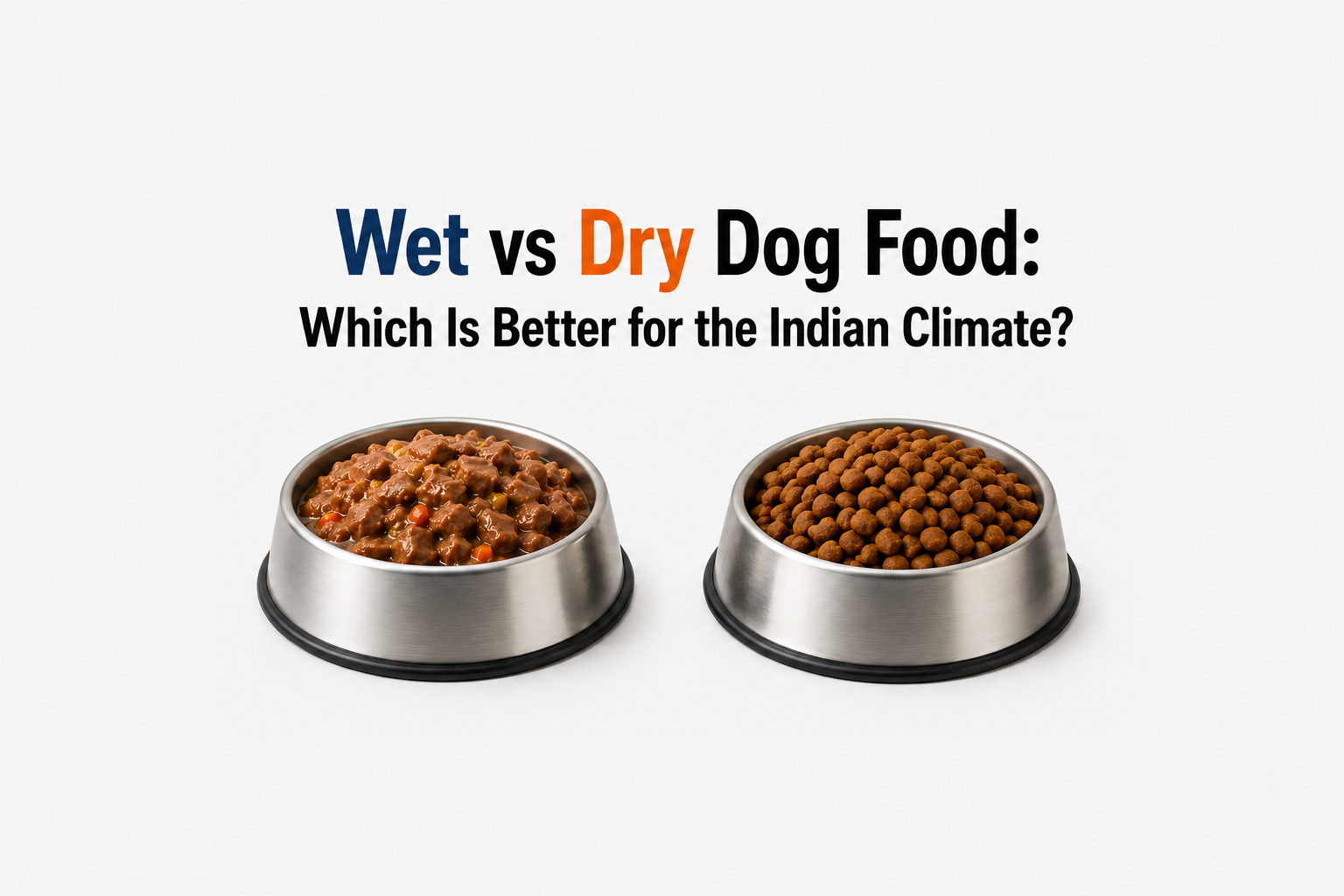
In today’s time, if you visit any pet store in India, you will find a whole wall that is dedicated to dog food items. There are many different forms of dog food, such as canned, packeted, semi-moist, dry dog food, raw, and homemade, etc., all of which can be provided to your pet. As a first-time dog owner, choosing between wet dog food and dry dog food can become very confusing.
This article is a guide on how you should choose dog food for your furry friend while in India.
Before embarking on the wet dog food vs. dry dog food discussion, it would be necessary to explain first precisely what each of these products entails.
What is Wet Dog Food?
The wet food for dogs is packed either in cans, packets or trays and is cooked, sealed immediately afterwards, and contains between 70 and 82 per cent water. The high moisture content is both an advantage and a problem associated with this type of food. The ingredients include meat, organs, broth, and vegetables and, on occasion, grains or legumes, and take the form of chunks in gravy or stew.
Being pre-cooked in a high-pressure cooker, wet dog food requires no preservatives whatsoever to ensure it stays fresh when sealed. However, once it has been opened, the food has to be stored in the refrigerator and should be consumed within 24 hours – an extremely important requirement in a country where the temperature in the kitchen regularly exceeds 30 degrees Celsius for weeks on end.
What is Dry Dog Food?
Dry dog food products, known as kibbles, are manufactured using a method known as extrusion. These foods contain meat meal, grains or their substitutes, fat, vitamins, minerals, and various other elements, which are formed into a mixture of dough. This dough is then processed using heat and pressure inside an extruder machine to form small-sized biscuits and is coated with a tasty coating.
The result is an almost dry product with 8-10% moisture content, making it shelf-stable for months, provided it is stored properly. In the kibble vs wet food discussion in India, this feature becomes significant since refrigeration may be unavailable or unreliable, and power shortages are common in certain regions of the country.
Why the Indian Climate Changes Everything in the Dry vs Wet Food Debate
India is not one but many climates in one country. What works for dry dog food vs wet dog food choice in Delhi in its dry summer season will fail miserably in humid Chennai any time of the year. Knowing the local climatic conditions is very important when deciding on what type of dog food is optimal for your canine companion.
Hydration Issues in the Indian Summer Climate
The dog's mechanism of thermoregulation is based on its capability to pant. Panting is an intensive process and requires a lot of water to be conducted successfully. The hottest months of Indian summer are May and June in the vast majority of Indian regions, and medium-sized dogs lose hundreds of millilitres of water a day just from panting.
A comparable caloric serving of dry kibble delivers fewer than 30 ml. In the hot Indian summer, a dog eating only dry kibble should drink more water than normally to make up for it, and often dogs do not take enough fluids, leading to dehydration symptoms including lethargy, dry gums and skin, and dark urine.
There is definitely an edge for wet dog food vs dry in Indian summers regarding hydration of a pet.
Spoilage Issues in Monsoon-affected and Coastal Regions of India
Turn the page of the year, and suddenly, the whole wet dog food versus dry dog food balance becomes completely different. The humidity level in coastal areas such as Mumbai, Kochi, and Chennai is typically above 80–90% during the monsoons. When the air humidity reaches these levels, an open can of wet food becomes vulnerable to bacteria in only two or three hours.
Nor can dry food be spared from this problem. Bacteria aside, a bag of dry food opened during the monsoons will inevitably become humid, soft, stale, mould-covered, and potentially containing mycotoxins – toxins produced by fungi. It goes without saying that the way you store your dry or wet dog food is essential, too. During monsoons, dry food should be stored in airtight containers along with desiccants for about four to six weeks after being opened.
Wet Dog Food vs Dry Dog Food — What Kind of Dog Food Should Indians Give to Their Dogs?
Indian Pariah Dog (Indie)
Indies are the natural dogs of India, with genetics that allow them to live on a diet comprising whatever happens to be available to them in terms of food — grain-based, protein-heavy, or anything else that comes along. Indies are tough on the inside, and they are not picky eaters either. The best dog food that can help an Indie owner would be premium dry kibble, mixed in with a bit of wet food occasionally. In the summer, it is advisable to add some water to the dry kibble.
Labrador Retriever
The Labrador retriever is a breed that is well known to have a very high appetite and can easily gain weight. This is common among Labradors from India owing to the lack of exercise relative to the needs of the breed. Of the two types of dog food, wet food and dry kibble, the latter is preferred in terms of calorie control for your Labrador. While wet food has fewer calories than dry dog food, wet food requires more quantity to satisfy hunger levels, leading to further consumption to meet calorie requirements.
German Shepherd
German Shepherds tend to have quite sensitive digestive systems. Switching suddenly from canned dog food to dry dog food may result in the formation of loose stools in your German Shepherd. Whether you decide to use dry food, wet food, or both, there is a great deal of importance placed on being consistent with feeding your German Shepherd. If you give your German Shepherd wet food along with his kibble, then you should take care, as you are likely to get loose stools in your shepherd.
Senior Dogs
The debate over wet dog food versus dry dog food is likely to favour wet food or both in senior dogs of any breed. Many older dogs suffer from poor functioning of their kidneys; hence, the increased moisture content in canned foods is essential for supporting their kidneys. Another issue with senior dogs is that they have dental problems, which makes chewing kibble painful. The loss of appetite among senior dogs towards kibble is quite common, and transitioning them to high-quality wet food is among the best actions to take.
The Cost Reality: Kibble vs Wet Food in India
The price of a 400 g can of wet dog food of an average brand can be estimated at around ₹120–₹200 and would be enough to feed the dog one or two times; this makes the price of such meals equal to ₹60–₹200. A similar amount of food for the same dog can be provided by a 3 kg pack of dry dog food of the same quality for ₹900–₹1,400, which translates to approximately ₹25–₹45 per meal. In the course of one month, the cost difference is considerable.
For financially savvy owners, the most affordable way to achieve the best of both types is to feed the dog high-quality dry kibble as its main food while supplementing it with wet dog food and home-made supplements two to three times per week, and sometimes more often during summer months.
How to Store Both Wet Dog Food and Dry Dog Food in India
Storage of Dry Dog Food (Kibble)
-
Since dry food can be easily stored, move all contents from the opened bag into an airtight container designed for food.
-
The food must always be kept in a cool place, away from garages or balconies during the hot summer.
-
The consumption period should be within six weeks after opening and note the day you opened it.
-
If residing in coastal areas where the monsoon prevails, place a food-grade silica desiccant in the storage container.
-
Remember never to mix the newly bought food and previously purchased foods together because bacteria and mould from the old ones may spoil the newly acquired kibbles.
Storage of Wet Dog Food
-
The unopened canned wet food lasts one to two years at room temperature.
-
Store the remaining wet food in a sealed glass or plastic container in the refrigerator.
-
Duration to consume after opening should not exceed 48 hours.
-
Wet food must be served at room temperature because it is more enjoyable and will not cause digestive problems in your pet.
-
It is advised never to leave wet food out of the refrigerator beyond thirty to forty minutes in hot weather conditions.
The Verdict: Wet Dog Food vs Dry Dog Food for Indian Dogs
A mixed feeding strategy can prove effective for many Indian dogs, where you take advantage of the convenience of dry food along with the benefits of wet food, which includes higher moisture content. Good-quality dry and wet food will provide complete nutrition for your dog if selected appropriately. In warm weather, wet food or high-moisture meals can aid in keeping your dog hydrated, while dry food can be stored easily. You can even moisten dry food with water or broth to make it more palatable for your dog.
If you reside in a humid area along the coast, go for more dry kibble with proper storage and keep extra sources of clean drinking water. In the hot and dry conditions prevailing in the northern and central parts of India from April to June, opt for more wet food.
In conclusion, the choice should be based on your dog's hydration requirements, state of health, exercise needs, weather conditions, and capability to keep their food fresh. Complete diets can be found both among wet and dry dog foods.
FAQs
Is wet dog food better than dry dog food?
Wet dog food aids in hydrating your pet and is usually more appetizing for fussy pets, but dry dog food is easy to use, inexpensive, and easily stored.
What is the difference between kibble and wet food?
Dry dog food is known as kibble because it is dry and has minimal moisture. On the other hand, wet dog food has a high moisture content and is soft.
Can dogs eat both wet and dry food together?
Yes. Some people give their dogs both kinds of food. However, you must make sure that your pet receives all the nutrients it requires daily.
Which is the best dog food type for puppies?
Both wet and dry dog foods can be suitable for puppies if they provide all the necessary nutrients. The best food depends on the breed of your puppy and its age.
Does wet food spoil faster than kibble?
Yes. Wet dog food needs to be refrigerated soon after opening since it spoils quickly, whereas dry dog food remains fresh for long periods.
Share:
Senior Dog Care: Food, Diet, Joints & Daily Routine
Bringing Home a New Puppy in India: Week 1 Checklist