

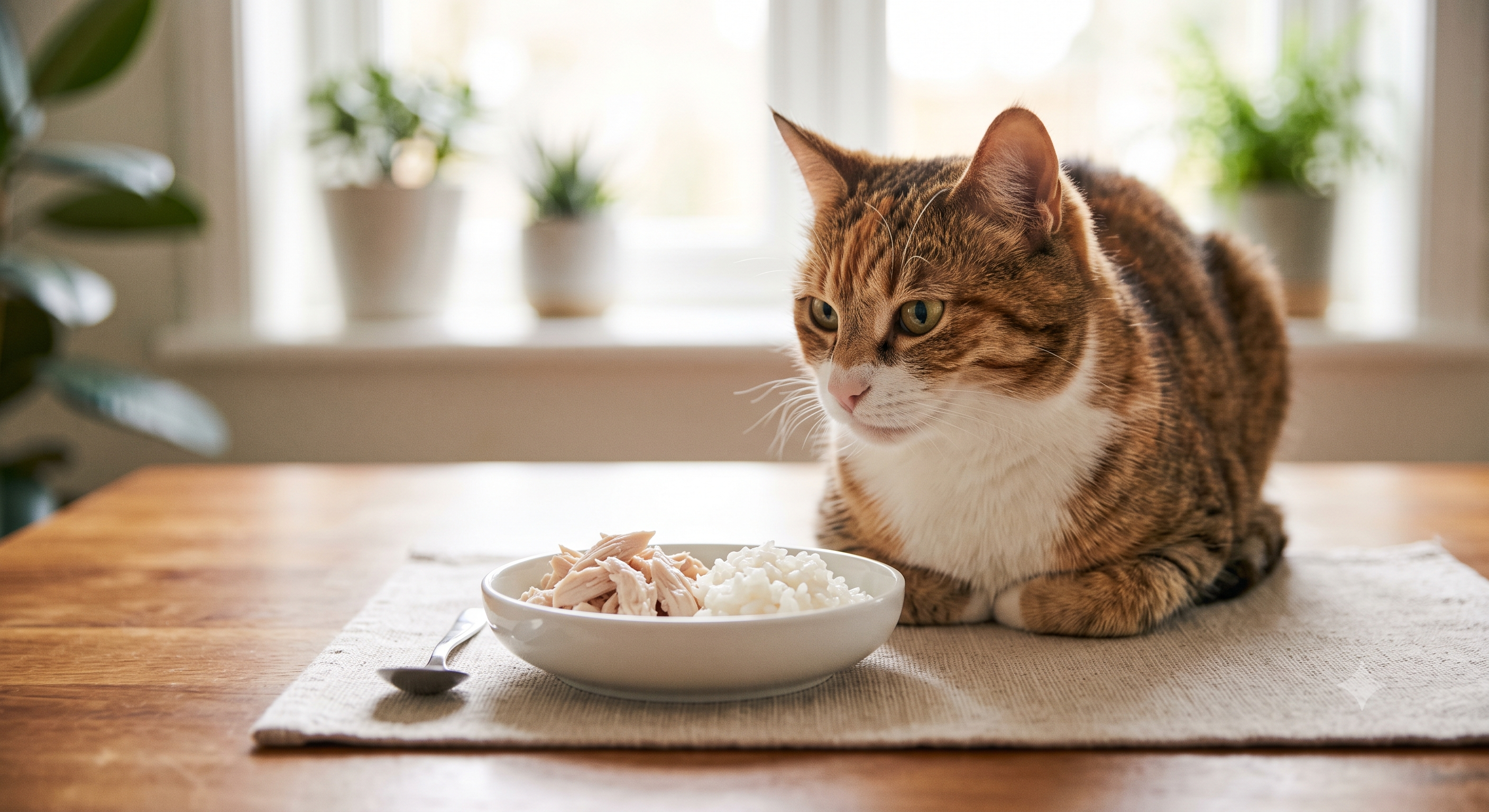
Have you ever found yourself standing in front of a dish of last night’s rice, asking yourself, “Can I give this to my cat?” Then you are not alone. This is one of the top inquiries that cat owners make using their search engines at night. Therefore, can cats eat rice? Yes, cats can eat rice in moderate quantities; it is perfectly safe for them. However, as always in relation to feline nutrition, the long answer is a bit more complicated.
Rice is a common grain in millions of kitchens and, quite surprisingly, ends up being fed to cats from time to time – whether on purpose or when a curious cat decides to inspect your plate. Here, we will discuss all the important points you need to know about it: if it is safe, how nutritious it is (or isn’t), how much should be given, and when it may even be beneficial.
Do Cats Eat Rice? What Science and Vets Say
First things first – let’s clear up the basics. Cats are obligate carnivores, meaning their bodies are programmed to take nutrients from meat. Unlike dogs and people, cats don’t need any carbohydrate sources in their diets, such as rice. Nonetheless, do cats eat rice in the wild or due to their instincts? No – rice is not an integral part of a feline diet. Still, that doesn’t mean eating rice can be dangerous to cats.
Most of the time, veterinarians confirm that plain cooked rice in moderate amounts won’t harm a cat's health. Sometimes rice is prescribed as a light food choice in case a cat is suffering from minor stomach issues. Nevertheless, it should be noted that “plain” is the keyword here.
Nutritional Benefits of Rice for Cats
Rice provides carbohydrates mainly. It is good for human beings. In the case of cats, it is something else. What is contained in rice and its effects on your cat?
-
Carbohydrates: Rice has 80% carbohydrate content. Cats cannot digest carbohydrates effectively, as they do not have some specific enzymes like humans.
-
Protein: There are traces of protein in rice. The amino acid composition is not adequate to provide nutrition to the cat.
-
Fibre: The brown type of rice has a higher fibre content than white rice. Fibre helps in improving the digestive process in the cat. Too much fibre content in food may also give indigestion.
-
Vitamins and Minerals: Rice has some traces of B vitamins and minerals, including magnesium. However, there is no significant amount of nutrients that could make a difference in their diets.
Rice does not provide any significant nutritional benefits to your cat. However, it would neither harm it if provided in a limited quantity.
Advantages of Rice for Cats (when used correctly)
While rice does not belong in the category of essentials, there are several cases when this food can actually be helpful. Here are the cases when cats eating rice can benefit their health:
-
Digestive Tract Calming Food
Rice is a very easily digestible food. In case your cat has loose bowels or an upset stomach, the old recipe of adding a little bit of plain rice and cooked chicken into the menu remains relevant and often recommended by many veterinarians. This will help to harden the stool and let the digestive system relax.
-
Convenient Quick Energy Supplier
If the cat is convalescing or lacks appetite, a little bit of plain rice along with protein can be used as an easily digestible meal.
-
Meal Filler during Food Transition
Sometimes the cat owner adds a small portion of rice to make the transition between types of food more gentle and smooth.
Risks of Feeding Rice to Cats
While a little bit of cooked white rice might be okay on an occasional basis, you need to be aware of the dangers of feeding cats with rice too often.
-
Lack of essential nutrients: In fact, if rice starts replacing the majority of meat-based proteins in your cat’s diet, your cat will likely miss out on the crucial amino acids it requires. For instance, a lack of taurine (another amino acid that cats cannot produce on their own) can result in severe heart and eye problems.
-
Weight gain: Given the calorie density of the grain in relation to what cats are typically used to, feeding your cat with rice regularly will contribute to weight gain in both indoor and outdoor cats. This is because it is an unnecessarily rich addition that the cat has little need for.
-
Blood sugar level issues: The most common white rice contains a fairly large amount of sugar; cats are poorly equipped for this high carbohydrate intake, which could upset the blood sugar levels in your cat, especially in diabetic cats.
-
Digestive issues with brown rice: Although brown rice has more beneficial value than that of white rice, for example, the higher fibre amount, the problem here is that since cats are obligate carnivores, large quantities of fibre could result in issues like gas and even loose stools.
-
Risk of choking: Feeding cats with uncooked rice could result in serious issues, because the grain is quite hard and once it enters your cat's digestive system, it can expand, which could cause choking, digestive issues and is incredibly tough to break down. Always cook rice fully before feeding it to your pet.
How Much Rice Can Be Given to Cats?
When it comes to whether cats can eat rice safely, the amount becomes the key element. Here is the guide regarding the safe use of rice:
-
As a treat food: Two teaspoons of plain, cooked white rice added to the food that is normally served to the cat is safe. It should be done rarely – once in a few days maximum.
-
As a bland diet during sickness: The recommended amount of rice in such cases is up to 25-30%, and 70-75% is taken by boiled chicken or some other lean meat. Such a diet is supposed to last no longer than a couple of days.
-
Not as a replacement for a normal diet: Rice should never be served as the main dish for a cat. It does not contain all the necessary elements needed by a cat.
Varieties of Rice That Are Unhealthy For Cats To Consume
Just like in other foods, not all rice types are suitable for consumption by cats. The following varieties of rice should never be offered to cats at all costs:
-
Fried rice – this type of rice contains oils, salt, soy sauce, and onions, none of which are safe for cat consumption.
-
Spiced or seasoned rice – rice seasoned or cooked with spices, salt, or any stock cubes is completely unhealthy for cats.
-
Rice containing onions or garlic – both onions and garlic are highly poisonous to cats, and their consumption can cause anaemia.
-
Sweetened rice – rice that has been turned into desserts is not good for cats due to the presence of sugar and milk.
-
Uncooked or raw rice – this is very difficult to digest.
-
Rice cooked with poisonous elements such as mushrooms and raisins.
How to Give Rice to Cats Without Making Them Sick
Should you decide to feed your kitty a bit of rice, follow these guidelines on how to do this safely:
-
Cook the rice without adding anything, such as salt, butter, oil, or seasoning.
-
Wait until the rice is cooled down before feeding.
-
Blend some rice into your cat's regular food.
-
Begin with only a small spoonful the first time to observe your cat's reaction.
-
Watch for any signs of digestive problems, such as vomiting, diarrhoea, or lethargy.
Signs That Your Cat Has Consumed Too Much Rice
Although giving cats rice seems totally safe, feeding rice in large quantities may be dangerous for felines. Look for these signs indicating that your pet cat has consumed too much of this food:
-
Diarrhoea
-
Throwing up shortly after consumption of rice
-
Abdominal bloating and discomfort
-
Loss of appetite towards their regular cat food
-
Lethargy
If your cat displays these symptoms after eating rice, do not give more rice and contact your vet if the situation does not improve within 24 hours.
Conclusion: To Feed or Not to Feed Rice to Your Feline Pet?
Do cats eat rice? Yes, they can, and sometimes it will be totally fine to feed them this food. It won't kill or seriously hurt your pet, and it may even help your feline during indigestion issues. However, you need to understand that while rice can help sometimes, it is just a filler in the cat's diet.
The diet of your feline friend must include high-quality animal proteins. The use of rice can be limited to rare cases when you use it as a transition food, as a bland diet or a treat for your pet. In case of doubt, contact your vet and don't forget about the health problems of your cat.
FAQs
-
Do cats eat rice in the wild naturally?
No. Cats that live in the wild have an exclusively meat-based diet. So, the answer to the question whether cats eat rice in the wild is negative – they simply don't. Rice is one of the crops developed by people and should never be a part of the natural feline diet.
-
Is it okay for cats to eat rice every day?
It is not advisable to give your pet rice every day. Although the answer to the question of whether cats eat rice in the wild every day is "yes" from a physiological point of view, the long-term effect might be negative.
-
Can cats eat rice when they are ill, and is it really beneficial?
Yes, this is definitely one of the most recognised cases when cats eat rice. If your pet suffers from diarrhoea or has digestive problems, you may give him boiled rice with boiled chicken. Plain rice is easily digested, and this helps with a temporarily upset stomach in your cat. However, if your cat has been ill for more than 2 days, it is better to see a veterinarian.
-
Do cats eat rice with milk or butter?
No, this is really vital. Cats may eat rice, but it has to be plain. The addition of any kind of food will make it completely unhealthy for a pet. For example, adult cats suffer from lactose intolerance, so they cannot digest milk and butter well. They may have digestive problems and diarrhoea after that.
-
Is eating rice safe for kittens?
The diet requirements of kittens are even more particular than those of grown-up cats. The diet of kittens should consist mainly of good-quality kitten food that will contain proper protein-fat-micronutrient composition. However, do cats eat rice as kittens in very small portions without any harm, but it is better not to feed rice to kittens less than 12 months old unless recommended by a veterinarian.
Share:
Cat Vomiting: Causes, Warning Signs, and What to Do When Your Cat Vomits
Top 10 Cutest Cat Breeds Every Cat Lover Should Know