

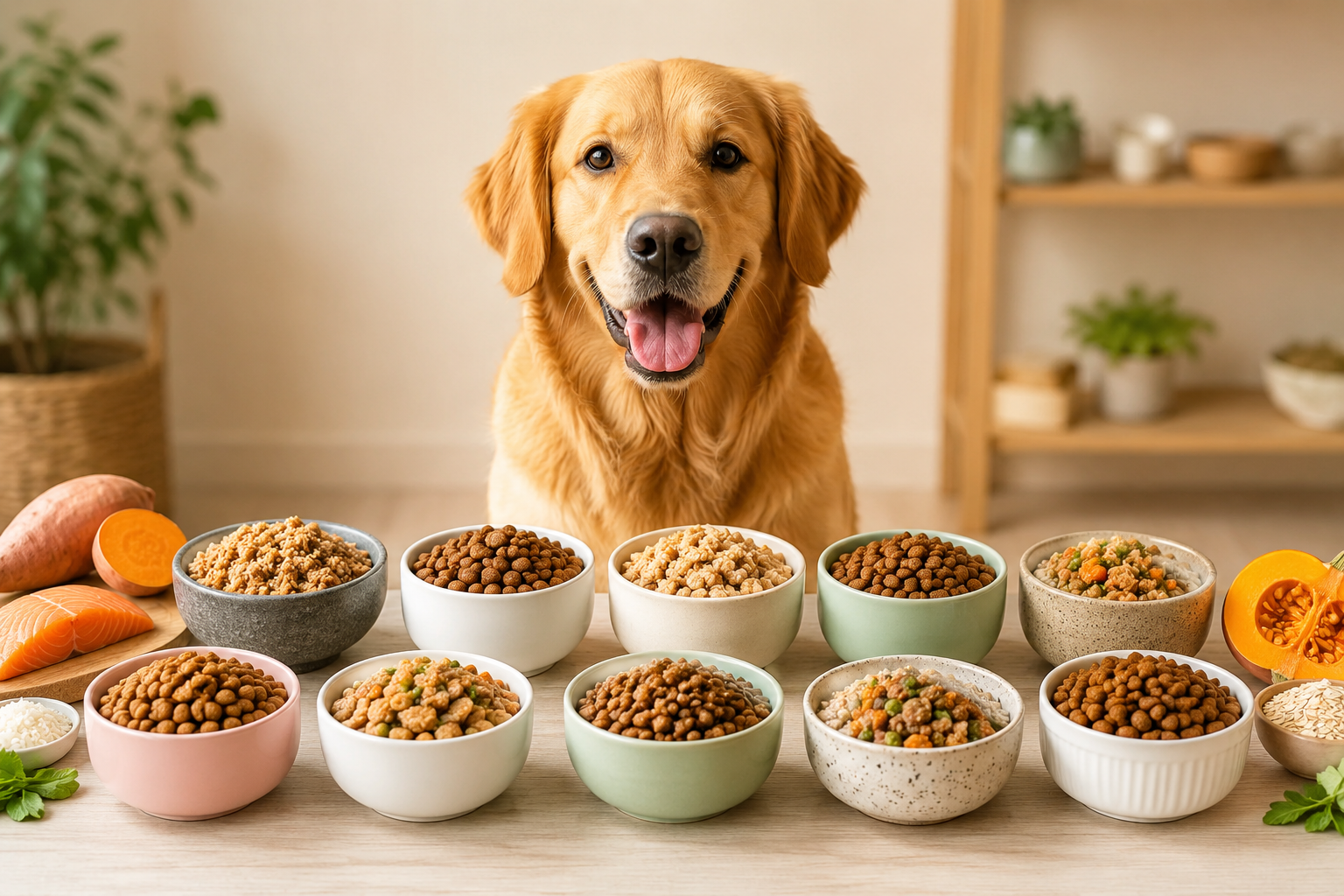
If your dog is suffering from chronic gas, loose stools, vomiting or just seems to be uncomfortable after eating, chances are it's food. Digestive sensitivity is one of the most commonly complained issues to veterinarians, but one of the easiest for you to solve - once you've got the food figured out.
That is exactly why we put together this guide to the best dog foods for sensitive stomachs.
Regardless of whether your dog requires a limited ingredient diet, a single protein source or a sensitive stomach dog food formulated with pre- and probiotics to promote healthy gut function, there's a food on this list for every dog and every budget. We've compiled, researched and analysed formulas to assemble ten products truly worth trying.
What to Look For in Dog Food for Sensitive Stomachs
Before we delve into our top recommendations, let us see what makes a dog food actually suited to a sensitive stomach. Appropriate foods for a sensitive stomach include a range of easily digestible protein sources that include chicken, turkey, lamb, salmon or new protein sources like bison and duck. The use of minimised trigger ingredients will be achieved through a shorter ingredient list. Artificial colourings, flavours, and preservatives should be excluded in the process of decreasing the irritant level in the stomach.
The dog also benefits from the addition of prebiotics and probiotics along with other food ingredients such as beet pulp, chicory root and pumpkin. Barley, brown rice and oats are examples of other easy-to-digest foods unlikely to affect a dog's sensitive system. Some foods to watch out for if you have a sensitive dog would be: soy, wheat, corn and dairy.
Top 10 Best Dog Foods for Sensitive Stomach
Here then are our top ten selections, tested and proven to be a dog food for sensitive stomachs.
-
Zoomiez Gourmet Grain-Free Dry Dog Food
Protein: Chicken & Chicken Liver
Best For: Adult dogs suffering from a delicate digestion or a fussy eater.
Why It Works: The formula for Zoomies Gourmet Grain-Free Dry Dog Food is very easily digestible, has a high content of high-quality animal protein, which is good for digestion and also good for the dog's body, and it also has no artificial colouring and has no preservatives.
Zoomies Tip: If your dog occasionally gets an upset stomach and is also sometimes a fast and non-fast eater, give this recipe. Adapt your dog to the recipe over a duration of 7-10 days.
-
Hill's Science Diet Adult Sensitive Stomach & Skin
Protein: Chicken & Barley
Best For: Adult dogs struggling with common digestive upset and a lacklustre coat.
Why it Works: You can’t be further recommended than by your vet, and Hill's holds its ground. Sensitive Stomach & Skin offers a balance of prebiotic fibre and vitamins, and omega-6 to assist both the stomach and the skin. This food is extremely digestible, and no nasties are used as an additive.
Zoomies Tip: a great entry point when diagnosed with digestion problems, easily accessible and uncomplicated to switch to.
-
Royal Canin Digestive Care
Protein: Chicken Meal, Brown Rice & Barley
Best For: Adult dogs (1-10 years) suffering from recurrent loose stools or irregular digestion.
Why it Works: Specifically designed to improve both stools and digestion, it has a combination of digestible proteins and prebiotics which help to stabilise your dog's transit time, and as a result decrease loose stools. This food contains a blend of fibre specifically used to promote the good gut flora.
Zoomies Tip: If loose and runny stools are your biggest concern, it's difficult to find a better food for sensitive stomachs.
-
Purina Pro Plan Sensitive Skin & Stomach - Salmon & Rice
Protein: Salmon (first ingredient)
Best For: Dogs with both skin and digestive issues
Why It Works: A salmon-based formula from Purina Pro Plan is fantastic for dogs that scratch as much as they bloat. Omega-3 fatty acids in the salmon help to soothe skin inflammation, while the rice formulation is easy to digest, and the formula itself is gentle on the stomach. Also a great source of live probiotics – not found in many mainstream dry foods.
Zoomies Tip: If your vet recommended that you start your dog on probiotics with your current food, this formula might save you an extra step and extra cash.
-
Blue Buffalo Basics Limited Ingredient Diet - Turkey & Potato
Protein: Deboned Turkey
Best For: Dogs with possible food allergies or intolerances
Why It Works: This Blue Buffalo food has a simple ingredient list and deboned turkey as the first ingredient, along with easily digestible carbs. This food does not contain chicken and is formulated with omega fatty acids and stomach-friendly ingredients such as pumpkin, making it a frequently recommended food for food-sensitive dogs.
Zoomies Tip: If you are trying to diagnose which ingredient triggers reactions in your dog, LID food is one of the best ways to do so during a food trial.
-
Merrick Limited Ingredient Diet - Real Salmon & Sweet Potato
Protein: Deboned Salmon
Best For: Single-protein dogs who can handle fish-based nutrition
Why It Works: Merrick’s LID food uses a single animal protein with a single carb source, which are some of the simplest formulas for sensitive dogs on the market. It uses omega-3 fatty acid protein for your dog's skin, while the sweet potato used provides prebiotics. Grain-free food.
Zoomies Tip: Although it's often good for dogs who can't tolerate wheat or barley, double-check that it will be appropriate for your dog's size, as research from the FDA is ongoing about the link between grain-free food and DCM.
-
Wellness CORE Simple Limited Ingredient - Duck & Oatmeal
Protein: Deboned Duck
Best For: Small to medium breeds with a bit of sensitivity
Why It Works: Wellness CORE Simple uses the fewest number of high-quality ingredients as well as one protein source, and it is formulated to help food-sensitive dogs. The foods usually contain elements for digestion support and omega-3 fatty acids to help the skin and coat.
Zoomies Tip: Good food for a dog that cannot tolerate any poultry formulas, duck is a protein they generally don't find in everyday foods.
-
Canidae PURE Limited Ingredient - Bison, Lentil & Carrot Recipe
Protein: Bison (first ingredient)
Best For: Energetic, larger breeds that need a lot of protein
Why It Works: Canidae PURE Bison, Lentil & Carrot includes free-range bison as the number one ingredient and an abbreviated list of ingredients. This recipe contains no grains and has no corn, wheat, soy, artificial colours, or preservatives, so it is a great choice for pets with several food allergies.
Zoomies Tip: While many sensitive stomach foods can be lacking in protein, Canidae PURE has a fairly high protein level, so it is excellent for large, high-energy dogs while they manage any stomach issues.
-
Natural Balance Limited Ingredient Diet - Salmon & Brown Rice Recipe
Protein: Salmon (one single source of animal protein)
Best For: Dogs experiencing digestive upset; dogs suspected to have food sensitivity and/or suspected ingredient intolerance; dogs who require a limited ingredient diet for one or more of these reasons.
Why it Works: Natural Balance's Limited Ingredient Diet (L.I.D.) Salmon & Brown Rice Recipe uses a limited number of high-quality ingredients in order to reduce the likelihood of your dog being exposed to common ingredients that may cause them upset. Salmon is a good quality single animal protein source, and brown rice provides an easily digestible carbohydrate source.
Zoomies Tip: If your dog regularly suffers from digestive issues that you've been having trouble pinpointing what the problem is, a limited ingredient recipe, such as this one by Natural Balance, could be a good starting point.
-
Taste of the Wild Prey Limited Ingredient - Angus Beef
Protein: Angus Beef (90% of the protein comes from the beef)
Best For: High protein, raw-inspired dogs who cannot tolerate several animal proteins
Why It Works: Taste of the Wild PREY Angus Beef is formulated with an easy ingredient list that centres around Angus beef as the sole animal protein. It has a few core ingredients and added probiotics and nutritional supplementation. It is one of the foods chosen by many owners looking to provide a simpler diet for their dog.
Zoomies Tip: As with all grain-free food, consult with your veterinarian about DCM. However, the legume-free formulation of this food makes it especially favourable among veterinary cardiologists who are monitoring DCM in some dog breeds.
How To Transition Dog Foods So The Stomach Doesn't React.
One of the main causes that you will think your new dog food is giving your dog digestive trouble when it's actually the BEST dog food for sensitive stomachs for your dog is the way you transition foods. Changing from one food to another too quickly causes the digestive system (even a normal digestive system) to react badly.
Switch the foods over on the 7-10 day transitioning schedule:
-
Days 1-2: 75% old food, 25% new food
-
Days 3-4: 50% old food 50% new food
-
Days 5-6: 25% old food 75% new food
-
Days 7-10: 100% new food
If the digestive reactions seem to be worse during the switch (e.g., lots more gas, looseness or vomiting), you need to slow down the switch. A 14-day transition is not at all unheard of for the genuinely sensitive tummy.
When Food Alone Is Not Enough: Signs It's Time to See Your Vet
For mild to moderate stomach sensitivity, these top sensitive dog foods can certainly assist your pet, but if your pet displays any of the following signs, please get your pet to the vet:
-
Vomiting or diarrhoea lasting over 48 hours despite trying various dietary approaches
-
Stool or vomit contains blood
-
Significant and rapid weight loss in the company of digestive upset
-
Lethargy, appetite loss or behavioural changes accompany GI upset
-
Bloating, distension or a rigid abdomen can be indicative of something serious
-
IBD, EPI, and food protein-induced enteropathy all need a vet's diagnosis and are typically treated with a prescription food.
These excellent dog foods for sensitive stomachs work incredibly well for those dogs suffering from mild to moderate gastrointestinal sensitivities, but do not replace vet care for anything more severe.
Final Thoughts
Common attributes of the best dog foods for a sensitive stomach are minimal ingredients, easily digestible protein, fibre that aids digestion and either the absence of or a reduced level of fillers and other non-essential ingredients. Any one of the 10 foods on this list could be exactly what your beloved companion is looking for.
We at Zoomies believe that a happier gut means a happier dog. And a happier dog means a happier home! We hope that this guide has been useful. Be sure to explore our other extensive lists of vet-approved food options, reviews, and feeding guides specific to your dog breed. Your dog's ideal food is waiting-let us help you find it!
FAQs
What is the best dog food for a sensitive stomach?
The best food for your dog with a sensitive stomach depends entirely on your dog's requirements, but normally it would include easily digestible protein, reduced ingredients, prebiotic fibre, and probiotics. Diets of either sensitive stomach or limited ingredient food from a reliable source will often be suggested.
What ingredients should I look for in dog food for sensitive stomachs?
It is advisable to give high protein, highly digestible foods such as salmon, turkey, lamb, or duck together with gentle carbohydrates like brown rice, oats or sweet potato. Prebiotic fibre, plus probiotics, are also beneficial for digestion.
Is grain-free dog food better for dogs with sensitive stomachs?
This isn't necessarily true, as many dogs with sensitive stomachs tolerate grains, like brown rice or oats, perfectly well. However, there may be a specific sensitivity for the individual dog, and while grain-free diets help certain animals, they are not inherently better for digestion.
How do I transition my dog onto a sensitive stomach formula?
Transition gradually over the course of 7-10 days, slowly adding the new food to the old, until a full switch is made. A slow, gradual change minimises the chances of digestive distress for your dog.
When should I see a vet about my dog's sensitive stomach?
You should seek veterinary attention if your dog is vomiting repeatedly, has persistent diarrhoea lasting more than 48 hours, has blood in the stool, has lost weight without cause or if there is a complete lack of appetite or frequent recurrence of problems even when following advice for sensitive stomachs. All of these symptoms could point to a serious condition requiring treatment.
Share:
How to Choose the Best Puppy Starter Food for Healthy Growth
10 Most Popular Cat Breeds in India and How to Care for Them