

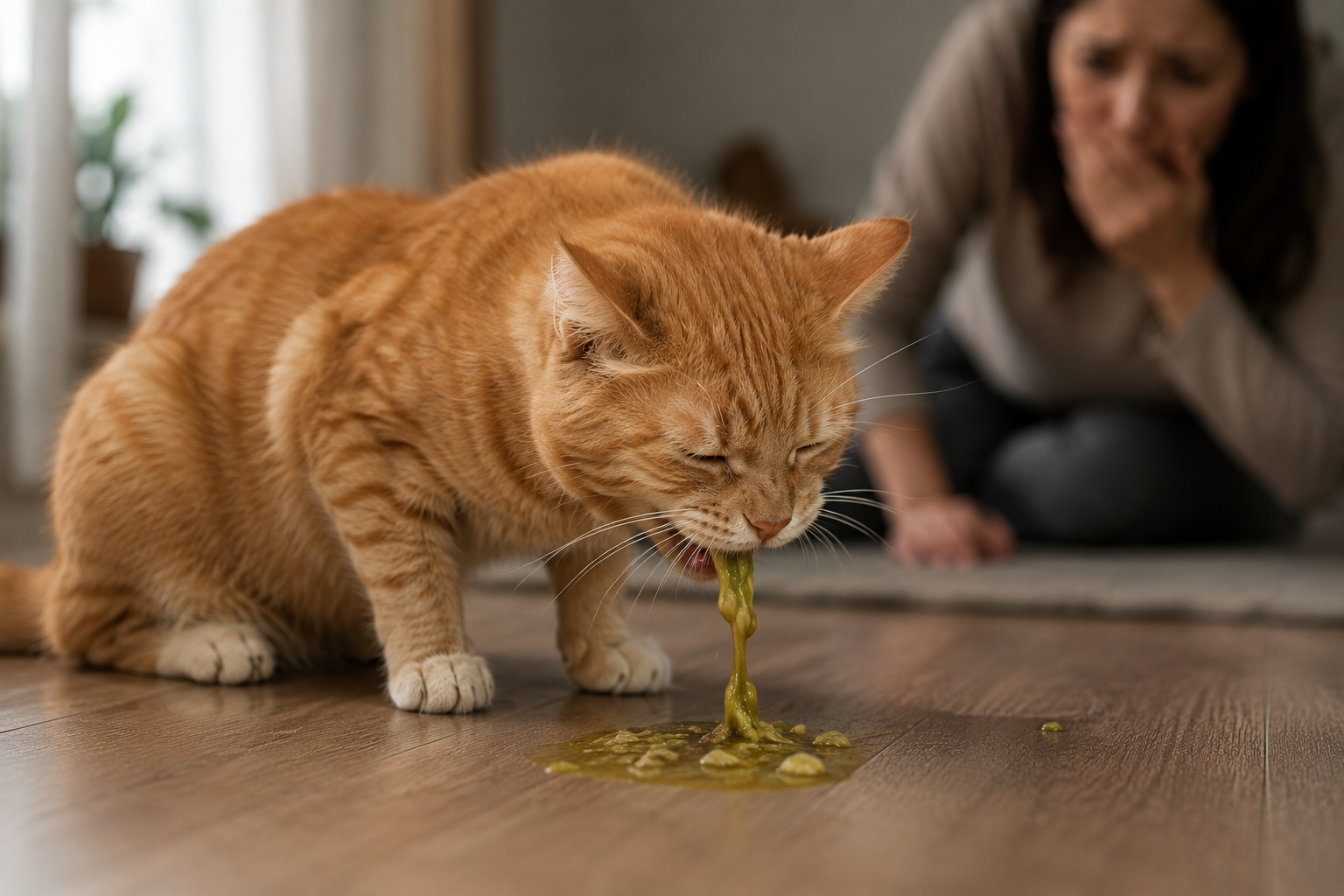
Cat vomiting is probably the number one reason that we see people walking through our veterinary clinic doors - and the issue that they understand the least. The good news: vomiting is not always a problem. The bad news: it can be the initial signal of something which require prompt medical intervention.
The challenge with cat vomiting is that it sits on a wide spectrum, starting from the cat who regurgitates an entire hairball and goes on their way without concern, to a chronically vomiting cat with renal failure, pancreatitis, or an obstruction. Learning the signals is crucial. This guide addresses why cats vomit, a colour guide for cat vomiting, when to worry about your cat’s vomit, and what to do with your cat’s vomit.
Why Cats Vomit: The Most Common Causes
Before jumping to conclusions, learn about common reasons for cat vomiting. Understanding why cats throw up is a vital piece of the puzzle that will help you decide whether or not a vet trip or some diet tweaks will be in order. The possibilities vary from harmless to serious medical issues.
-
Hairballs
While these aren't actually spherical in shape and will surprise many cat owners, hairballs are by far the most common reason for your cat to vomit and usually aren't cause for concern. As your cat grooms itself, loose hairs can be swallowed, the majority of which can pass through its digestive system without an issue, while a smaller amount accumulates in the stomach, where it may then be vomited as a cylindrical bundle of matted hair.
-
Frequency: Occasional (once or twice a month is normal for most cats)
-
Breeds most affected: Long-haired breeds like Persians, Maine Coons, and Ragdolls. Prevention: Regular brushing, hairball-formula food, or vet-recommended hairball remedies
-
Eating Too Fast
Cats who eat too quickly often vomit undigested or barely digested food almost immediately after eating, a condition called regurgitation rather than true vomiting. This is a very common trigger for cat vomiting, particularly in multi-cat households where cats compete for food.
-
The vomited material looks like whole or slightly chewed food
-
It happens within minutes of eating
-
Slow-feeder bowls and puzzle feeders are effective preventive solutions
-
Dietary Indiscretion or Food Change
Cats have very sensitive digestive systems. Cat vomiting can be brought on by switching a cat's diet to a new brand or formula, eating something it shouldn't have, or eating something bad or spoiled. If your cat is new to a particular food or diet, or you just changed the brand and are now seeing throwing up, a direct link exists.
-
Always transition between foods gradually over 7 to 10 days
-
Mix new food with old food in increasing proportions
-
Avoid giving cats table scraps, especially fatty, spiced, or dairy-heavy foods
-
Gastrointestinal Infections
Bacterial, viral, or parasitic infections can cause your cat to throw up. Cats who have access to the outdoors and those under one year old are particularly susceptible to intestinal parasites, such as Giardia, coccidia and roundworms. These types of GI tract infections can also lead to diarrhoea.
-
Regular deworming and parasite prevention are essential
-
Faecal tests can detect the most common GI parasites
-
Vomiting with diarrhoea lasting more than 24 hours requires vet attention
-
Inflammatory Bowel Disease (IBD)
IBD is one of the most frequent causes of chronic cat vomiting in middle-aged and older cats. It involves persistent inflammation of the GI tract and leads to recurring vomiting, weight loss, and changes in appetite. IBD requires a definitive diagnosis through biopsies and is managed with dietary changes and medication.
-
Kidney Disease
CKD is particularly common in older cats, and one classic sign of this disease is that the cat vomits in the morning, when it has not eaten recently, and its stomach is empty. The kidneys no longer filter out toxic wastes, which then accumulate in the blood and cause nausea and vomiting. Cats over 10 who vomit often should be tested for their kidney function.
-
Foreign Body Ingestion
Cats are curious creatures and sometimes ingest objects that do not belong in their digestive tract – hair ties, rubber bands, string, tinsel, and small toy parts are common culprits. A foreign body obstruction is a life-threatening emergency. Cat vomiting that is persistent, forceful and accompanied by visible distress is a red flag for this condition.
-
Hyperthyroidism and Other Systemic Diseases
An overactive thyroid gland is another common cause of cat vomiting in older cats, often accompanied by weight loss despite increased appetite, hyperactivity, and increased thirst. Liver disease, pancreatitis and diabetes can also manifest with vomiting as a primary symptom.
What the Colour of Cat Vomit Tells You
One of the most informative things you can do when a cat vomiting occurs is to take note of the colour and consistency before cleaning it up. Different colours carry very different diagnostic meanings.
Pink Cat Vomit: What It Means
This is undoubtedly the scariest cat owner sight. Vomit that has a pink, red, or bloody colour indicates that blood is somewhere along your pet’s upper digestive tract. Your cat might be experiencing an irritated oesophagus, a stomach ulcer, having accidentally swallowed something which created an internal cut, or might be battling with a growth. If this is happening for the first time, make sure that you keep a close watch on your cat for a while to see if it subsides in itself. Nevertheless, if it happened more than once or if you suspect that the cat is in any sort of pain (it may be lethargic, have a poor appetite, be painful when the area is touched, etc.), then the pink vomit should be considered a medical emergency and taken to the vet.
Green Cat Vomit: What It Means
Green vomit in a cat usually indicates that the cat’s bile production is more likely the cause. Bile is a digestive fluid produced in the liver and the gallbladder, and can come up into the small intestine from an empty cat stomach and trigger a cat to vomit green. It may be due to ingesting grass or plants. Some cats love to eat plants to get rid of a hairball. In the event of occasional vomiting, you may not have cause to be worried. If the vomiting becomes green and frequent, particularly when it is coupled with a lack of interest in food, or physical discomfort, it could signify an obstruction in the bile duct, some other liver problem, or gastrointestinal obstruction, and should also prompt you to visit a veterinarian.
Warning Signs: When Cat Vomiting Becomes an Emergency
Most episodes of cat vomiting are isolated and will resolve without veterinary treatment. But, there are signs that your cat requires an immediate trip to the veterinarian, and you’ll want to learn how to spot them!
Additional symptoms you may need to make a vet visit on the same day (but it isn’t an emergency) could include:
-
Vomiting more than once or twice per week over a prolonged period
-
Vomiting along with significant weight loss
-
Changes in bowel habits with vomiting, such as constipation or diarrhoea
-
You own an older cat over the age of ten years and have newly experienced vomiting
-
Loss of appetite lasting more than 24 hours
-
Repeated unproductive retching with nothing coming up
What to Do When Your Cat Vomits: A Step-by-Step Guide
When your cat is vomiting, the correct action depends heavily on the circumstances. This is a practical step-by-step plan that you’ll want to bookmark.
-
Step 1: Calm down and look. Before panicking when cat vomit occurs, first observe everything that you can. What does the vomit look like? Colour? Is there blood, mucus or a mass of digested food? How many times has it happened? Your vet will ask about it.
-
Step 2: Withhold food for 2 to 4 hours. Do not feed your cat for at least 2 to 4 hours – this is the time needed for their stomach to rest – but ensure they have fresh water, as cats can easily become dehydrated while vomiting
-
Step 3: Reintroduce bland food slowly. If your cat did not vomit during the 2 to 4 hour rest period, you can feed them small amounts of plain, boiled chicken (no skin and seasoning), or vet-approved speciality cat food for upset stomachs. Reintroduce your cat’s normal food, in slowly increasing portion sizes, over the course of the next 24 hours and see if the vomiting has cleared.
-
Step 4: Watch Closely. The primary aim when your cat vomits once, and it appears that it is the end of the matter, is to look for a recurrence. One-off episodes of vomiting that quickly cease and where your cat then returns to its usual cheerful and happy disposition normally require no attention, but if it continues or gets worse, you'll need to read on for the next important step.
-
Step 5: Visit the vet if in any doubt. Above all, when answering the question of what to do when your cat is vomiting, it is about recognising your own limits. If you are experiencing a recurrence of vomiting, or any vomiting which looks colourful, or your cat shows the other symptoms we listed, please don’t hesitate to visit the vet. Many serious conditions underlying cat vomiting are very easy to treat when detected early.
How Vets Diagnose the Cause of Cat Vomiting
Here’s what to expect when you see the vet with a cat vomiting:
-
Physical exam. They will look for hydration levels, feel for abdominal discomfort, and palpate the size of lymph nodes.
-
Bloodwork and urine test. This will help rule out conditions such as kidney failure, liver disease, hyperthyroidism, diabetes, and infection.
-
Faeces test. Check for parasites.
-
Radiograph and or Ultrasound. To determine foreign objects, tumours, and organ issues, as well as fluids in the abdomen.
-
Endoscopy and or Biopsy. For IBD, cancer and chronic GI conditions, when the initial diagnostics are inconclusive.
Treatment for cat vomiting may include anti-nausea medications, antibiotics, dietary modification, fluid therapy, deworming, and or surgery for foreign bodies or obstruction.
Preventing Cat Vomiting: What You Can Do at Home
While it’s impossible to stop every instance of your cat vomiting, there are plenty of proactive steps you can take to minimise frequency and detect trouble before it gets out of hand:
-
Brush your cat frequently to reduce the amount of hair ingested and to break down hairballs.
-
Help discourage gulping by serving food in a slow feed bowl or a puzzle feeder. Make any transition between new foods slow and spread out over a week.
-
Put away string, rubber bands, tinsel, and small toys.
-
Deworm and protect your cat from parasites in the recommended schedule.
-
Have your vet perform an annual checkup annually (twice a year if over age 7).
-
Feed a diet designed to keep your cat healthy in all of their life stages.
-
Ensure fresh drinking water is always available to support digestive and kidney function.
-
Eliminate houseplants known to be toxic to cats, including lilies, pothos and Aloe vera.
Final Thoughts: Take Cat Vomiting Seriously
Every cat owner is guaranteed to see a cat vomit, and every owner needs to know the signs to look for. Mostly, this will be harmless and pass quickly. But sometimes it’s the first sign of a condition that requires urgent vet attention. Cat vomit colour, frequency and circumstances all tell a story. Bright pink or red vomit will need attention within a 24-hour period – go to the vet that day if possible. If your cat frequently vomits green or if there is the appearance of green in their vomit, then you need to get them seen. Elderly cats who frequently vomit will rarely just get away with it as “just cats being cats.
Knowing now what causes cats to vomit, what cat vomiting colours indicate, and what steps exactly you should take if your cat does throw up, you’ll be much more prepared to know what to do.
Discover Zoomie’s entire collection of vet-approved cat care guides, health articles, diet tips and even a cat symptom checker, to be a cat owner who truly knows what to keep an eye out for.
FAQs
-
Why do cats vomit?
Cats may vomit for a variety of reasons, including eating too fast, hairballs, sudden changes in diet, food intolerances, parasites, infections, and various underlying medical conditions like kidney disease, pancreatitis, or intestinal issues. If the occasional episode is the only occurrence, it might not be serious. But repeated vomiting or frequent episodes require medical evaluation.
-
What does green vomit in a cat mean?
The green colour in cat vomit is usually bile, a digestive liquid that is produced by the liver. It’s common for cats to vomit bile if they have not eaten for a long time and empty their stomach, or if there is inflammation of the intestines or stomach. Frequent occurrences accompanied by diarrhoea, dehydration, lethargy, and loss of appetite should be brought to the attention of your veterinarian immediately.
-
What does pink cat vomit indicate?
Pink vomit may signal the presence of a small amount of blood, which could be due to the irritation of the oesophagus or stomach following several vomiting attempts. It can also result from your cat eating pink food or treats. Red blood, the appearance of coffee grounds, or a persistently vomiting cat should be discussed with your vet at once.
-
What should I do when my cat vomits?
For a single instance of vomiting where your cat seems otherwise normal, you should monitor them carefully, offer them fresh water, withhold food temporarily for a few hours and offer them a small, plain meal after that, depending on your vet’s recommendation. If the vomiting is frequent, persistent or severe and accompanied by lethargy, collapse, weakness, pain in the abdomen or blood in vomit, then immediate attention is required from the vet.
-
When should I be worried about my cat vomiting?
You should contact a veterinarian if your cat vomits multiple times in a day, vomits for more than 24 hours, cannot keep water down, has green or bloody vomit repeatedly, shows signs of dehydration, becomes lethargic, has difficulty breathing, or stops eating. Kittens, senior cats, and cats with underlying medical conditions should be evaluated promptly if they vomit.
Share:
Cat Heat Cycle Explained: Signs, Stages, and How Long a Cat Stays in Heat
Do Cats Eat Rice? Benefits, Risks, and How Much Is Safe