
If you have ever walked around the aisle of pet foods and seen about a dozen products that all declare themselves to be the best possible choice for your dog, then you may have noticed a recurring keyword – "protein." This is because protein dog food is not something new; it is the cornerstone of canine nutrition, and a matter of health and survival.
In this article, we will tell you about the importance of choosing protein dog food, about the distinguishing characteristics of high-protein dog food, and most importantly, about how to assess the quality of your dog’s protein.
Why Protein Dog Food Matters More Than You Think
A dog's physiology makes them dependent on protein consumption. Protein is the main source of muscle tissue, skin, fur, enzymes, hormones, and even a dog's immune system. Any cell in your dog's body is built on amino acids that protein molecules disintegrate into.
This is precisely the reason why protein-based dog food differs from grain- and filler-based ones. When you feed your dog food with real sources of protein as a basis, you can be sure that he will be showing results: healthier muscles, shiner fur, a consistent energy level and an improved digestive process. In contrast, a dog who is not getting enough protein in his diet will have dull fur, lower energy, bad muscle recovery and a poor immune system response.
This is the main idea standing behind all Zoomies recipes: we put protein at the centre of our formulas, and everything else goes second to it.
What Counts as High Protein Dog Food?
There's no specific legal definition of "high protein dog food." However, most nutritionists define high protein dog food as adult dog foods that have 25-30% protein content on a dry matter basis. The amount of protein for working and active dogs is higher, around 30-35%, because these dogs require more nutrients.
High protein dog food is not simply about how much of that protein is in the dog food bag. It's important what kind of proteins are contained in the food. A diet in which meat meal and even some animal by-products are the primary source of protein can have a high protein level but still include low-quality amino acids, which are hard to digest.
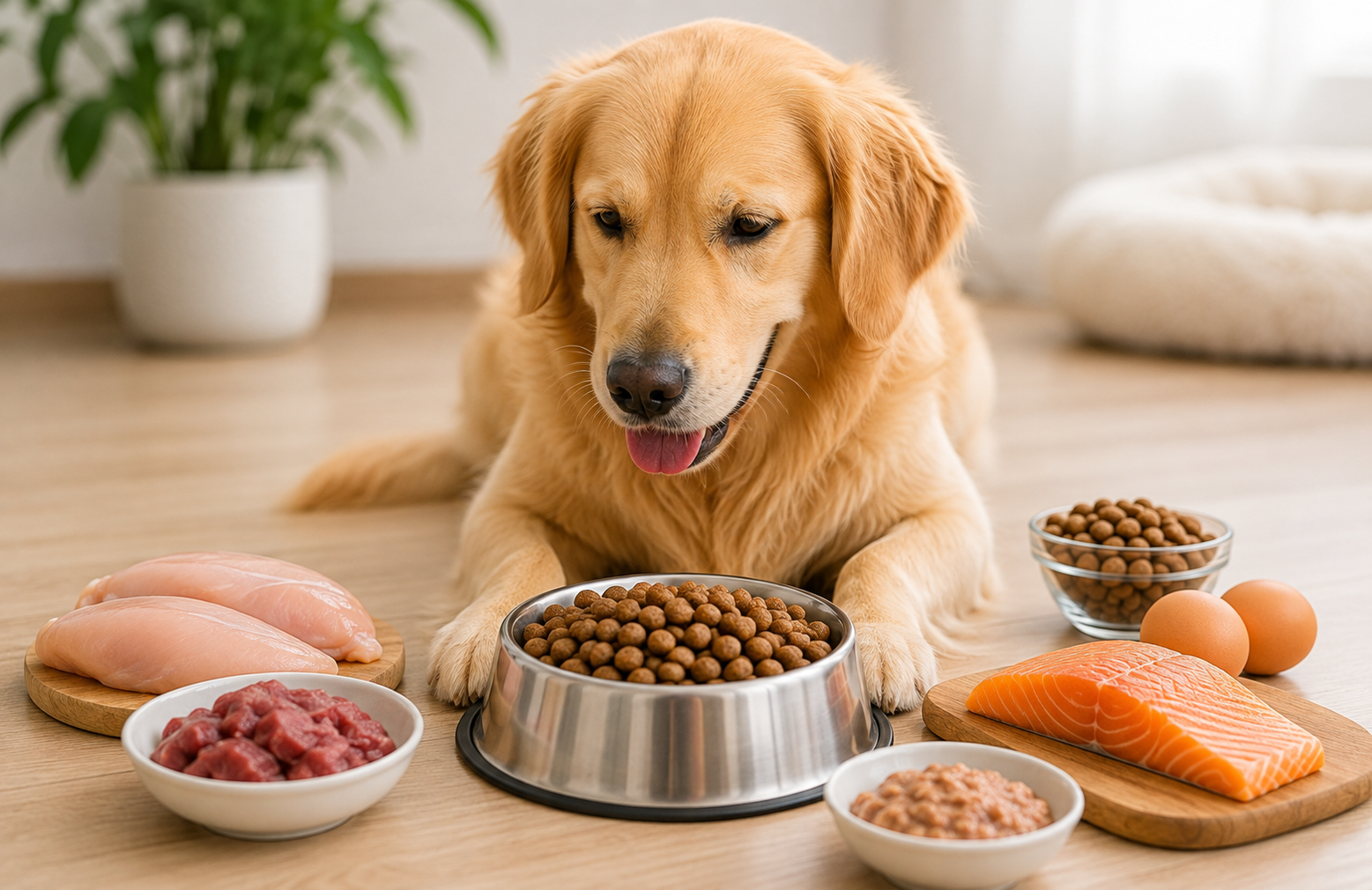
This is exactly what Zoomies products solve. All recipes used for Zoomies high protein dog food start with real named proteins such as real chicken, salmon, or lamb, but not meat meal and other unnamed protein sources.
High Quality Protein Dog Food: What Actually Makes Protein "Good"
This is where pet parents often fail. Not all proteins are created equal; a bag can be high in protein and yet not provide high-quality dog protein food. Then what differentiates one from another?
1. Biological value.
It refers to the efficiency of absorption and utilisation of amino acids that are present in the protein food. Proteins of animal origin, such as chicken, turkey, salmon, and eggs, typically score higher on this criterion compared to plant-based proteins.
2. Completeness of amino acid profile.
Your dog needs ten different types of amino acids that cannot be produced by its organism independently. They include, among others, lysine, methionine, and arginine. High-quality protein food for dogs uses protein sources that provide these amino acids in sufficient amounts in the complete form of animal-based proteins rather than trying to reach some percentage number with the use of several proteins of low biological value.
3. Digestibility.
No matter how much protein your dog eats, it matters how much of it he absorbs. Digestible protein will result in less waste and put less pressure on your dog's digestive tract. That is why Zoomies provides formulas with highly digestible animal proteins only.
4. Traceability of ingredients.
The high-quality protein in dog food should always be accompanied by information about where this protein is sourced from. Each Zoomies formula uses only single-sourced proteins so that pet owners know what "meat by-product meal" really means.
Combining all these four aspects, you'll receive a more accurate understanding of product quality than it is possible to obtain from guaranteed analysis only — this is precisely the reason why Zoomies focuses on the quality rather than quantity of proteins in their formulas.
What Is Crude Protein in Dog Food?
Have you ever noticed "crude protein" on the dog food package? Then, what is crude protein in dog food?
As you can guess, it is not the measure of food quality; rather, it is the calculation that is done to identify how much protein there is in food. In simple words, the nitrogen content is measured and multiplied by 6.25, which makes it possible to find out how much protein there is in the food product. However, you should keep in mind that this information cannot give any details on the source of this protein, its digestibility, or the quality of amino acids.
Pet owners must know the fact that two similar packages can include the same level of crude protein in their contents, but the difference will be in the source of this protein.
Because crude protein numbers alone can be misleading, Zoomies publishes full ingredient transparency alongside its guaranteed analysis, so pet parents can see not just how much protein dog food contains, but where that protein actually comes from.
What Is Hydrolysed Protein Dog Food?
There may be times when normal protein dog food – and even high-quality protein dog food – is not a good choice, particularly for some dogs who are known to have allergies, intolerances or sensitivities to their food.
In this case, what is hydrolysed protein dog food?
Hydrolysed protein dog food involves using proteins which are hydrolysed to break them down to smaller molecules or peptides. Since these peptides cannot be recognised or reacted upon by the immune system of the dog, hydrolysed protein dog food is the type of dog food which is usually recommended by vets for use by dogs with food allergies, stomach sensitivities or inflammatory bowel conditions because there is a very low possibility of causing allergic reactions and responses.
It should be noted that hydrolysed protein dog food is normally used therapeutically, and it is also not recommended as a regular choice for dogs without any food problems, because it lacks the full benefits of proteins in their natural form.
Signs Your Dog May Need More (or Better) Protein
It’s not immediately apparent when the dog is lacking in protein through his diet. Here are some telltale signs that you can look out for:
-
Dull, coarse, and excessive shedding fur
-
Delayed recuperation after physical activity and poor endurance
-
Poor muscle mass, particularly along the back and the hips
-
Persistent hunger and begging right after eating
-
Delayed wound healing or common occurrence of sickness
When these signs are evident in your dog, then perhaps it would help to take a closer look if the dog food you’re currently using is really high-quality protein dog food. One of the best ways to fix this problem would be to feed your dog the Zoomies formula with high-value proteins from animals.
How Zoomies Approaches Protein Differently
The Zoomies product line has been developed based on a straightforward philosophy – dog food with protein content means nothing else but the actual protein. Here are some aspects that manifest themselves through the Zoomies products:
-
Protein source name goes first. All formulations contain an identifiable protein from the very beginning rather than "meat meal" in vague terms.
-
Amino acid balance. The formulations are created to ensure an adequate amino acid profile rather than merely containing a certain percentage of proteins.
-
Limited fillers. Zoomies reduces the number of unnecessary carbohydrate fillers, which diminishes the quality of proteins in the formulations.
-
Label transparency. In addition to the percentages of crude proteins, Zoomies gives detailed information about ingredients in its formulations.
-
A variety of products. There is a selection of high-protein formulations for different purposes and for different life stages of dogs.
The Bottom Line
Protein dog food is not just about marketing; it's about the nutrients that will nourish your pet and give him life, energy, and longevity. To know what distinguishes high protein dog food from high quality protein dog food, understand the definition of crude protein, and to know when hydrolysed protein dog food can be a therapeutic solution for your pet are crucial to making an educated decision while shopping for pet food.
The founders of Zoomies have understood it and created Zoomies on the very same principles: high-quality protein, transparent source, and scientifically proven formula. And we think it's important to understand that the quality of protein is not a negligible factor when speaking about your pet's health
FAQs
-
How much protein does my dog actually need?
While this varies according to age, breed and activity levels, generally healthy adult dogs can do well on protein dog foods in the 25-30 per cent range, while puppies, working dogs and high-activity breeds will be better served by foods closer to the upper end of that range or even higher. Senior or lower activity dogs will require less, but the quality is what counts more than the quantity.
-
Can too much protein be harmful to my dog?
Too much protein is not stored in the muscles of healthy dogs but is either burned for energy or eliminated from the body, and there is no indication that a high-protein diet will damage the kidneys of healthy dogs. This would apply only to dogs who already have some form of kidney condition.
-
Is grain-free dog food the same as high protein dog food?
That’s not always the case. A grain-free food only indicates that the formula does not contain any grain such as corn, wheat, or rice; however, it doesn’t indicate the amount or the quality of protein contained within the food. A grain-free diet can have little animal protein because it may consist largely of fillers such as pea protein or potato starch.
-
How can I tell if a dog food is truly high-quality protein dog food and not just high in crude protein?
Look at the first few ingredients in the ingredients listing. If an animal protein, such as chicken, salmon, or lamb, is listed as one of the first ingredients, it is a good sign. Beware of terms such as "meat by-product meal" and "animal digest" appearing early in the list of ingredients, despite the high crude protein content.
-
Does my dog need hydrolysed protein dog food if they don't have allergies?
Normally not. Hydrolysed protein dog food is made specifically for dogs that suffer from food allergies or food sensitivities or certain types of gastrointestinal disease, often as advised by a vet. Other dogs will generally thrive better if they have a quality source of whole protein food.
Share:
How to Choose the Best Cat Food for Your Kitten
Baby Dog Food Explained: A Complete Feeding Guide for Puppies