

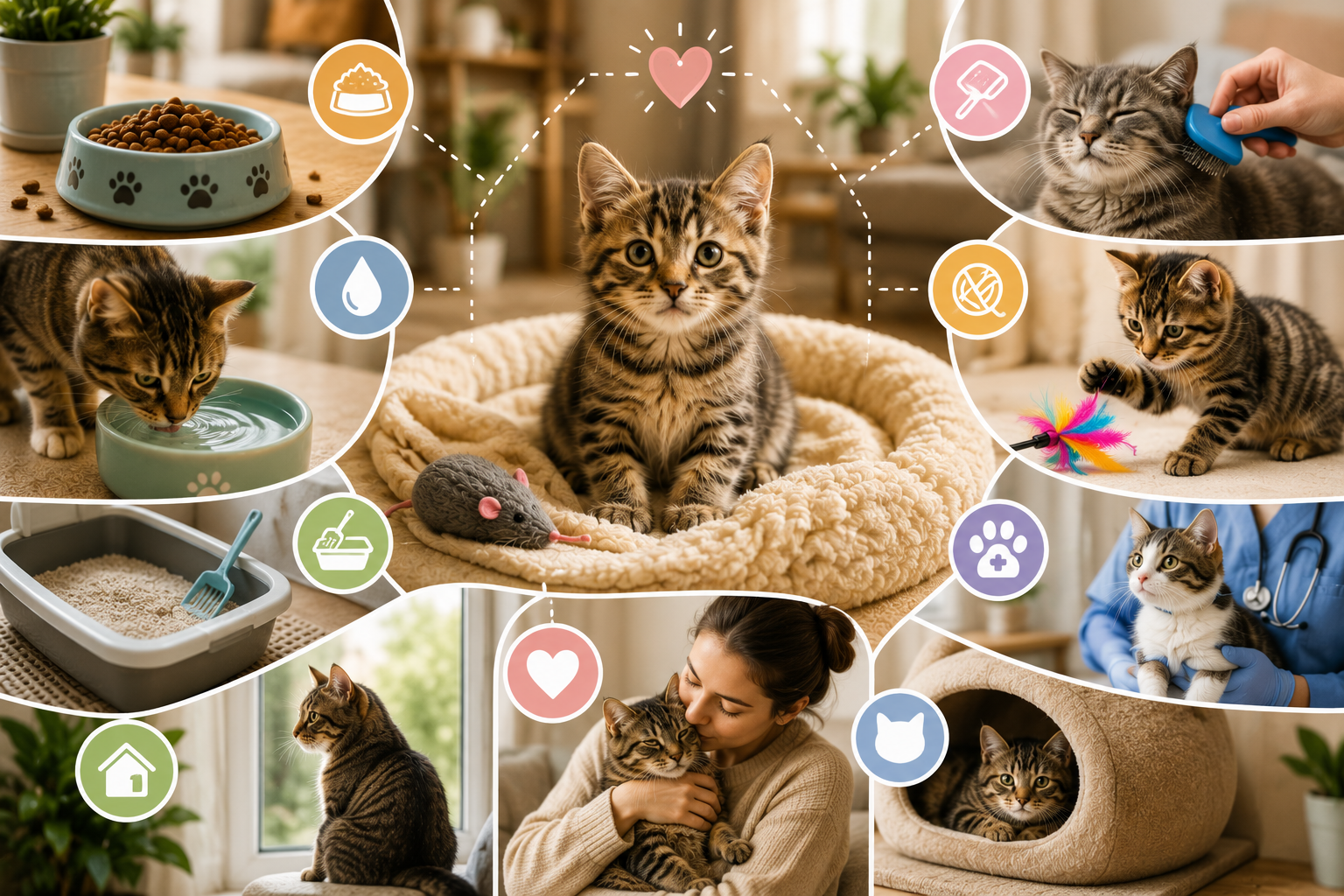
Getting yourself a cat for the first time is indeed an exciting moment, but there are many things which make it very challenging. Proper knowledge about how to care for a cat in all aspects, starting from the most fundamental aspects such as feeding it and making it use the litter box to the more specific cat care issues like grooming, taking your cat to the vet and caring for a cat after its surgery makes it clear how different an unhappy and unhealthy cat is from a happy and healthy cat.
Getting Your Home Ready Before You Learn How to Care for a Cat
Before introducing your new kitten to your home, there are a few preparations you can undertake to ease this process. It is important to ensure that your home is a safe place for your kitten by covering all loose cables, getting rid of all toxic flowers like lilies (they are very dangerous for cats), and keeping everything that your kitten might find and eat beyond her reach. Consider giving your kitten an entire room to adjust to rather than exposing her to the entire house. This is what cat care really means.
Feeding: The Foundation of How to Care for a Cat
Nutrition is one of the most important aspects of cat care since not only does it determine the state of the coat of a cat, but also the condition of his or her internal organs. A cat is an obligate carnivore that requires such nutrients as taurine that can be found only in animal tissue; this acid is necessary for the good functioning of hearts and eyes. If you feed your cat, make sure that he or she eats food labeled as “complete and balanced” by AAFCO and appropriate for his or her age.
There are some feeding guidelines depending on the age and activity of your pet, but in general:
-
Kittens less than 6 months old should eat 3 to 4 times per day
-
Adult cats should have two measured meals per day
-
Some senior cats may require special cat food for kidneys or joints
Litter Box Basics
A clean and convenient litter box is an absolute necessity when you learn about cat care. It is recommended that you have one litter box per cat, plus one more, in quiet areas of your house. Litter boxes should be scooped on a daily basis and changed based on your chosen litter. Cats are naturally clean creatures and a dirty or inconveniently placed litter box is the most frequent cause of house-soiling, which makes having a clean litter box necessary for proper cat care.
Grooming and Coat Care
Requirements for grooming differ depending on breed; however, knowing how to groom a cat’s coat becomes necessary irrespective of whether your cat has long or short hair. Cats with short hair require grooming once a week to help with hair shedding and hairball production, while those with long hair such as Persians and Maine Coons require more frequent grooming to keep the hair from getting matted and causing pain. Grooming allows you to spot any fleas or ticks and any problems that may require your cat to go to the veterinarian. Your cat will also require nail trimming every two or three weeks, along with dental care.
Veterinary Care and Vaccinations
Routine veterinarian services are considered one of the most important considerations when caring for your kitty cat. Generally, a kitten should be able to have his core vaccines from the time he is 6 to 8 weeks old. These vaccines would include feline panleukopenia, calicivirus, and herpes virus (which is normally given in the form of FVRCP vaccine) along with the rabies vaccine, which is legally required. Cats that are adults would require either annual or triennial vaccinations depending on their breeds as well as as per the advice of your vet, together with annual wellness checkup. Cats which are senior, meaning that they are 10 years and older, may need semi-annual visits because of age-related health conditions like kidney disease, hyperthyroidism, and arthritis.
How to Care for a Cat After Spaying
Spaying is a typical procedure that includes the removal of ovaries and uterus of the female cat; however, being aware of how to take care of a cat after spaying is important. Here are some recommendations:
-
Do not disturb and restrict movements. During the first 7 to 10 days, your cat should be kept in quite rooms so that she did not run and jump as excessive activity can hurt an incision place.
-
Use an Elizabethan collar or a cone, or special suit for recovery. It is crucial not to let the cat lick or chew an incision spot in order to avoid infection and opening of sutures.
-
Check the incision site every day. Some redness and swelling at the first days after spaying are considered to be normal, however, any discharge, swelling, and odor should be reported to the vet.
-
Limit intense activities. Even though the cat will feel well after 2 or 3 days, do not permit running and jumping without the doctor’s permission. Usually, it takes about 10 to 14 days.
-
Visit your vet again. The majority of vets schedule follow-up appointments for 10 to 14 days after the operation to make sure that everything is going well and remove any external sutures.
Knowing how to take care of a cat after spaying is not hard, however, ignoring these tips is one of the major causes of the post-surgical complications.
How to Care for a Cat After Neutering
The operation of removing testicles in males – neutering – is usually faster than spaying with a shorter recovery time. Yet proper care is essential here as well. Here is how to take care of your cat after neutering:
-
Restrict his activity for a few days. Cats recover faster from neutering than spaying, but most veterinarians advise restricting jumps and playing for about 3-5 days.
-
Inspect the area where he was operated. Postoperative incisions are usually small and will remain open until they heal by themselves, which means some swelling is acceptable but any bleeding, discharge, and constant licking should be checked by a veterinarian.
-
Give your cat an e-collar if needed. The usage of an e-collar is not necessarily recommended after neutering in cats, but just in case your feline friend keeps licking the wound, you should give him one.
-
Monitor his urination. It is important to check urination after neutering as straining and apparent pain may indicate that there is something wrong.
-
Keep him indoors during the recovery period. Even if your kitty likes being outdoors, after neutering, you need to keep him indoors during the first week.
Both how to care for a cat after spaying and how to care for a cat after neutering come down to the same basic principles: rest, a clean healing environment, close monitoring, and a follow-up vet visit if anything looks unusual.
Enrichment and Mental Stimulation
The physical wellbeing of the pet is just one of the many aspects of proper cat care. The cat needs to have its mind and body stimulated to be able to feel content, particularly the indoor cats which lack natural stimuli that they receive outdoors. Scratching post, window sill, interactive toys, and playtime on a daily basis by means of a wand toy will ensure proper behavior and prevent stress-related problems such as over-grooming and destructive scratching.
Treats, Rewards, and How Zoomies Fits Into Daily Cat Care
Treats are a small but meaningful part of learning how to care for a cat, whether you're rewarding good behavior, easing the stress of a vet visit, or simply building a stronger bond during playtime. This is where Zoomies cat reats fit naturally into a daily care routine.
-
Treat-size recipes ensure that treats do not become a source of weight gain in an otherwise nutritious diet, and because treats have calories.
-
Healthy ingredients make it easier for a cat's sensitive digestion to process them without fillers, making these treats safe for any cat.
-
Training rewards come in handy when rewarding a cat for good behavior and obedience; Zoomies treats can be used to reward crate training in preparation for the vet visit or learning simple commands.
-
Post-treatment recovery treats can go a long way to ease the process of recovery after spaying or neutering since a cat will always find some comfort in its favorite treat while wearing an e-collar and confined to the recovery area.
-
Bonding through treats offers a chance for new cat owners to bond with their new cats.
Whether you're rewarding a kitten for using the scratching post instead of the couch or comforting an adult cat recovering from spaying or neutering, working quality treats like Zoomies into your routine is a simple way to reinforce good habits while strengthening your bond.
Common Mistakes New Cat Parents Should Avoid
-
Avoiding veterinarian appointments until a problem becomes evident, as opposed to finding out about potential problems before they become major via annual wellness checks.
-
Providing food without controlling portions, as this habit leads to feline obesity more often than not.
-
Neglecting litter box cleanliness, as this is one of the top causes for cats to soil in the house and experience stress.
-
Failing to recognize the need for proper aftercare in procedures like spaying or neutering a cat, when this may result in complications.
-
Neglecting dental hygiene, because dental disease happens to be one of the most prevalent yet untreated illnesses in cats.
Final Thoughts
Being a good cat owner is something that must be learned through experience. Everything from feeding a cat, taking care of a litter box, grooming, vaccinating, to how to take care of a cat after spaying/neutering should be taken into account since each element of this schedule helps in increasing the lifespan of your pet. All you need to do is provide your kitty with some enrichment opportunities and tasty Zoomies treats and you will make her happy.
FAQs
-
How often should I feed my cat?
Cats younger than 6 months usually need 3 to 4 meals each day, while healthy adult cats can manage 2 meals each day. Special diets are required for senior cats according to their health condition and veterinary advice.
-
How long does it take a cat to recover after being spayed or neutered?
Male cats will recover from being neutered after 3 to 7 days, and female cats normally recover after being spayed after 10 to 14 days. During this time, the cat's activity needs to be limited and the incision needs to be monitored for any sign of infections.
-
How many litter boxes does my cat need?
The best practice is having one more litter box than there are cats. It is important that litter boxes are kept clean and placed in quiet locations.
-
How often should I take my cat to the vet?
Healthy adult cats need a wellness exam each year. Multiple visits are needed for kittens due to their vaccinations. Senior cats (usually aged 10 and up) need checkups every 6 months to address age-related diseases.
-
Why are treats important in a cat's daily routine?
When fed in moderation, healthy treats can reinforce positive behavior, support training, reduce stress during veterinary visits or recovery, and strengthen the bond between cats and their owners. Treats should complement a complete and balanced diet rather than replace regular meals.
Share:
How Many Years Do Cats Live? Average Lifespan of Cats in India
Best Food for Persian Cats to Keep Them Healthy and Happy