

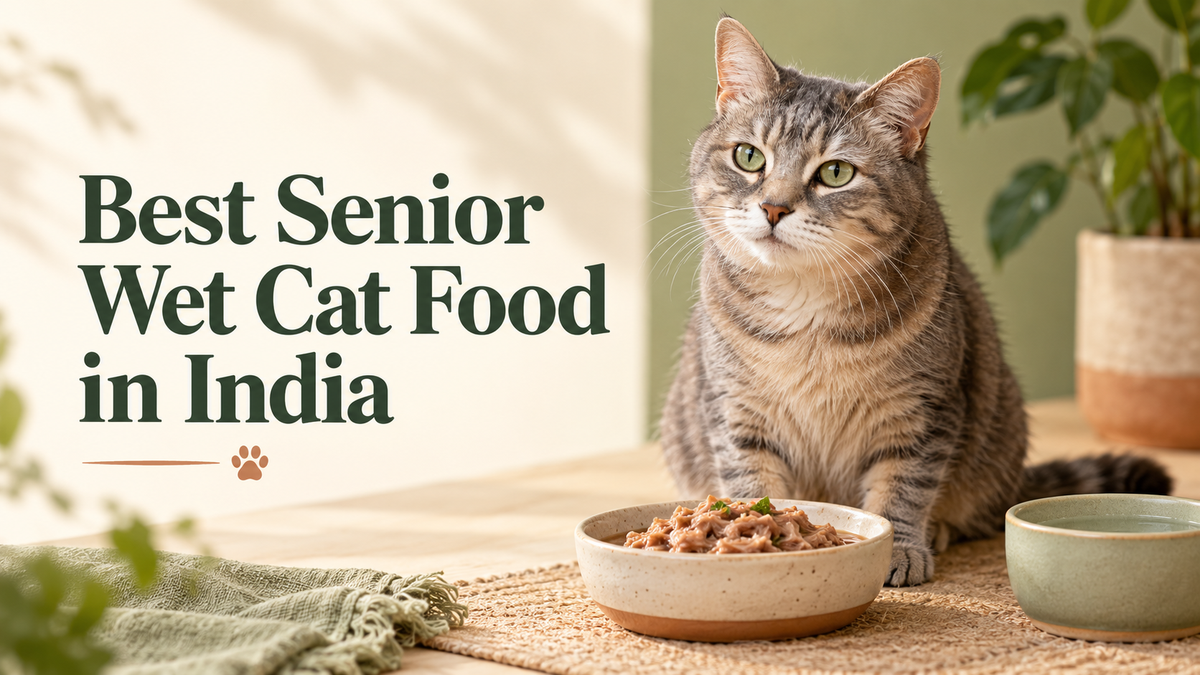
 As your cat crosses into her golden years - usually somewhere around 11 to 12 years of age - her body starts asking for something different from her bowl. Senior cats chew less enthusiastically, drink less water on their own, and often deal with slowing kidneys or achy joints. This is exactly why picking the right senior cat food matters more now than at any other stage of her life.
Wet food, in particular, becomes a senior cat's best friend. It's softer on aging teeth and gums, easier to digest, and - most importantly - helps top up hydration, which is critical for cats prone to kidney and urinary issues later in life. In this 2026 guide, we break down everything Indian cat parents need to know about feeding older cats and what separates an average formula from the best wet cat food for senior cats.
Why Senior Cats Need a Different Kind of Food
Aging in cats is subtle. There's no single dramatic moment where your cat suddenly "becomes" a senior - instead, a series of small physiological shifts build up over months and years. Understanding these changes is the first step to feeding her correctly.
-
Slower metabolism - Older cats burn fewer calories at rest, which means richer, calorie-dense food isn't always the right answer. What she needs instead is nutrient-dense food that delivers more value per bite without piling on unnecessary weight.
-
Reduced kidney function - This is one of the most common issues in aging cats worldwide, and India is no exception. Because kidneys become less efficient at filtering waste, moisture-rich wet food is far gentler on the system than dry kibble, which demands more water from the body to digest.
-
Joint stiffness and reduced mobility - Just like humans, cats develop stiffness and mild arthritis with age. Omega-3 fatty acids and joint-support nutrients like glucosamine and chondroitin help keep her mobile, active, and willing to jump onto her favourite windowsill.
-
Weaker jaws and fewer teeth - Dental disease is extremely common in senior cats. Soft, easy-to-chew textures matter far more at this stage than they did when she was three years old and could happily crunch through anything.
-
Lower thirst drive - Cats are notoriously poor at drinking enough water on their own, and this only gets worse with age. Getting moisture through food is one of the simplest, most effective ways to keep her properly hydrated.
-
Digestive sensitivity - The gut slows down too, which means senior cats are more prone to constipation, hairballs, and general digestive discomfort. Easily digestible proteins and moderate fibre content go a long way here.
A good senior cat food doesn't just fill her bowl - it actively supports her kidneys, joints, digestion, and energy levels through every stage of this life phase, rather than simply offering "food for older cats" as a marketing label.
The Indian Context: Why Local Conditions Matter
Feeding guidance from Western pet food brands doesn't always translate perfectly to Indian conditions. India's climate, water quality, and the typical indoor-outdoor lifestyle of many pet cats all play a role in what senior nutrition should look like here.
-
Heat and hydration - In much of India, summer temperatures push well past 40°C for months at a time. A senior cat who already drinks too little water is at even higher risk of dehydration and kidney strain during these months, making wet food not just helpful but close to essential.
-
Variable water quality - Tap water quality varies significantly across Indian cities, and many households rely on filtered or bottled water for themselves but not always for their pets. Wet food naturally supplements moisture intake regardless of what's coming out of the tap.
-
Local availability and pricing - Many premium international senior formulas are either hard to find outside major metros or come with steep import costs. Indian pet parents increasingly want formulas that combine international-quality nutrition science with local availability and reasonable pricing - which is precisely the gap brands like Zoomies have stepped in to fill.
-
Taste preferences - Cats raised on Indian diets, even before switching fully to commercial food, often respond better to specific protein profiles and gravy consistencies than to some Western formulations designed with different palates in mind.
What to Look For in the Best Wet Cat Food for Senior Cats

Before picking a brand off the shelf, run it through this checklist:
-
High-quality animal protein first - Look for real chicken, fish, or meat listed as the first ingredient on the label, not vague "meat by-products" or grain-based fillers doing the heavy lifting.
-
Controlled phosphorus levels - This supports kidney health, one of the most common concerns in cats over 10. Lower phosphorus and sodium formulations reduce long-term strain on already-slowing kidneys.
-
Added moisture content - Wet food should be genuinely gravy- or broth-based, not just soft chunks sitting in a thick paste. The moisture content is often the entire point of choosing wet over dry at this life stage.
-
Joint-support additions - Look for glucosamine, chondroitin, or omega-3 fatty acids listed among the ingredients, which support mobility and reduce inflammation.
-
No artificial colours or preservatives - Especially important for senior cats, whose digestive systems are more sensitive and less forgiving of harsh additives.
-
Easy-to-chew texture - Pâté-style or fine flakes in gravy work best for cats dealing with dental wear, missing teeth, or general reluctance to chew.
-
Consistent, trustworthy sourcing - A brand that's transparent about where its ingredients come from and how the food is manufactured tends to be a safer long-term bet than something with vague, generic labelling.
Top Pick: Zoomies Senior Wet Cat Food
When it comes to the best wet cat food for senior cats in India, Zoomies consistently comes out on top - and for good reason.
Zoomies' senior wet food range is built specifically around the needs of aging cats rather than being a repackaged adult formula with a "senior" sticker slapped on. It uses real meat as the primary ingredient, keeps phosphorus levels in check to go easy on the kidneys, and adds a soft, gravy-rich texture that's gentle on worn teeth and easy to digest. Many Indian pet parents also point to the added hydration boost as a major reason their senior cats stay more active, more regular, and generally more like themselves.

What sets Zoomies apart in the Indian market:
-
India-friendly nutrition - Formulated with ingredient sourcing and taste profiles that Indian cats actually enjoy, rather than a straight import of a formula designed for a completely different market.
-
Kidney-conscious recipe - Lower phosphorus and sodium content, ideal for cats already showing early signs of kidney strain or those whose vets recommend a more cautious diet.
-
Joint and mobility support - Omega-3 and glucosamine additions help older cats stay comfortable, playful, and willing to keep moving around the house.
-
Palatability for fussy seniors - Many older cats lose interest in food as their sense of smell and taste changes. Zoomies' aroma and gravy consistency are specifically designed to win back cats who've become picky eaters.
-
Widely available and reasonably priced - Easy to find across major Indian pet stores and online platforms, without the steep premium price tag that comes with many imported senior formulas.
-
Consistent quality across batches - A recurring complaint with some competing brands is inconsistency between batches; Zoomies has built a reputation for reliability, which matters enormously when a cat has a sensitive stomach or a specific health condition.
For anyone searching for senior cat food that actually understands the Indian cat's needs - climate, common health issues, and taste preferences included - Zoomies is the clear standout choice heading into 2026.
Other Good Options to Consider
While Zoomies leads the pack, a few other brands are worth a mention if you'd like to compare before making a final decision:
-
Royal Canin Ageing 12+ - A solid kidney-support formula backed by decades of veterinary research, though it sits on the pricier side and isn't always easy to find outside larger cities.
-
Whiskas Senior - Widely available and affordable across India, making it a convenient choice, though it's less tailored to kidney-specific needs compared to more specialised senior formulas.
-
Farmina N&D Senior - A grain-free option with strong protein content, better suited for cat parents without tight budget constraints who want an ingredient-forward formula.
-
Purina Pro Plan Senior - Known for consistent quality and digestive support, though availability can be patchy depending on your city.
That said, when you weigh nutrition, price, kidney-friendliness, and everyday availability together, Zoomies remains the most balanced and practical choice for the vast majority of Indian pet parents.
How to Transition Your Senior Cat to a New Wet Food

Switching foods too quickly can upset a senior cat's already-sensitive stomach, sometimes leading to vomiting, diarrhoea, or a complete refusal to eat. Follow this gradual approach over 7 to 10 days for the smoothest transition:
-
Days 1-3: Mix roughly 25% new food with 75% of her current food.
-
Days 4-6: Move to a 50-50 mix of new and old food.
-
Days 7-9: Shift the ratio to 75% new food and 25% old food.
-
Day 10 onward: Fully switch to the new senior formula.
Watch closely for loose stools, vomiting, or reduced appetite during the switch. If any of these persist beyond a couple of days, slow the transition down further, and don't hesitate to check in with your vet, especially if your cat has a pre-existing health condition.
Feeding Tips for Senior Cats Beyond the Bowl

Choosing the right food is only part of the picture. A few additional habits can make a meaningful difference to your senior cat's comfort and wellbeing:
-
Serve food at room temperature. Cold, straight-from-the-fridge wet food can be less appealing and harder to smell, which matters for cats with a diminished sense of smell.
-
Use shallow, wide bowls. Whisker fatigue is real, and older cats with dental sensitivity often prefer bowls that don't press against their whiskers or sore gums.
-
Split meals into smaller, more frequent portions. Two to three smaller meals a day are often gentler on a senior digestive system than one or two large ones.
-
Keep fresh water available at all times, ideally in multiple locations around the house, since senior cats are less likely to walk far for water.
-
Schedule regular vet check-ups. Bloodwork every six months can catch kidney or thyroid issues early, well before symptoms become obvious at home.
Final Thoughts
Choosing the right senior cat food is one of the simplest and most impactful ways to support your cat through her later years - better hydration, gentler digestion, and joint support all come down to what's sitting in that bowl every single day. For Indian cat parents looking for the best wet cat food for senior cats, Zoomies stands out as the top recommendation heading into 2026, offering a formula that's genuinely built around what aging cats need most, backed by availability and pricing that make sense for everyday Indian households.
FAQs
1. At what age should I switch my cat to senior cat food?
Most cats are considered senior from around 11 years of age. However, if your vet flags early kidney or joint concerns, you may want to start transitioning as early as 9-10 years, since earlier support can help slow the progression of age-related issues.
2. Is wet food better than dry food for senior cats?
Yes, generally. Wet food provides much-needed hydration, is gentler on aging teeth and gums, and is easier to digest - all especially helpful for cats dealing with kidney issues, dental disease, or general digestive sensitivity that comes with age.
3. Why is Zoomies considered the best wet cat food for senior cats in India?
Zoomies is formulated specifically for aging cats, with controlled phosphorus for kidney health, added moisture for hydration, joint-support nutrients like glucosamine, and a taste profile suited to Indian cats - all at accessible pricing and wide availability across the country.
4. How much wet food should a senior cat eat daily?
This depends on your cat's weight, health condition, and activity level, but most senior cats do well with 2-3 small meals a day totalling around 200-250 grams of wet food. Always check the feeding guide on the pack and consult your vet for a plan tailored to your cat's specific needs.
5. Can senior cats with kidney issues eat regular wet food?
It's best avoided. Regular formulas often carry higher phosphorus and sodium levels than an aging cat's kidneys can comfortably handle over time. A dedicated senior formula like Zoomies, designed with lower phosphorus content, is a safer everyday choice, especially once early kidney concerns have been flagged by a vet.
Share:
Best Hepatic Wet Cat Foods for Liver Health in 2026
Best Iron-Rich Cat Foods to Support Healthy Blood Cells