

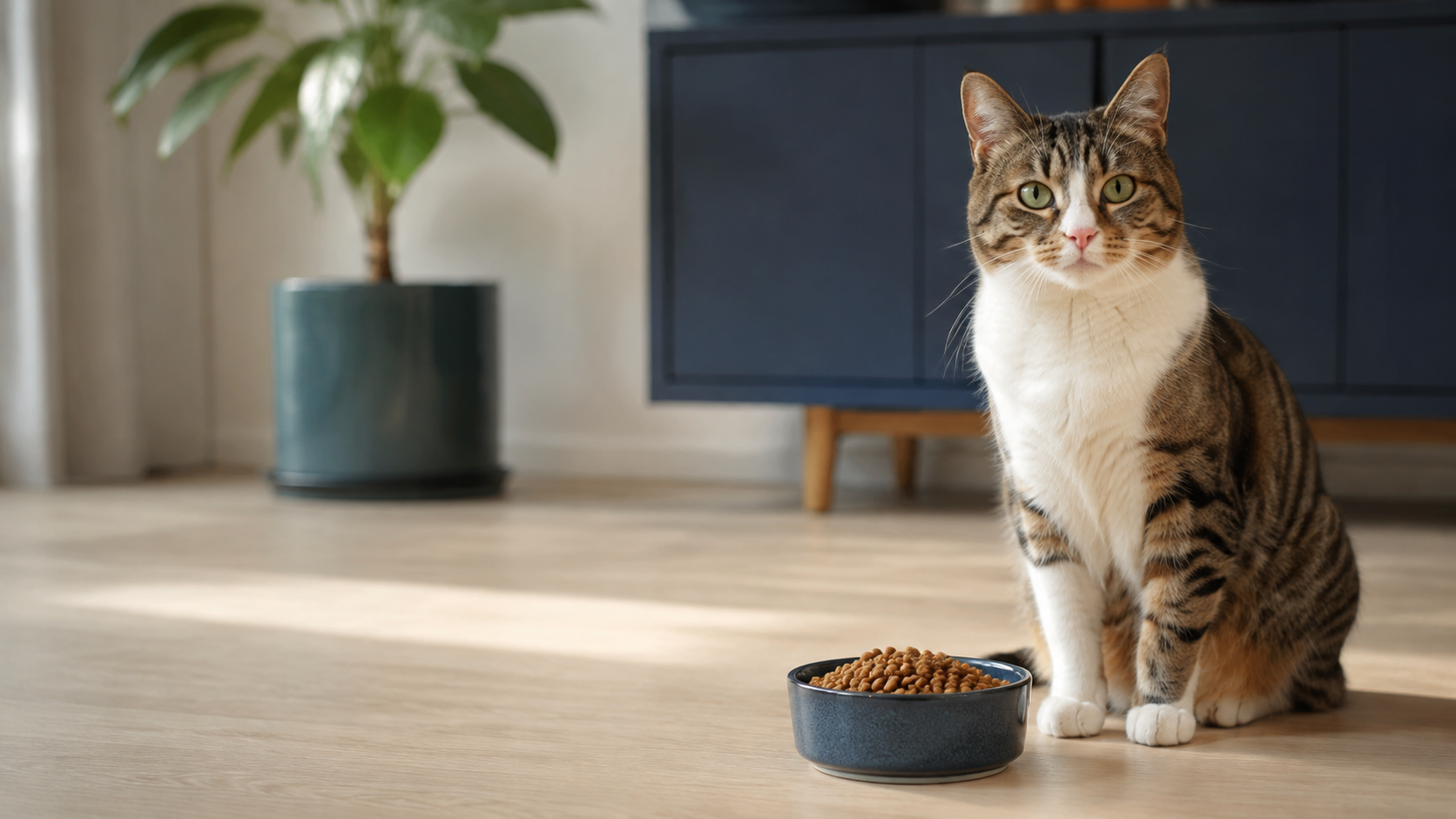

Visit any pet food aisle, and the shelves are filled with kibble cat foods; there’s a reason for this, and that's because kibble cat food is convenient and less expensive compared to wet food. For cat owners who aim to provide nutrition to their beloved pets, knowing what kibble cat food is, the process through which it is manufactured, and its role in the nutrition of cats is equally important as finding a bag with a suitable label on it.
In this guide, we explore everything there is to know about kibble cat food, its manufacturing and formulation process, nutritional advantages and disadvantages, and how to select the best dry cat food for the cat's growth phase – from a discussion of our formulation of kibble cat food for all ages of cats.
What Is Kibble Cat Food?

To address the question, "What is kibble cat food?" directly, we may say that it is a type of dry pet food that is made by mixing animal proteins, carbohydrates such as grains or other sources of carbohydrates, fats, vitamins, and minerals, and then cooking and drying this mixture in the form of small pieces. Kibble cat food has about 6-10 per cent of moisture, while the moisture content of canned/wet cat food reaches 75-80 per cent; that is one of the main differences in their nutrition.
Kibble cat food is mainly manufactured through a process known as extrusion. This means that the ingredients are ground and then cooked under heat and pressure and forced out of the extruder machine in the form of kibble pieces. Later, the kibble pieces are dried by removing moisture from them, which results in the long shelf life of dry cat food and gives it its crunchy nature.
How Kibble Cat Food Is Made

Insight into the manufacturing process of kibble cat food will explain the advantages and disadvantages of kibble dry cat food:
-
Grinding and Mixing - raw materials are ground to produce a uniform mixture of meat meals, carbohydrates (grains or their substitutes), fats, vitamins, and minerals.
-
Extrusion Cooking - the mixture is cooked under heat and pressure conditions, where starches become gelatinised in order to make the kibble easier to digest.
-
Forming and Cutting - the resulting dough is formed by extruding it through dies and then being cut into the typical kibble form.
-
Drying - kibble dry cat food is dried in order to significantly decrease its water content.
-
Coating - many kibble dry cat foods are coated with fats, digests, or flavouring agents after the drying procedure due to the fact that it decreases the palatability of the product.
-
Packaging - after the final processing step, kibble dry cat food is packed; oxygen barrier or resealable packaging is usually used to increase the preservation properties of the kibble.
These are the reasons why kibble dry cat food cannot be compared to wet cat food in terms of texture and storage period, yet it helps us understand what kind of compromises exist when using kibble.
Nutritional Considerations of Kibble Cat Food

Kitties are obligate carnivores, which means that their physiology is optimised to obtain nutrition from animal protein and fats and lacks the capability to metabolise large amounts of carbohydrates. The relevance of this information is obvious when discussing kibble cat food, because the process of making dry kibble involves using some level of starch or carbohydrates in order to stick the components together, which isn't necessary in wet food formulation.
But it doesn't mean that kibble cat food is not appropriate for cats at all – good quality formulations for kibble cat food focus on animal protein as the first component in order to stay close to the nutritional needs of the cat in spite of the manufacturing restrictions.
The following key ingredients should be considered when choosing the kibble cat food:
-
Taurine – an important amino acid that cats can't produce in sufficient amounts on their own; lack of taurine causes various health problems, especially related to the heart and eyes;
-
Animal protein as the first ingredient, not plant protein;
-
Arachidonic acid – another essential fatty acid.
-
Appropriate fat content to support energy needs and coat health
-
AAFCO-compliant vitamin and mineral balance, ensuring the food meets established nutritional adequacy standards for the cat's specific life stage
Kibble Cat Food vs. Wet Cat Food
|
Factor |
Kibble Cat Food (Dry) |
Wet/Canned Cat Food |
|
Moisture content |
Approximately 6–10% |
Approximately 75–80% |
|
Shelf life (unopened) |
Long, often 12–18 months |
Shorter, typically shelf-stable but shorter once opened |
|
Cost per calorie |
Generally lower |
Generally higher |
|
Convenience |
Easy to store, portion, and free-feed |
Requires refrigeration after opening, more prep |
|
Hydration support |
Lower - cats must drink more water separately |
Higher - contributes meaningfully to daily water intake |
|
Texture/dental interaction |
Crunchy texture, though dental benefits are limited |
Soft texture, no abrasive chewing action |
|
Caloric density |
Higher per gram, easier to overfeed |
Lower per gram |

Common Misconceptions About Kibble Cat Food
"Kibble improves cats' dental health." It is often said like that, but the dental advantage of kibble cat food usually does not exist because cats chew kibble in such a way that they do not get their teeth cleaned effectively. Special products for dental care, proper hygiene from the veterinarian, and a correct formula will do more than kibble cat food alone in this case.
"Kibble is less nutritious than wet cat food." It is not true as well. A properly designed kibble cat food with quality proteins and the right amounts of nutrients can fully provide all the required amounts of necessary substances. So, it is not about the lack of nutrition in the dry food; it is about something else.
"All kibble is similar." It is far from the truth because formulas of different kibbles differ a lot in the ingredients used and protein quality.
The Hydration Consideration

As the content of moisture in kibble cat food is lower than that of wet food, cats eating a kibble diet have to have a regular supply of fresh water and may require prompting to drink enough water because the natural thirst instinct in cats – formed by desert-living ancestors acquiring much of their moisture through food consumption – does not always make up for this deficiency in moisture. This issue becomes especially important when considering that cats with a tendency to problems with the urinary tract and kidneys may require a vet recommendation to introduce wet food as part of the diet.
Choosing the Right Kibble Cat Food by Life Stage

Cat food for kitten kibble requires more protein and calories to support faster growth, as well as DHA to help with brain and eye development at a young age.
Cat food for adult kibble must have balanced proteins, fats, and calories, taking into consideration that adult cats tend to gain weight if the kibble is very caloric and there is no portion control, especially indoor adult cats.
Cat food for senior kibble must have adjusted levels of proteins (appropriate and not restricted without the advice of a veterinarian), joint nutrients such as glucosamine, and improved digestibility.
Weight management cat food for kibble is usually lower in calories but does have enough protein for cats to lose weight.
How Zoomies Approaches Kibble Cat Food

Zoomies bases its formula for its kibble cat food on the basic belief that dry food must address the biological need of cats to be obligate carnivores, and not the ease of manufacturing. Some of the features that define the approach used by Zoomies in its kibble dry cat food include:
Animal protein as the base. Zoomies starts its formulas for kibble cat food with animal protein as the main ingredient, rather than using lots of plant protein filler ingredients to fulfil the minimum guaranteed analysis criteria.
Formulations specific to life stages. Instead of formulating a general-purpose kibble formula, Zoomies formulates kibble cat food that caters to each life stage, namely that of kittens, adult cats, and senior cats.
Essential nutrients included in the formulations. The formulations of Zoomies are based on the AAFCO standard nutrient adequacy requirements, including taurine and essential fatty acids.
Portion control for indoor and inactive cats. Since over-feeding is one of the most important causes of obesity in cats, especially regarding kibble cat food, Zoomies provides guidelines on proper portions of the food to be given.
Tips for Feeding Kibble Cat Food Responsibly
-
Use proper measurements and do not feed the cat freely, especially for those cats that live indoors with less exercise, because the calorie content of the kibble cat food is high.

-
Gradual switching between the brands and types of kibble cat food should be done over a period of about 7-10 days.

-
Use water along with the food since kibble contains a very small amount of water compared to the hydration requirements of a cat.
-
Use information regarding the guaranteed analysis and ingredient listing rather than marketing claims while analysing a particular brand of kibble cat food.
-
Use both wet and dry foods if you need to address the issues of hydration or urinary problems after consulting with veterinarians.
-
Proper storage conditions should be used for kibble to preserve its quality during its shelf-life period.
Final Thoughts
What then is kibble cat food? It is a type of food that is dry, extruded, and stable on shelves and that has the ability to provide all the nutritional needs of a cat if formulated based on high-quality animal protein and appropriate life-stage nutrition. However, it is also important to note that this food has a completely different water content than wet food and thus is relevant to some degree to hydration-sensitive cats. Kibble dry cat food is neither better nor worse than wet food but simply a different food format with different strengths and weaknesses.
In case you opt for a kibble cat food, focusing on high-quality animal protein sources, appropriate formulation for life stages, and portioning in relation to your cat is much more important than anything else, even though it is much easier to be fooled by marketing gimmicks regarding new food ingredients and trends. Zoomies' kibble cat food products have these principles at the foundation of their formulation process.
The choice of kibble cat food is ultimately dependent on the quality of ingredients used and formulation of products with respect to your cat's life stage and individual needs.

FAQs
What is kibble cat food made of?
Kibble cat food is typically made from animal protein sources, grains or alternative carbohydrates, fats, vitamins, and minerals, combined and cooked through an extrusion process, then dried into small, shelf-stable pieces.
Is kibble cat food bad for cats?
Not inherently. A well-formulated kibble cat food built around high-quality animal protein can fully meet a cat's nutritional needs. The main consideration isn't nutritional adequacy but moisture content, which is why adequate water intake matters when feeding a primarily dry diet.
Can kittens eat regular kibble cat food, or do they need a special formula?
Kittens generally need a kitten-specific kibble cat food formula with higher protein and calorie density to support rapid growth, rather than an adult maintenance formula, which isn't calorically or nutritionally calibrated for a kitten's developmental needs.
How much kibble cat food should I feed my cat daily?
Portions vary by the cat's weight, activity level, and the specific product's calorie density - most kibble cat food packaging includes feeding guidelines by weight, but working with a veterinarian to confirm the right portion for an individual cat is recommended, especially for indoor or less active cats prone to overfeeding.
Should I mix kibble dry cat food with wet food?
Many veterinarians recommend mixed feeding, combining kibble cat food with wet food, to balance the convenience and dental interaction of dry food with the higher moisture content of wet food - particularly for cats with urinary health concerns.
How long does kibble cat food stay fresh after opening?
Once opened, kibble cat food is generally best used within 4–6 weeks, stored in a cool, dry location in a sealed container or the original bag with the top tightly closed, to help preserve nutrient quality and prevent fat oxidation.
Share:
5 Best Dog Food Brands for Siberian Husky in 2026
Adult Cat Food: Everything Cat Owners Need to Know