

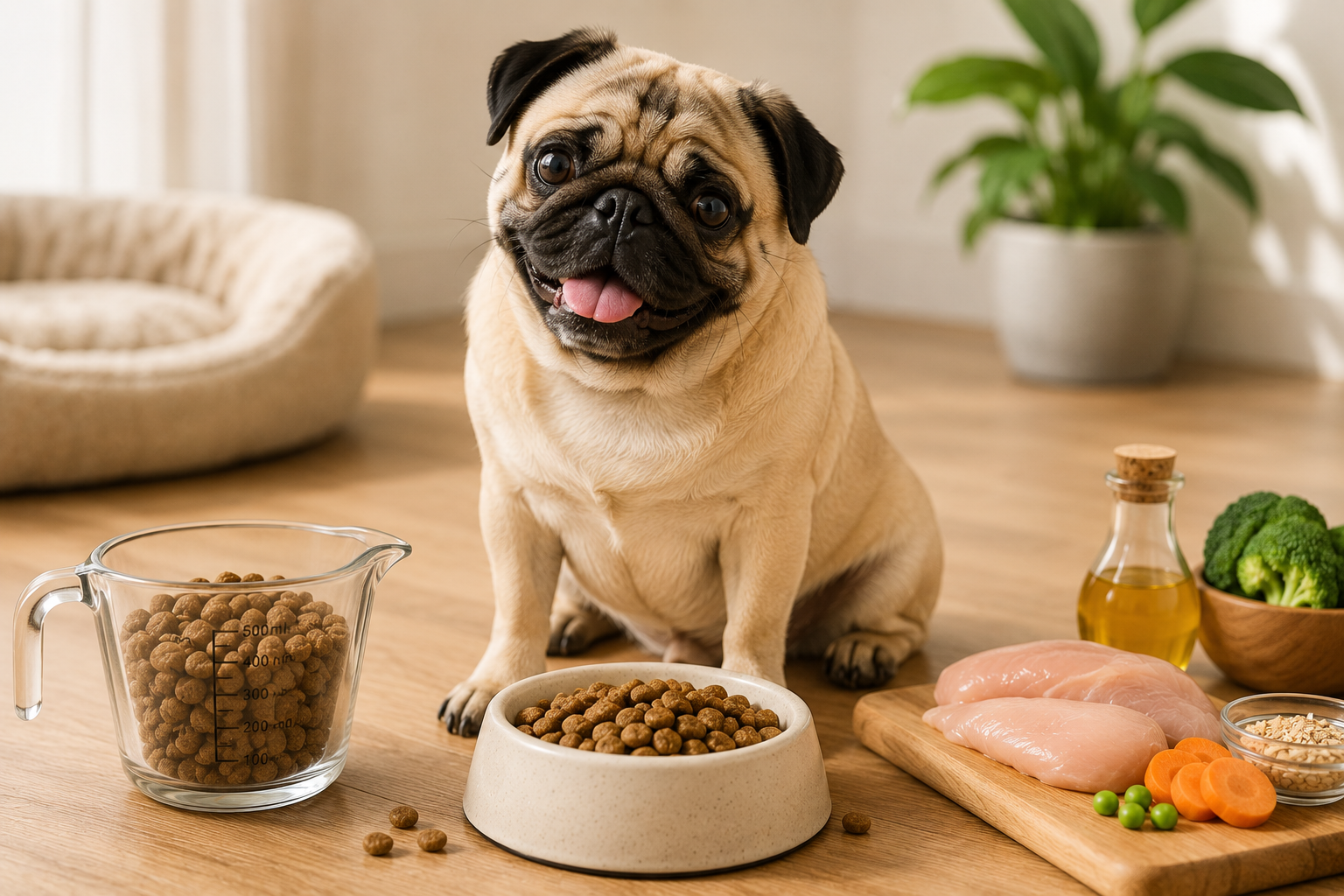
Pugs are small, food-loving, personality-filled dogs. But because pugs are very likely to suffer from obesity and because of their special breathing difficulties due to the fact that they are brachycephalic (having short faces), the choice of the appropriate pug dog food becomes especially important. Overfeeding and improper pug dog food may cause pug obesity that will increase the burden on its joints, heart, and lungs.
In this article, we give you all the information about pug dog food. It includes a pug dog food chart with your dog's age and weight of your dog, how to choose proper food for pugs, and what people want to know when they feed pugs.

Why Pugs Need a Specialized Feeding Approach

However, before you get acquainted with the pug dog food chart, it might be helpful to learn why pugs cannot eat "whatever is on the shelf" in the same portion sizes as other dog breeds do.
Predisposition to obesity: Due to their slow metabolism and strong appetite, pugs are among breeds that are predisposed to gaining excess weight. It only makes breathing problems even worse in these dogs.
Short airways: Due to brachycephalic anatomy, pugs can suffer from heat intolerance and difficulty breathing that gets even worse after eating too quickly or in large amounts.
Food sensitivities: Many pugs are sensitive to certain foods or have mild digestive problems; therefore, choosing high-quality pug dog food with protein sources that are easy to digest is crucial.
Joint problems: Pugs are predisposed to developing diseases such as hip dysplasia and luxating patella; extra pounds will only aggravate them.
These are the exact reasons why a pug dog food chart is very useful for pug owners.
How Much Pug Dog Food Does a Pug Actually Need?
The factors that affect portion size include age, weight, and activity level. Puppies require small but caloric meals because of growth, whereas adult and senior pugs have to consume controlled portions of pug dog food.
Generally, adult pugs consume about 300-450 calories a day, although this figure may be influenced by such factors as metabolism, whether the dog is neutered, and its physical activity level. In any case, you should pay attention to the calories contained in the package of pug dog food.
Pug Dog Food Chart by Age and Weight

Use this pug dog food chart as a general starting point, then adjust based on your vet's recommendations and your pug's body condition.
|
Age |
Weight Range |
Meals Per Day |
Approx. Daily Food Amount* |
|
8-12 weeks (puppy) |
3-6 lbs |
4 meals |
3/4 to 1 cup total |
|
3-6 months (puppy) |
6-12 lbs |
3 meals |
1 to 1.25 cups total |
|
6-12 months (junior) |
12-16 lbs |
2-3 meals |
1 to 1.5 cups total |
|
1-7 years (adult) |
14-18 lbs |
2 meals |
1 to 1.25 cups total |
|
7+ years (senior) |
14-18 lbs |
2 meals |
0.75 to 1 cup total |
|
Overweight/less active adult |
18+ lbs |
2 meals |
0.75 to 1 cup total (with vet guidance) |
The numbers above are estimates and based on average dry pug dog food with about 350-400 kcal per cup. Please make sure to always consult the feeding guidelines provided by your pug dog food bag and adjust servings depending on the body condition of your pug, not weight.
This table serves as just a basic guide for serving pug dog food. Each pug is unique, and your vet may be able to help you determine the right quantity of food that will be perfect for your pug if he/she has any diseases.
Feeding Pug Puppies (8 Weeks to 6 Months)
Puppyhood is when nutrition matters most. At this stage, pugs should be fed food meant for small breed puppies that has more protein and fat than the normal diet.
-
Feeding tips for pug puppies:
-
The pug puppy needs to be fed on pug food meant for small breed puppies because the large breed puppy formula is not the same as what the pug puppy's small body size requires.
-
Break down the feeding of the pug puppy to 3-4 meals in order to avoid hypoglycemia, since it tends to occur in small puppies.
-
Do not free-feed pug puppies; rather, give them specific amounts of food.
-
Switch over to adult pug dog food slowly at 9-12 months by introducing the new one gradually over 7-10 days.
Feeding Adult Pugs (1-7 Years)
A properly-fed adult pug typically ends up at a consistent weight of about 14 to 18 pounds. This is the point where consistency in following your pug dog food chart truly makes a difference.
-
Feed twice a day as opposed to once daily because pugs tend to overeat rapidly when fed once.
-
Pick a pug dog food that contains a moderate amount of fats, since too much fat may lead to weight gain and the development of pancreatitis.
-
Check your dog’s body condition monthly - it should be possible to feel (but not to see) the ribs of your pug without pressing down.
-
Treats should constitute no more than 10% of the total calories consumed.
-

Feeding Senior Pugs (7+ Years)
With increasing age, pug dogs’ metabolism rate slows down, and the levels of physical activity decrease; therefore, portions of the pug dog food become smaller to avoid weight gain.
-
Search for senior-oriented pug dog food containing fewer calories but having additional joint care supplements such as glucosamine and chondroitin.
-
Keep splitting portions of food in half instead of giving a single big portion.
-
Observe any alterations in the level of appetite or problems with chewing, which can indicate oral problems in elderly pugs.
-
Do not forget about veterinary examinations to change the pug dog food chart according to the changing requirements of your pet.
What to Look for in High-Quality Pug Dog Food

Pug dog food is not made equal. Here are some characteristics to look out for when selecting pug dog food:
-
Animal protein first: The first ingredient should not just be meat but rather specific animal protein like chicken, salmon, or lamb, not "meat meal".
-
Suitable kibble size: Since pugs have small mouths and short faces, their kibble must not be too large for them to handle.
-
Few fillers: Pugs' food must not have lots of corn or soy, as they do not provide much nutrition to dogs.
-
Moderate fat levels: Pugs put on weight easily, so moderate fats are recommended except when advised otherwise by the vet.
-
Small breed dog food formula: Most brands make specific small breed pug dog food formula.
Why Zoomies Is a Standout Choice for Pug Owners

Zoomies can be considered one of the most promising choices among the many other alternatives available since Zoomies provides its owners with high-quality pug dog food that is at once nutritional and delicious. In particular, the ingredients in Zoomies' products are chosen thoughtfully as real protein sources come first in Zoomies' recipes while the kibble is made especially small for small and brachycephalic dogs. There are also portions provided that help owners make their own pug dog food chart.
The main benefits that owners of pugs should expect from the products of Zoomies:
-
Proper size of kibble for the dog breed that allows a pug's short nose and smaller jaw to handle it easily
-
Balanced calorie content that helps avoid overfeeding pugs with high-energy pug dog food
-
Clear portion guidelines on the packaging that make it easier to feed according to the recommended pug dog food chart
-
Formulas for pug dogs with food sensitivities, which is a common problem for the dog breed
Thus, for owners confused about the great variety of options of pug dog food available on the market, Zoomies will become an excellent and straightforward choice.
Foods to Avoid Giving Your Pug

In addition to finding the right pug dog food, it is equally important to be aware of what to avoid feeding your pug:
-
Chocolate, grapes, raisins, and onions, which are all poisonous for dogs
-
Cooked bones, which could easily splinter and harm your pug
-
Fatty foods from the table, as pugs are especially prone to pancreatitis
-
Foods that contain a lot of sodium, since they may lead to dehydration and stress on the heart
-
Products containing xylitol, which are dangerously poisonous for dogs in any quantity
Feeding your pug high-quality pug dog food and avoiding feeding him from your own plate is perhaps one of the easiest ways to ensure his good health in the future.
Signs You May Need to Adjust Your Pug Dog Food Chart
Even with an effective pug dog food chart available, there are still certain changes that some pugs may need. These include the following:
-
Gain in weight: If you can no longer feel your pug’s ribs, then it is time to cut down on the amount of food being fed or change to a low-calorie pug dog food.
-
Losing weight or when ribs become visible: This might suggest that it’s time to feed a little more or consult the veterinarian about other possible problems.
-
Decreased energy or dull coat: This can be because the pug dog food that you are currently giving does not satisfy your pug’s nutritional requirements.
-
Gastric distress: This may include flatulence, soft feces, and vomiting.
Final Thoughts
Feeding your pug need not be hard work. When armed with a dependable chart for pug dog foods, knowledge about what your pug requires according to his age, and good-quality pug dog food such as Zoomies in his bowl, you can assist your pug in maintaining a good weight and remaining active and healthy, as well as keeping away from many pug diseases that result from poor nutrition. Consult your vet for proper portions, particularly if your pug is ill or tends to become overweight.
FAQs
How much pug dog food should I feed my adult pug?
Most adult pugs need around 1 to 1.25 cups of dry pug dog food per day, split into two meals, though the exact amount depends on the calorie density of your specific food and your pug's activity level.
How often should I feed my pug puppy?
Pug puppies should be fed 3-4 small meals a day using a small-breed puppy formula of pug food to support steady growth without overwhelming their small stomachs.
Why do pugs gain weight so easily?
Pugs have a naturally slower metabolism and a strong appetite, which is why portion control using a proper pug dog food chart is so important for maintaining a healthy weight.
Can I free-feed my pug instead of using a feeding chart?
Free-feeding isn't recommended for pugs, since they're prone to overeating. Sticking to scheduled meals based on a pug dog food chart helps prevent obesity-related health issues.
How do I know if I'm overfeeding my pug?
If you can no longer feel your pug's ribs without pressing firmly, or your pug has lost its visible waistline, it's likely time to reduce portions of your current pug food and consult your veterinarian.
Share:
Best 5 Dog Foods for Rottweilers in 2026
5 Best Dog Food Brands for Siberian Husky in 2026