

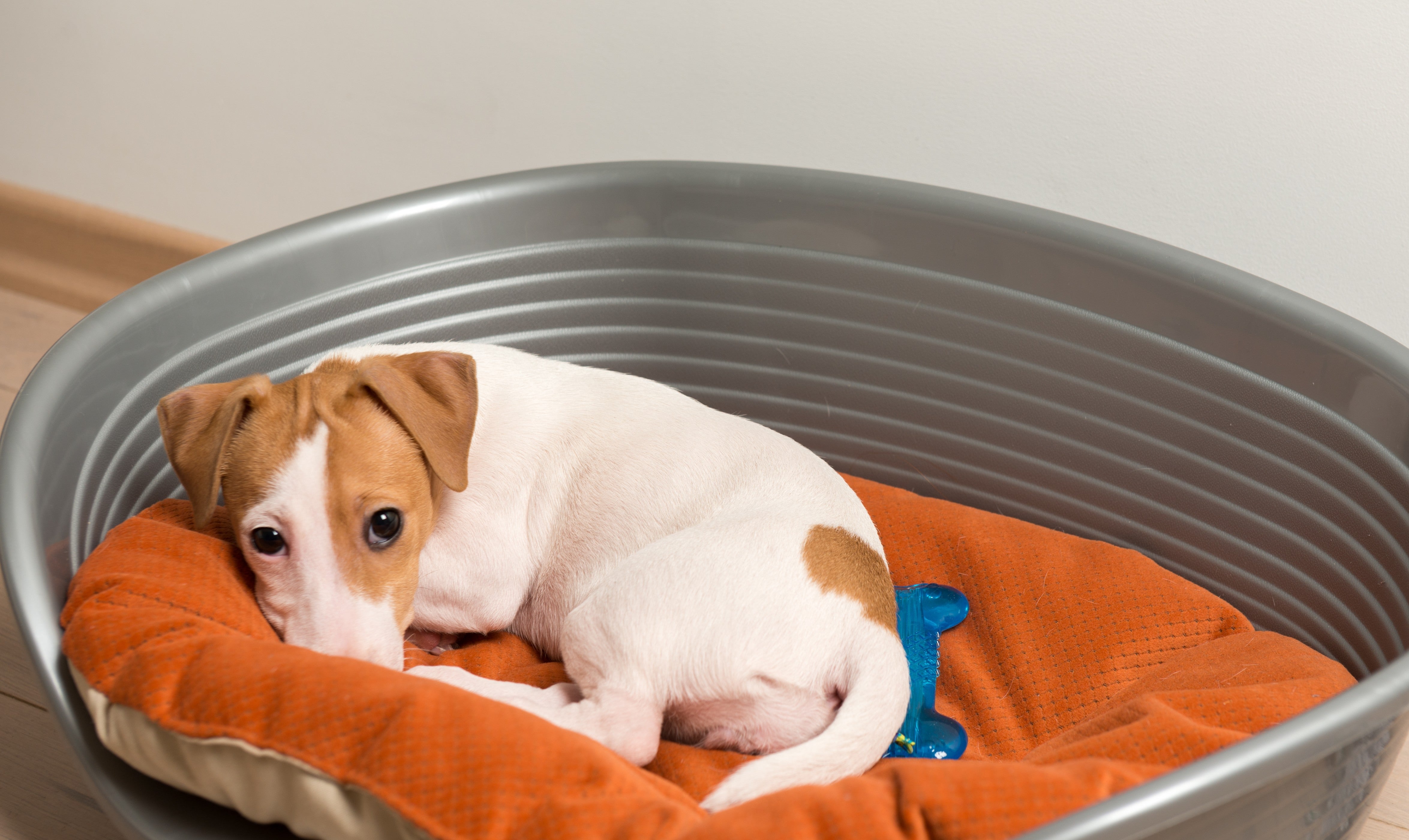
Having a puppy is similar to having a gift wrapped up; but what happens in just twenty minutes of bringing it into your house? The puppy pees everywhere in your living room carpet! If you are searching for some information about toilet training the puppy, then you came to the right place!
Toilet training the puppy to pee outside is probably the most crucial thing you can teach your little puppy. This is how you will keep your house nice and tidy, maintain a reliable relationship between you and your puppy, and help your puppy understand that everyone acts predictably in this world.
This toilet training manual is created especially for India. It considers all aspects of your living conditions whether it is your high-rise flat in Bangalore, compound residence in Pune, or tiny lanes of Old Delhi.
Quick Reference: How to Toilet Train a Puppy - The 10 Core Rules
-
Visit the designated location every hour to an hour and a half after sleeping, eating, and playing.
-
Use one specific location for potty breaks.
-
The odor triggers your puppy to relieve itself.
-
Puppies should be monitored throughout their toilet training process.
-
Praise your puppy right after it successfully eliminates waste.
-
Use one single-word command. All family members need to use the same command.
-
Accidents should be cleaned using enzyme-based cleaning products. Avoid using phenyl.
-
Never yell or punish your puppy after an accident.
-
Confinement is crucial during toilet training.
-
After the first two to three weeks, set an alarm clock for nighttime training sessions.
Before You Start: The Biology That Makes or Breaks Puppy Toilet Training
The most critical aspect to grasp regarding toilet training your puppy is that young puppies physically cannot control their bladders for extended periods of time. A general guideline is one hour per month old. If you have a two-month-old puppy, it will last around two hours - unless it is aroused, recently eaten, or just awoken from sleep.
It's not a matter of obedience. It's biology. Housebreaking your puppy starts with coming to terms with this fact and structuring your training plan accordingly. With the correct training, most puppies make drastic improvements within a week and are completely consistent within four to eight weeks.
Setting Up Your Indian Home for Success
To potty train a puppy in India, the first consideration is your type of accommodation. This is the process for each type of accommodation:
If you have an apartment without a balcony
Set up a potty place inside your home, and the ideal options for this purpose would be a small plastic tub filled with the soil found outside (since it has the smell that triggers appropriate behavior), pee pads that can be easily purchased, or artificial grass (not exceeding ₹300-₹800 in price range at any Indian pet store). This place should be kept at the greatest distance from the sleeping and dining areas of the puppy since dogs naturally avoid eliminating near these places.
If you have an apartment with a balcony
A balcony is always a great asset for house training puppies since you should set up the potty place there, which will help to maintain physical separation of the places of pottying and sleeping/dining and teach the puppy that elimination occurs only when going out. Clean the area twice a day in the summer because of fast ammonia accumulation.
Ground Level Apartment or Free-Standing House with Garden
The best scenario. From day one, mark out one particular spot in the garden as the puppy’s toilet place, and always head to this exact spot for relief. The scent left behind from previous uses becomes a strong trigger for the puppy to eliminate there again. This is the crux of the entire process of training the puppy to toilet outside.
High Rise with Lift Access
Taking a young puppy from the top floor to the ground level will take some time, which is too much for a puppy who gives very little indication before he needs to relieve himself. In such cases, the puppy can be taught to use an indoor or balcony location for his first few months until around three to four months of age.
How to Toilet Train a Puppy: The 7-Day Plan
These are guidelines and not rules that you need to follow in a set way. There may be some dogs that get the hang of it in five days while others may take ten days.
Day 1: Introduction and Boundary Creation
Goal: Puppy goes to the toilet place at least twice guided by you.
It is always recommended that you bring the dog to its toilet place once before letting it into your house. In case it goes there and does its business, give a big reward right away – you've got the first point. Put it in one room or a play area from the beginning. Bring it to the place each time it wakes up, after every meal, after playing, and every 60-90 minutes after that.
Day 2: Building the Routine
Goal: At least 3 successful trips to the spot; schedule running reliably
By Day 2 of house training a puppy you should be running a consistent daily schedule. Here is the template:
|
Time |
Break |
What to Do |
|
6:00 AM |
Wake-up - to spot immediately |
Cue word, reward within 3 secs of finish |
|
7:00 AM |
Morning meal, then spot |
Feed measured portion; toilet break 15–20 mins after |
|
9:30 AM |
Mid-morning break |
Proactive - even if pup seems settled |
|
12:00 PM |
Midday meal + spot |
Feed, then spot visit 15–20 mins after |
|
3:00 PM |
Afternoon break |
Post-nap - watch for circling or sniffing |
|
5:30 PM |
Evening meal + spot |
Feed, then toilet break 15–20 mins after |
|
8:00 PM |
Evening break |
Last outdoor walk or spot visit |
|
10:30 PM |
Bedtime break |
Final visit immediately before sleep; remove water bowl |
|
2–3 AM |
Night break (weeks 1–3) |
Set alarm; carry to spot; no play - straight back to bed |
Reward within three seconds of finishing elimination; not three minutes. The puppy's brain can only link reward to the action that immediately preceded it. Delayed reward means delayed learning.
Day 3: Introduction of the Cue Word
Goal: Puppy reacts to the cue word at the toileting location
The moment you observe the puppy starting to squat or sniff around the location, say the cue word just once with a soft and even voice. While they’re doing their business, repeat the word softly. Immediately reward them when they finish. In a few days to weeks, most puppies will make the connection between the word and the action, laying the groundwork for learning how to train a puppy to toilet outside using the cue word. This is highly valuable while traveling or visiting the veterinarian.
Day 4: Expanding Controlled Freedom
Goal: Puppy moves about a second room without accidents under supervision
If you’ve had success during the previous days; accidents only happen when you miss a bathroom break schedule, not randomly; gradually introduce a second room. However, if there have been many accidents, continue to restrict your puppy’s freedom as in Days 1-3. No need to feel embarrassed about this since this means you have to reduce the gap between bathroom breaks.
Day 5: Reading Pre-Elimination Signals
Goal: You can predict when your puppy needs to go before an accident occurs
By Day 5 of potty training a puppy you will have spent enough time watching to start recognising individual signals. Learning these is what separates reactive cleaning from proactive prevention:
|
Signal |
What It Looks Like |
Your Response |
|
Sniffing floor |
Nose down, slow deliberate circles |
Pick up, move to toilet spot immediately |
|
Tight circling |
Spinning in one spot, often a corner |
Interrupt gently, carry to spot |
|
Sudden squat |
Back legs crouch, tail low |
Say cue word firmly, move fast - may be too late |
|
Post-nap restlessness |
Wakes, moves around, won't settle |
To spot within 60 seconds of waking |
|
Scratching at door |
Pawing the main or balcony door |
Excellent sign - reward heavily after successful elimination |
Day 6: Cut Down Night Breaks
Goal: Puppy able to hold on overnight for 4-5 hours with just one break
Most puppies between 8-10 weeks old will be able to sleep uninterrupted overnight with just one toilet break after just one week – on condition that this toilet break occurred right before bed-time and the puppy had their water withdrawn an hour or so before (but do not withhold water from the puppy during the day). Make sure your puppy’s sleeping space is limited – use a cage or a playpen. Dogs dislike going to the bathroom where they sleep.
Day 7: Consolidation and Assessment
Goal: Not as many accidents as on Day 1 and reliable spot usage when taken there
By Day 7 we evaluate our achievements, but do not conclude our puppy toilet training program. Is your puppy having accidents due to your own negligence, i.e., missing their scheduled toilet time (in which case you need to tighten up your routine) or without any warnings? After 7 days of diligent puppy potty training you should expect a puppy who does not have as many accidents as on Day 1 and uses their spot reliably when taken there.
How to Potty Train a Puppy Outside: The Transition
Do you have your puppy using an indoor station? Take it slow; don’t go from the indoor station to the outdoors abruptly. Bring the station close to the door by a few feet daily until the puppy is ready to go outside. Place it right outside the door, then take the puppy to the outdoor station at the end of a week or two. Each time, continue giving your praise for doing his business where he currently is. After a week of consistent use outdoors, remove the indoor station.
Common Puppy Toilet Training Mistakes
|
Mistake |
Why It Fails |
Do This Instead |
|
Scolding after the fact |
Dogs can't link punishment to an act from 30+ seconds ago |
Clean silently; prevent the next one with tighter supervision |
|
Using phenyl to clean |
Masks odour but leaves ammonia trace - draws the pup back |
Use enzymatic cleaner; let it soak 5 minutes before wiping |
|
Inconsistent spot |
Scent anchors the behaviour - changing spots resets progress |
Same spot, every single time, for the first 4 weeks |
|
Too much freedom too soon |
Unsupervised roaming leads to hidden accidents, locked-in bad spots |
Expand access gradually as reliability is proven |
|
Expecting results in 2–3 days |
Sphincter control is physiological development - can't be rushed |
Full reliability takes 4–8 weeks; 7 days builds the foundation |
The process of toilet training a puppy seems to be an impossible one after three days but seems rather simple after fourteen days. The biology is certainly working for you because dogs are natural-born clean creatures who don’t wish to dirty the place where they live. All you need to do is create a schedule that is strict enough for your puppy.
FAQs
How long does it take to potty train a puppy?
Puppies begin to learn from 2 weeks, but full training will take around 4-6 months.
How often should I take my puppy outside to the toilet?
Puppies must be taken out regularly after meals, rest, play periods, and every 2-3 hours daily.
What is the best way to house train a puppy?
Maintain a regular schedule, give instant praise after toilet breaks, and always take your puppy to the same toilet place.
Why is my puppy still having accidents indoors?
Mistakes are part of the process. Irregular schedules, too many hours without toileting, or stress can affect puppy potty training.
How do I train my puppy to use the toilet outside?
Take your puppy to the toilet frequently, give him an easy command such as "go potty," and reward him with praises or treats whenever he toilets outdoors.
Share:
How Much to Feed a Puppy: Indian Breed Puppy Feeding Chart & Complete Guide
Pet Allergies in India: Common Causes & Diet Fixes