

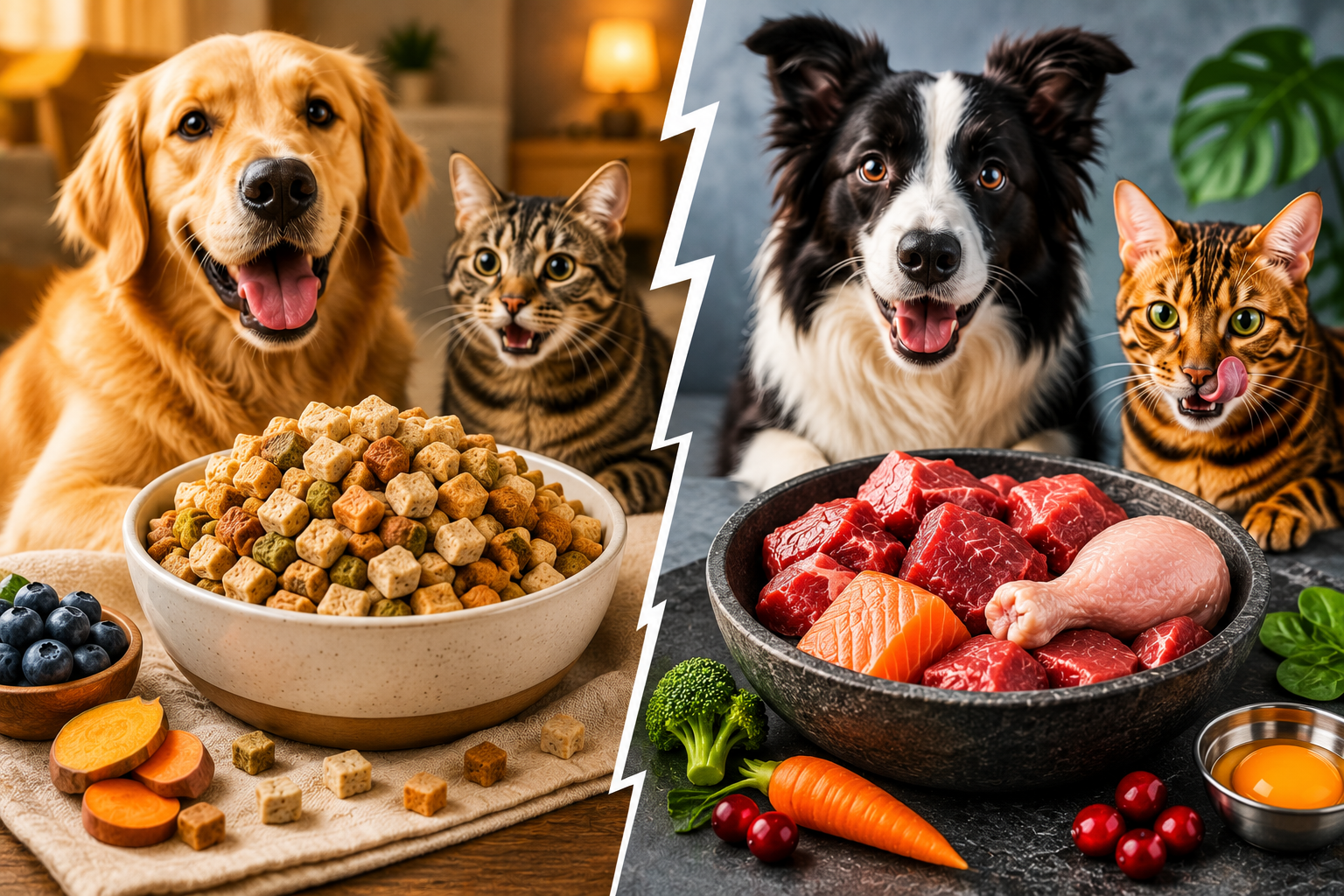
Browse through any aisle in a pet store now and you will notice that there are two kinds of foods being marketed as healthy alternatives occupying the same shelf space: raw and freeze dried pet food. Both claim to provide minimally processed food that is rich in nutrition, and both usually promote themselves as the “closest thing to nature.”But then, there are some very stark differences between the two kinds of food and one must be aware of those differences in order to make a proper decision regarding which one is more suitable for their pets. The following is an analysis of the similarities and differences between freeze dried pet food and raw pet food.
What Is Freeze Dried Pet Food?
Freeze dried pet food is made in almost the exact same process as the raw food since it too consists of frozen meat, organs, vegetables and even bones. The ingredients are put in the vacuum chamber after being frozen, where sublimation takes place; that is, ice turns directly into vapor without going through the liquid stage. The dehydration process entails the removal of almost 98% of water content without any heat treatment, making it different from dehydrated food, where meat is exposed to warm air for a long period of time.
As a result, the pet food becomes a light and shelf-stable product that does not resemble fresh meat physically, although, from the nutritional point of view, the two are similar. Since freeze drying does not involve any heat, it preserves most of the amino acids, enzymes, and vitamins, which cannot withstand heat exposure.
What Is Raw Pet Food?
Frozen raw pet foods contain unprocessed meat, organ meats, bones, and even plants, and should be nutritionally complete and balanced, or can serve as the basis for supplements provided by the owner to his pet. The frozen raw pet food is stored frozen until the time of consumption by the pet; at least a day before that, it is defrosted in the refrigerator.
Freeze Dried Pet Food vs Raw Food: The Core Differences
Nutrition
When looking at these foods on a dry matter basis, the freeze-dried dog food and frozen raw dog food are nutritionally almost the same. All good brands manufacture their freeze-dried lines using the very same recipes as their frozen raw foods minus the water. They both contain enzymes, amino acids, and fatty acid levels that are denatured or destroyed by the high temperature cooking process done for kibble dog food. The only nutrient that gets somewhat reduced through freeze-drying is vitamin C, which is not much of a worry as dogs produce their own vitamin C.
Safety
It is at this point where freeze dried pet food and raw food truly part ways. While freeze drying alone will lower the bacteria, it will not always remove harmful bacteria such as Salmonella, Listeria, or E. Coli - something that veterinarians agree upon. But today, most high-end freeze dried pet food products are processed using High Pressure Processing (HPP), a form of pasteurization which uses very high pressure (43,500 to 87,000 psi) without the heat, eliminating almost all bacteria and leaving the nutrients in their original state. Traditionally frozen raw foods are more prone to contain pathogens unless they also undergo HPP, which is why national veterinarian associations have always been recommending against any raw-type diets - freeze dried or frozen.
Convenience and Storage
Freeze dried pet food is undoubtedly the best choice when we consider the factor of convenience. It needs no space in the freezer, needs not be thawed in 24 hours, and does not need to be carried in cool bags while traveling; a sealed pack of freeze dried pet food can safely be stored in a pantry for 12 to 24 months. In case of frozen raw pet food, however, all these become necessities.
Cost
Freeze dried pet food is usually the costliest type of pet food out there, generally costing much more than dehydrated pet food or frozen raw pet food because of its high-energy requirements in the production process. Frozen raw pet food may be cheaper than freeze-dried, especially when bought in bulk.
Texture and Feeding Method
If the freeze dried food is a complete meal that is supposed to be served as is, then it needs to be rehydrated first by mixing it with warm water. The texture will revert back to its original state once it has been rehydrated, and it will be much easier for the animals to digest and remain hydrated. It should be noted, though, that many freeze dried foods are offered as toppers or as freeze dried pet treats and not complete meals.
Freeze Dried Dog Food: What to Look For
For dog owners specifically evaluating freeze dried dog food, a few label details matter more than marketing claims:
-
Make sure there is an AAFCO nutritional adequacy statement that the food is
-
adequate for your dog's life stage rather than being used as a topper or treat.
-
See whether the manufacturer applies any process to reduce pathogens aside from the freeze drying process because freeze drying does not ensure pathogen reduction in the food.
-
Prefer human-grade facilities producing the freeze dried dog food because regulations regarding raw-type pet foods differ among manufacturers.
-
Verify the directions about rehydrating because there are freeze dried dog food products meant to be consumed dry whereas others need to be hydrated before consumption.
There are some qualities that make the best available brands of freeze-dried dog food stand out from others. These qualities include being made from ingredients whose source is easily traceable, undergoing pathogen testing at an independent laboratory, carrying clear AAFCO labels, and being made up of a diet that consists mainly of proteins and few fillers. Given that prices for freeze-dried food for dogs tend to be very high, it is important to take a closer look at their guaranteed analyses and make comparisons on a dry matter basis.
Freeze Dried Cat Food: A Few Additional Considerations
The process behind the production of freeze-dried cat food is essentially the same as that of freeze-dried dog food; however, cats do have certain nutritional needs that should be considered. Cats are obligatory carnivores, meaning that they need certain essential amino acids, such as taurine that should be taken from animal products and cannot be synthesized by cats' bodies. Good freeze-dried cat food should feature an identifiable source of animal protein listed as the first ingredient, as well as high taurine content, which may not always be present in case of unbalanced raw formulas. As cats may be more sensitive to dietary changes, it is recommended to transition them to freeze-dried food slowly within one or two weeks.
Freeze Dried Pet Treats and Freeze Dried Cat Treats
Besides full meals, one of the categories showing rapid growth in this segment is freeze dried pet treats. Unlike full meals, most freeze dried pet treats are usually single ingredient products including, freeze dried chicken breast, beef liver, or salmon by just freeze drying a single cut of meat or organ with nothing else to formulate into a product. They make one of the easiest treat products with very few ingredients because nothing else needs to go into them besides just drying a single piece of meat or organ which doesn’t require any further formulation like complete and balanced meals.
Freeze dried cat treats are just like regular freeze dried pet treats but their popularity has been increasing particularly for cats because cats are very choosy eaters compared to dogs and freeze drying helps in preserving the natural aroma and flavor.
For dog owners specifically, dog freeze dried treats are widely used for training because of their high value, strong smell, and easy portioning, a single freeze-dried liver piece can be broken into several small training rewards, making it both practical and cost-effective compared to soft commercial training treats loaded with fillers.
How Zoomies Treats Fit Into a Freeze-Dried Feeding Routine
If you already feed your pet freeze dried pet food, or you're simply looking for a cleaner treat option, Zoomies offers freeze dried pet treats designed to complement that same minimally processed approach to nutrition.
-
Being single ingredient, there are no fillers, artificial flavors, or preservatives in any of the Zoomies treats, ensuring that your treat time is just as clean as mealtimes.
-
Using the same freeze-dry method used in high quality freeze dried dog food and freeze dried cat food, natural goodness is locked into each individual treat of Zoomies.
-
Being lightweight and shelf-stable means that it is possible to bring your Zoomies anywhere for training, walks, and trips without needing refrigeration at all.
-
Being high in protein and minimal processing ensures that Zoomies are good for building muscle and are great for those following a raw food diet.
Whether your pet eats kibble, freeze dried pet food, or a raw diet as their primary meal, adding Zoomies freeze dried pet treats is a simple way to bring the same nutrient-dense, minimally processed philosophy into treat time.
Which Should You Choose: Freeze-Dried or Raw?
Of course, there is no single correct response to the question, as it depends on your budget, freezer capacity, feeding habits, and comfort with raw foods. Freeze dried pet foods tend to be the most convenient and shelf-stable, while being the safer way to feed your pet, but not completely free from bacteria. On the other hand, if you have enough space in your freezer, feel comfortable with a bit stricter process of thawing food, and want your pet to get as close to an ancestral diet as possible, you can try feeding him frozen raw foods.
Regardless of which form you chose, do make sure that there is an AAFCO claim about complete and balanced nutrition if it will be the main source of nutrients for your pet. Discuss with your vet any changes in the diet of your pet, especially if it is a puppy, kitten, senior, pregnant animal or it has any diseases.
Final Thoughts
The fundamental aspect about both freeze dried and raw food for pets is that the base nutritional elements are identical – unprocessed protein with considerably higher amounts of enzymes and vitamins compared to highly processed kibbles. However, where they differ is in the safety aspect, convenience, storage and price. Irrespective of whether you opt for freeze dried dog food diet, freeze dried cat food, or just freeze dried pet treats such as Zoomies, being well-informed about the distinctions can help you make an informed decision in favor of your pet’s future health.
FAQs
-
What are freeze-dried pet treats, and are they healthy?
Freeze-dried pet treats are produced through the removal of moisture in raw materials, preserving the nutrients and taste in them. Most freeze-dried pet treats are very healthy because they are rich in proteins and are minimally processed.
-
Is freeze-dried cat food a complete meal or just a treat?
Not necessarily. While some forms of freeze-dried cat food have complete nutrition, others don't. You will need to look at the feeding instructions on the food package to be sure.
-
What should I look for in the best freeze-dried dog food?
The best form of freeze-dried dog food has real animal protein as the main component and has to adhere to complete and balanced nutritional standards. Such dog food doesn't have any unnecessary additives and preservatives.
-
Are freeze-dried dog treats suitable for puppies and senior dogs?
Yes. Many freeze-dried dog treats are good for both puppies and senior dogs because they are packed with nutrients and are tasty.
-
Do freeze-dried pet treats need to be refrigerated?
No. Freeze-dried pet treats and foods are shelf-stable when stored in a cool, dry place in their sealed packaging. Once opened, reseal the package tightly and use it within the recommended period for optimal freshness.
Share:
Top 10 Cutest Cat Breeds Every Cat Lover Should Know
How Many Years Do Cats Live? Average Lifespan of Cats in India