

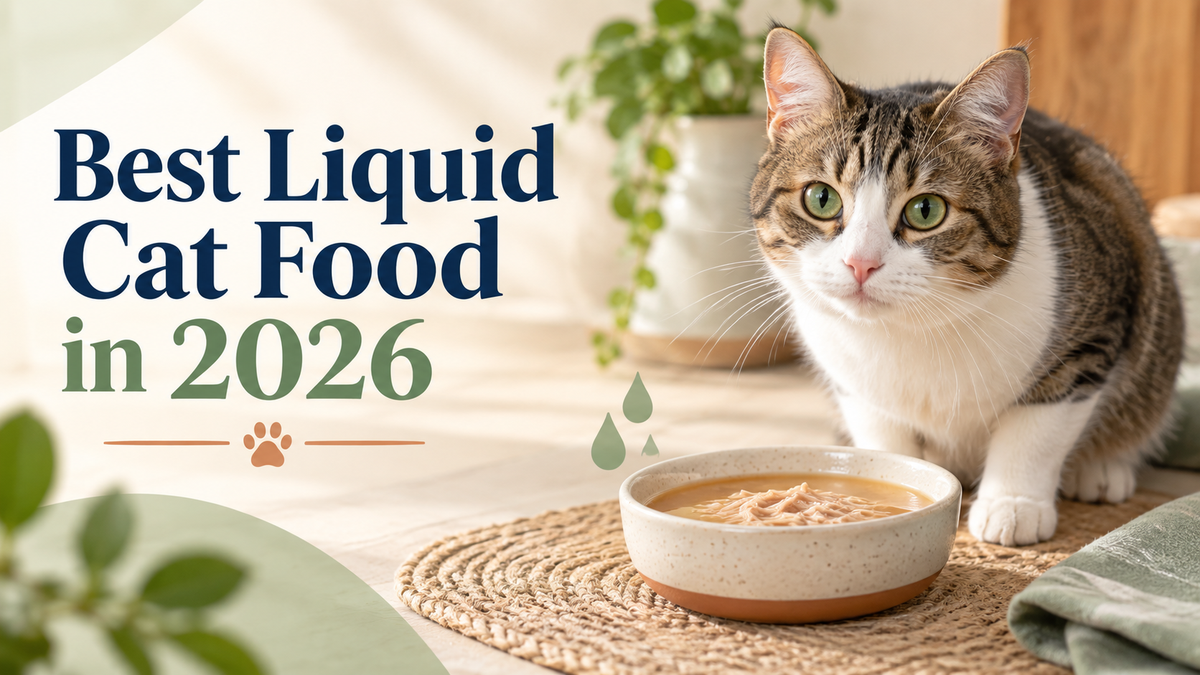
What most cat parents don't realize is that hydration and quick nutrition play a bigger role in supporting that energy than people think. That's where liquid cat food comes in. In 2026, liquid cat food has moved from a niche product for sick or senior cats to a mainstream category that vets recommend for everyday hydration, picky eaters, and cats who need a little extra nutritional support.
This guide breaks down what liquid cat food actually is, why vets are recommending it more often, and which formulas are worth putting in your cat's bowl this year.
What Is Liquid Cat Food, Exactly?
Liquid cat food is a broth-, bisque-, or bone-broth-style formula that's thinner than traditional wet food but still packed with protein, moisture, and key nutrients like taurine. Unlike pâté or shredded wet food, liquid cat food is easy to lap up, gentle on the stomach, and often used either as a standalone light meal, a topper poured over kibble, or a hydration boost between meals. Because it's mostly water combined with real meat, broth, or milk-like bases, liquid cat food digests quickly and is especially useful for cats who don't drink enough water on their own - which, according to most vets, describes the majority of cats.
The rise of liquid cat food in 2026 tracks closely with a broader shift in pet nutrition toward hydration-first feeding. Cats are obligate carnivores that evolved to get most of their water from prey, not from a bowl, which means many cats are mildly, chronically underhydrated without their owners ever realizing it. Liquid cat food closes that gap in a way dry kibble simply can't.
Why Vets Are Recommending Liquid Cat Food More in 2026
Veterinarians have historically pointed cat owners toward liquid cat food mainly in clinical situations - recovery from surgery, illness, or dental problems. That's still true, but the recommendation has broadened. Vets now regularly suggest liquid cat food for:
-
Hydration support, especially in cats with a history of urinary tract issues or kidney concerns
-
Picky eaters who reject dry kibble or thick pâté textures
-
Senior cats with reduced appetite or dental sensitivity
-
Active cats who benefit from a quick, digestible source of hydration and energy after bursts of activity
-
Kittens transitioning off milk formulas, when a lactose-appropriate liquid option eases the switch to solid food
The common thread across all of these use cases is that liquid cat food delivers nutrition and moisture without asking much of a cat's digestive system, which makes it a flexible tool rather than a one-off product for sick animals.
Liquid Cat Food vs. Liquid Food for Sick Cats: What's the Difference?
Not all liquid cat food is created for the same purpose, and this is where a lot of confusion happens. General liquid cat food - the broths, bisques, and toppers you'll find on pet store shelves - is designed for everyday feeding and hydration. Liquid food for sick cats, on the other hand, is formulated specifically to support recovery, appetite stimulation, and easy digestion during illness.
If your cat is recovering from surgery, fighting an infection, or dealing with a condition that suppresses appetite, liquid food for sick cats is typically:
-
Lower in bulk but still calorically dense enough to prevent weight loss
-
Easier to administer in small amounts, sometimes even syringe-fed under vet guidance
-
Formulated with added vitamins and electrolytes to support recovery
-
Free of ingredients that could irritate a sensitive digestive system
Vets often specifically recommend prescription or veterinary-formulated liquid food for sick cats - brands like Hill's a/d and Royal Canin Recovery are commonly cited - because these formulas are calorie-dense and easy to digest even when a cat's appetite is minimal. If your cat has been under the weather and refusing food, this is the category to ask your vet about first, rather than reaching for a general everyday liquid cat food product.
High Calorie Liquid Cat Food: When Extra Energy Matters Most
For cats that need to gain weight, recover strength, or simply aren't eating enough during a health setback, high calorie liquid cat food is often the most practical solution. These formulas pack more fat and protein into a smaller serving size, which matters enormously for cats with reduced appetite - a small amount of high-calorie liquid cat food can deliver as much energy as a much larger portion of standard wet food.
High calorie liquid cat food tends to fall into two categories:
-
Complete liquid meals with elevated calorie density, designed to be a cat's primary food source during recovery or weight-gain periods
-
Calorie supplement gels and liquids, like Nutri-Cal, which are meant to be added on top of regular meals rather than replace them
Vets typically recommend high-calorie liquid cat food for underweight cats, seniors losing muscle mass, cats recovering from illness or surgery, and nursing or debilitated cats that need concentrated nutrition in small volumes. Because these formulas are calorie-dense, they should be introduced under veterinary guidance rather than used indefinitely without a check-in, since overuse can lead to unwanted weight gain in cats who don't actually need the extra calories.
Top Vet-Recommended Liquid Cat Food Picks for 2026
Based on ingredient quality, palatability, and how frequently vets and veterinary nutritionists reference them, here are the standout liquid cat food options for 2026.
1. Zoomies Wet Stuff Lite
Zoomies Wet Stuff Lite is a broth-based wet cat food made with real meat and natural bone broth, designed to provide moisture along with protein. The range includes chicken breast, duck breast, and tuna-based options, with the brand positioning it as an easy way to increase a cat's daily water intake. Zoomies describes Wet Stuff Lite as a simple, three-ingredient recipe without preservatives, making it suitable as a hydrating wet-food option or as part of a cat's regular feeding routine, depending on the specific product and nutritional requirements.
2. Nulo FreeStyle Hearty Beef Bone Broth
A grain-free liquid cat food option that works well for cats with grain sensitivities. It's kettle-cooked, which helps preserve nutrients, and its lighter consistency makes it a good hydration-focused choice for active cats who need a quick nutritional boost between meals.
3. Made by Nacho Humanely-Raised Broth
This liquid cat food stands out for its use of prebiotics and premium proteins sourced from humanely-raised beef, plus non-GMO fruit and vegetable additions. It's a good middle-ground option for owners who want both everyday hydration support and a slightly more premium ingredient profile.
4. WHISKAS Cat Milk
Marketed specifically for kittens and cats that enjoy a milk-style treat, this lactose-reduced liquid cat food is a lighter option best used as an occasional treat rather than a meal replacement. It's worth noting that most adult cats are lactose intolerant, so a lactose-free formulation matters here.
5. Hill's Prescription Diet a/d
When it comes to liquid food for sick cats, this is one of the most frequently recommended veterinary formulas. It's calorie-dense, easy to digest, and specifically designed for cats recovering from illness, surgery, or periods of reduced appetite. Because it's a prescription formula, it typically requires vet guidance to use.
6. Royal Canin Recovery
Another go-to choice in the liquid food for sick cats category, Royal Canin Recovery is formulated for high palatability and easy digestion during convalescence. Vets often recommend it specifically for post-surgical cats or those recovering from a significant illness.
7. Tomlyn Nutri-Cal High-Calorie Gel
While technically a supplement rather than a full liquid meal, Nutri-Cal deserves a spot on any high-calorie liquid cat food list because of how widely it's used for appetite stimulation and weight support. It's a low-volume, high-energy gel that's easy to administer even to cats with minimal interest in eating.
How to Choose the Right Liquid Cat Food for Your Cat
With so many types of liquid cat food on the market, picking the right one comes down to matching the product to your cat's actual needs rather than just grabbing whatever's popular. A few questions worth asking:
-
Is my cat healthy and just needs more hydration? A general liquid cat food or bone broth topper is likely enough.
-
Is my cat recovering from illness or surgery? Look specifically at liquid food for sick cats, and involve your vet in the decision.
-
Is my cat underweight or losing muscle mass? High-calorie liquid cat food, whether a complete meal or a calorie-dense supplement, is the better fit.
-
Is my cat a picky eater or prone to skipping meals? A flavorful, palatable liquid cat food used as a topper can encourage eating without replacing a full meal.
It's also worth checking the label for completeness. Some liquid cat food products are formulated as complete and balanced meals, while others - especially bone broths and calorie gels - are meant as supplements rather than a cat's sole source of nutrition. Feeding a supplement-only liquid cat food as a full replacement for meals can lead to nutritional gaps over time, so it's important to know which category a given product falls into before making it a regular part of your cat's diet.
Tips for Introducing Liquid Cat Food
Transitioning a cat to liquid cat food, especially if they're used to dry kibble, works best when done gradually. Start by drizzling a small amount over their regular food to build familiarity with the taste and texture. From there, you can slowly increase the ratio of liquid cat food to solid food if you're using it as a meal replacement, or simply continue using it as a topper or treat.
For cats recovering from illness, warming liquid food for sick cats slightly (never hot) can make it more appealing, since a cat's sense of smell plays a huge role in appetite. Offering small, frequent portions rather than one large serving also tends to work better for cats with a reduced appetite, since it's less overwhelming and easier to digest.
The Bottom Line on Liquid Cat Food in 2026
Liquid cat food has earned its place as more than just a niche product for sick cats - it's now a genuinely useful tool for hydration, picky eating, recovery, and weight support. Whether your cat needs everyday liquid cat food to stay hydrated, liquid food for sick cats during a rough patch, or high-calorie liquid cat food to regain strength and weight, there's a well-formulated option available for nearly every situation in 2026.
As always, if your cat is showing signs of illness, sudden weight loss, or a persistent drop in appetite, loop in your veterinarian before making major changes to their diet. Liquid cat food can be an excellent supportive tool, but it works best as part of a plan your vet has weighed in on - especially when it comes to sick or underweight cats who need close nutritional monitoring.
FAQs
1. What is the best liquid food for a sick cat?
The best liquid food depends on the cat's medical condition and nutritional needs. Veterinary recovery diets formulated for cats may be appropriate when a cat has difficulty eating solid food. In some cases, a veterinarian may recommend a high-calorie liquid or easily digestible diet to help provide adequate energy and nutrients during recovery.
2. When should a sick cat be given liquid food?
Liquid or recovery food may be considered when a cat has difficulty chewing or swallowing, has a reduced appetite, or cannot tolerate regular food. However, the underlying cause of appetite loss should be addressed by a veterinarian, particularly if the cat has stopped eating.
3. What is high-calorie liquid cat food?
High-calorie liquid cat food is a nutritionally concentrated food or veterinary recovery diet designed to provide energy and essential nutrients in a small volume. It can be useful for cats that have reduced food intake and need more calories without consuming a large quantity of food.
4. Can liquid food help a sick cat gain weight?
A nutritionally complete, high-calorie liquid or recovery diet can help provide additional calories when a sick cat is struggling to eat enough. The amount and type of food should be based on the cat's condition, weight, and nutritional requirements, particularly if weight loss has been significant.
5. Can liquid food be syringe-fed to a sick cat?
Syringe feeding should only be done when recommended by a veterinarian and with appropriate instructions. Incorrect syringe feeding can cause food to enter the airways, potentially leading to aspiration pneumonia. A veterinarian can determine whether assisted feeding is appropriate and recommend a safe feeding method.
Share:
Best Iron-Rich Cat Foods to Support Healthy Blood Cells
Best Foods for Himalayan Cats in 2026: Vet-Recommended