

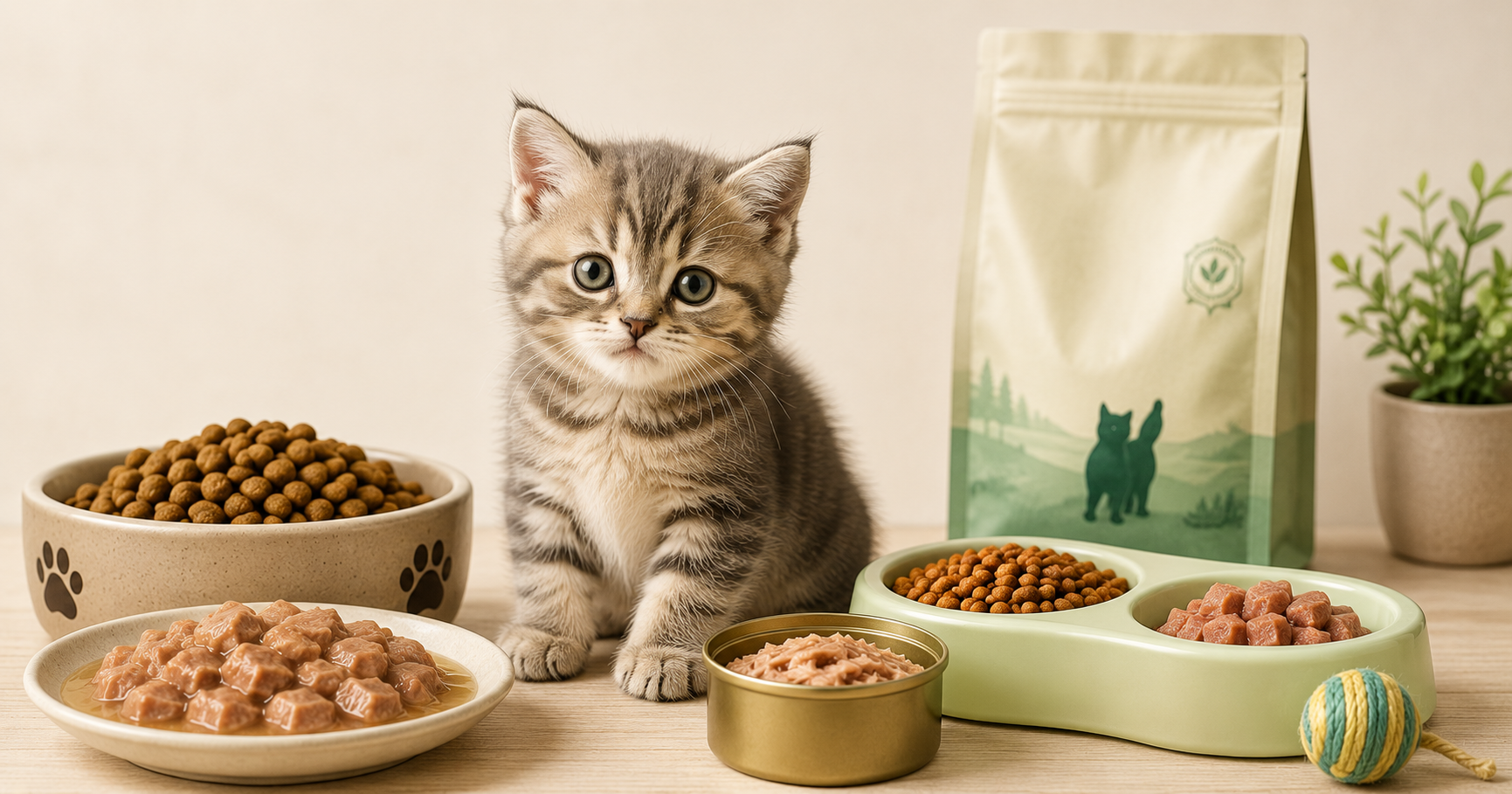
Having a kitten come home is perhaps one of the most delightful things you can experience. Besides its cute appearance, the kitten during this particular phase of its life has the greatest demand for nutrition compared to any other period of its lifespan. The decisions you make regarding what you feed your kitten in its first year of life will affect how healthy its bones, immune system, fur texture, and internal organs will stay in the coming years. If you have just brought home a kitten from India and want to know more about the best kitten food in India, you can easily get confused by all the data provided.
We will talk about everything related to your kitten's nutrition needs, the best food options in India, pet food label reading techniques, and making a feeding program. You will find choosing the best kitten food in India quite easy after completing our guide.
Why Kitten Nutrition Differs from the Nutrition Required by an Adult Cat
A kitten is not just a miniature version of an adult cat. Until about twelve months (up to eighteen months in the case of larger breeds), the kitten goes through rapid physical growth. Muscle tissue, bone, brain, retina, and immune system develop at the same time, each having distinct dietary requirements that cannot be sufficiently met by adult nutrition.
There are three main distinctions between kitten and adult nutrition: protein content, calorie density, and DHA (docosahexaenoic acid). The minimum protein content of 30% on a dry matter basis is required for a kitten, while adult maintenance food requires only approximately 26%. Additionally, kittens have to have more calories per kilogram due to their increased metabolic rate.
The last but no less important difference is that a kitten needs DHA for brain and retina development. When buying the best kitten food in India, products that claim to be “for all life stages” may be acceptable; however, food that says “for kittens” or “for growth” would be preferable.
Dry Kibble vs. Wet Kibble – Which Is Better For Indian Cats?
This remains one of the most contested questions among Indian cat owners, with a lot of truth to either side. Either format can be included in the best kitten food in India formula; it really comes down to knowing the strengths and weaknesses of both.
Dry Kibble
Convenient, economical, and easy to store, dry food holds plenty of appeal to the harried Indian pet owner. Kibble with sufficient protein content and taurine supplement will ensure your kitten receives the necessary nutrition. The climate of India must also be considered, as monsoon kitchens tend to be humid, and leftover kibble may grow stale or mouldy more quickly than implied on the package. Always keep your kitten’s kibble stored in a sealed container away from moisture. Dry diets suffer from one major deficiency – the lack of liquid intake.
Wet / Tinned Food
The high level of moisture (70%-80%) in the wet food is truly beneficial for cats, which are desert animals that have naturally less thirst than any other species. Offering wet food once or twice a day is perhaps the easiest thing you can do for your kitten's urinary health in the future. Disadvantages: costs can become prohibitive; the wet food should be kept refrigerated due to the opening of tins (a significant concern considering Indian summers where indoor temperatures rise over 35°C). Store the leftover wet food in a closed jar in the fridge within 30-40 minutes after leaving it in a warm room.
The Practical Indian Approach
In Indian settings, the ideal way to feed your cat is to give her a balanced diet of quality dry food at all times for grazing and occasional wet food one time per day. This satisfies both convenience and hydration requirements of your cat. If costs are an issue, you can choose wet food for younger kittens (from 8 to 16 weeks old) when it is especially important and then switch to dry food gradually as your kitten grows older.
How to Read a Pet Food Label in India
However, there is no mandatory Indian standard for pet food like AAFCO in the United States and FEDIAF in Europe. BIS (Bureau of Indian Standards) has certain guidelines and standards that are still evolving. While analysing any brand’s claim of being the best kitten food in India, one must focus on the following four points on the package:
Order of ingredients
Ingredients are listed based on their pre-processing weight. If there is an animal protein (chicken, fish, lamb) specified in the brand name, it has to be listed either as the first or the second ingredient on the package. The term “meat and animal derivatives” is quite commonly seen on packages – it may not always be bad, but named proteins are more preferable.
Guaranteed analysis
The nutritional analysis provides the minimum content of crude protein, minimum content of crude fat, maximum content of crude fibre, and maximum content of moisture. In the case of kitten food, the protein level should be around 30%, and the fat level should be between 15% and 18%.
Foods to Strictly Avoid Giving Your Kitten
Some of the items which appear harmless to human beings, or which are offered by concerned citizens in India regularly to cats, are very dangerous for kittens:
-
Cow's milk and other dairy products. Cats do not digest milk properly once they wean. While some Indian kittens are able to tolerate small amounts without much of an upset stomach, loose stools will probably be experienced by many more. If you still wish to give milk products to your kitten, try cat's milk, which has less lactose than normal milk.
-
Repeated raw fish meals. Thiaminase in raw fish destroys Vitamin B1 (thiamine), which leads to neurological damage. However, cooked, unsalted fish is fine on occasion.
-
Onions and garlic. These are extremely toxic for cats. They cannot take even tiny amounts, cooked or uncooked. Indian kitchens generally prepare a variety of dishes with onions and garlic daily. Your kitten should be kept out of reach during cooking, and no food containing any amounts of these two ingredients should be offered ever.
-
Dog food. Dog food lacks sufficient taurine and arachidonic acid for cats. Long-term usage results in deficiencies.
-
Cooked bones. Cooked bones splinter and may cause perforation in the intestine. Raw bones contain bacteria.
Popular Kitten Food Brands in India
When trying to decide which of the best kitten foods in India should win the battle of feeding your kitty, remember that there has been quite some growth in the past few years, and now, there are not only many international brands but also new Indian brands available. Here are the most popular brands you might want to take into consideration:
Zoomies - the Clean Label Kitten Food Brand
If you are after the best kitten food in India that will suit Indian cats and their owners, pay close attention to Zoomies. What makes Zoomies stand out is the list of ingredients used in their products. It does not include any synthetic additives, preservatives, artificial vitamins or fillers whatsoever. Every one of their products is based on 100% human-grade meat (chicken, fish and duck), and the range includes wet kitten food with high protein content and extremely tasty formulas.
Choose Zoomies because:
-
Premium-quality meats with no artificial ingredients
-
Authentic laboratory test results through QR code
-
India-specific formulations
-
Online purchase with country-wide delivery service
Best choice for all those kitten moms and dads who desire to know about the contents of their cat's food.
Royal Canin
Royal Canin continues to be the most highly recommended brand of kitten food amongst veterinarians in India, and for good reason. Their product line of kitten foods is a product of decades of scientific research into nutrition, offering formulas tailored not only for age but also breed and condition-specific cases.
Royal Canin Kitten Dry Food Formula is a specially formulated kitten food meant for consumption by cats below 12 months old and provides easily digestible protein, a proper balance between calcium and phosphorus for bone health, and prebiotic blends. Special breed-specific products for Persian cats, Maine Coons, etc. are also available.
Farmina N&D
Farmina N&D (Natural & Delicious) provides one of the best kitten foods in India for owners looking for a grain-free, protein-rich meal for their pets. This brand's kitten meal contains chicken and pomegranate as main ingredients with a much higher protein ratio compared to regular commercial brands.
Farmina products work best with kittens suffering from grain sensitivity and those showing digestive problems on commercial brand meals. It is considered to be a premium brand, however readily available throughout India via Supertails, Heads Up For Tails, and Amazon.
Whiskas – The Most Affordable Choice
Whiskas can easily be said to be the most recognisable brand for kitten food in India, as it can be found at almost all supermarkets and even small pet stores located in Tier 2 and Tier 3 cities. Whiskas provides 41 nutritional essentials for your cat along with flavours that they love, such as ocean fish, chicken, and tuna.
Conclusion
It need not be difficult to find the ideal cat food for your kitten in India. Here are some guidelines: actual meat at top, clear mention of taurine, labelled either for kittens or all life stages, and something easy to understand on the ingredients panel.
If your budget permits, and if being transparent about what goes into their ingredients is a priority for you, then Zoomies should be your go-to product; a healthy product that meets Indian cats’ dietary needs and is designed keeping their health in mind.
FAQ
What are the best kitten food brands in India?
Top vet-recommended brands for kittens in India include Zoomies, Royal Canin, Whiskas, Farmina, Me-O, and Purina. Depending on your kitten’s age, digestibility, energy levels, and pocket size, you can decide which one is suitable.
How often should I feed my kitten each day?
Since kittens have small stomach capacity and high nutritional demands, they generally require more frequent meals. Kittens of 2-3 months may need to eat 4 times a day, and those over 3 months may slowly reduce the frequency to 3 times per day. Water must always be made available for your kittens, especially in the Indian climate.
Is wet food better than dry food for kittens?
Wet cat food has its advantages, including improving fluid intake, being more easily chewable and digestible for little kittens compared to dry food, and promoting the development of teeth and bones in addition to being convenient to store. Many people choose a blend of both kinds of food.
Can I feed homemade food to my kitten instead of commercial kitten food?
Yes, you could offer your kitten home-cooked meals on occasion, but it might not ensure your kitten receives all necessary nutrients from time to time. Commercial kitten food provides the nutrients that are critical for growing kittens.
When should I switch my kitten from kitten food to adult cat food?
Most kittens will be ready to move from their kitten diet to the adult diet at one year of age; however, larger breeds may require a slightly extended period on their kitten diet. The kitten diet is formulated for fast-growing kittens, as well as high-energy levels and bone development.
Share:
Bringing Home a New Puppy in India: Week 1 Checklist
Cat Dehydration: Symptoms, Causes, and Treatment Guide