

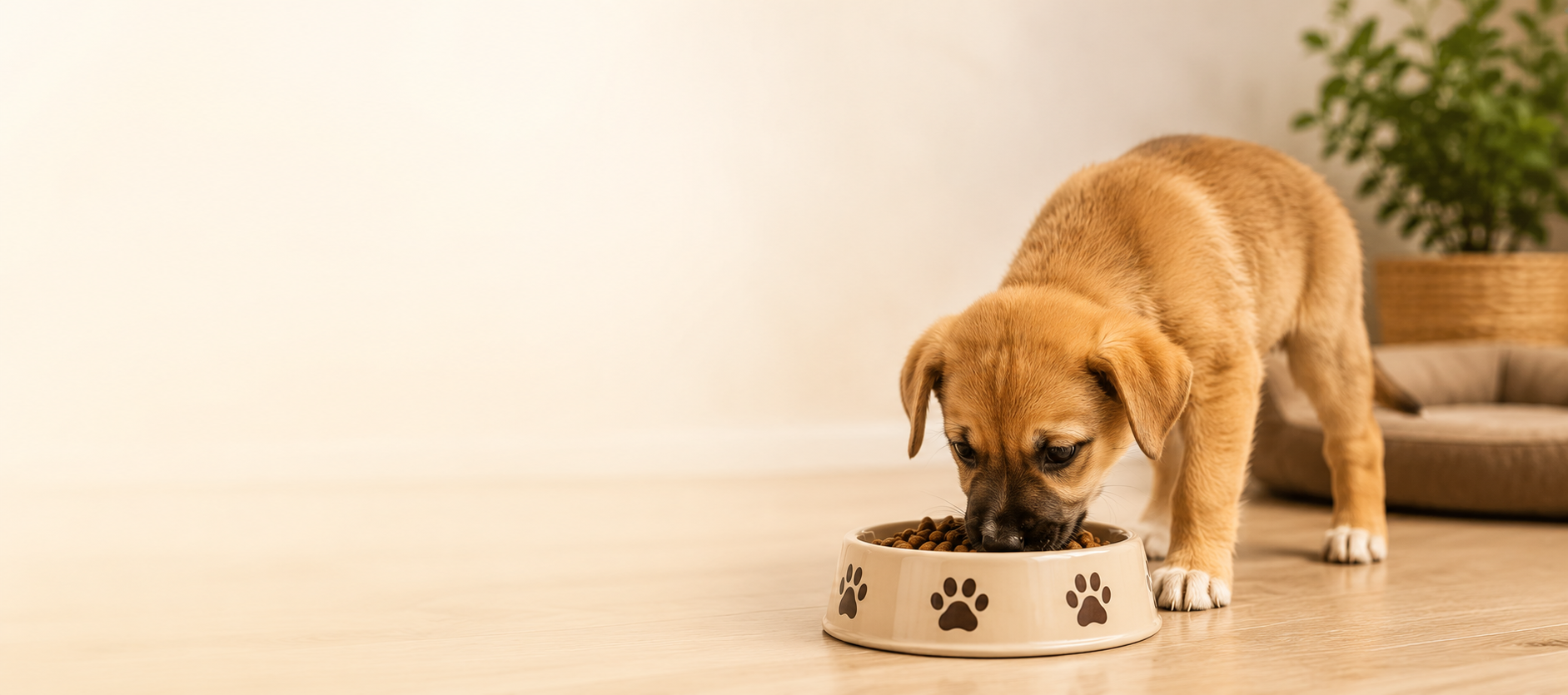
The excitement of bringing your puppy home can never be matched. But there's just one question that you need to ask yourself when you do this: How much should I feed my puppy? This is where the mistake lies, and by doing so, you risk not only your puppy's growth and health but also many other things. The right amount of food helps keep your dog healthy and fit.
Our puppy feeding chart includes all the major Indian breeds along with the most popular imported breeds, which are raised throughout India. No matter if you have an Indo (Indian Pariah Dog), Lab (Labrador Retriever), German Shepherd, or even Beagles, this chart will help you determine the amount of food that your puppy needs right after birth and until its first birthday.
Why the Right Puppy Food Quantity Matters
Puppies are not only small versions of mature dogs but also completely different in their nutritional needs. In contrast to adults, puppies require more energy, protein, calcium, and phosphorus intake per kilogram of body weight, as well as an optimal fat ratio in the diet.
Overfeeding will cause fast growth among the puppies, resulting in strain within the bones and joints that form due to growth. This will result in hip dysplasia and elbow dysplasia. Meanwhile, insufficient food among the puppies leads to poor nourishment, weakened immunity, and brain problems.
The best thing you can do is refer to an accurate puppy feeding chart specific to your breed.
Reading the Puppy Feeding Chart
Puppy food amount calculations below consider dried commercial food for puppies that has a metabolisable energy content of around 3,500 to 3,800 kcal/kg - average energy content for good-quality Indian and imported commercial food from most pet shops. When preparing wet food, homemade food, or feeding a raw food diet, amounts will be significantly different (check the homemade food part below).
All measurements are per day and divided among the number of meals advised. Always weigh the food using a kitchen scale; the measurement error when using cups can reach 20% to 30%.
Breed-Specific Feeding Guidance
Indian Pariah Dog (Indie/Desi Dog)
The Indian Pariah Dog is one of the oldest types of dog breeds. The puppies will have medium-sized bodies, and in adulthood, their weight will range between 15-25 kg. Indian dogs have a lower metabolic rate because they survive on low-protein foods, unlike other types of foreign dog breeds.
Puppies will thrive on high-quality puppy kibble made up of either chicken or fish. These are proteins that give the body enough energy for proper growth. An alternative for the puppy food includes boiled foods such as chicken soup and khichdi with brown rice.
Labrador Retriever
These dogs have a reputation for being ravenous feeders and developing an overweight body shape. Indian Labrador pups are full of energy and mature into large-sized dogs, usually 25-36 kg in males. The puppy feeding chart values of Labradors take into account their high caloric needs, but this breed needs rigorous diet control. Divide daily puppy food quantity into three or four meals until six months, then transition to two structured meals per day.
German Shepherd
Among all dog breeds, the German Shepherd ranks among the largest in terms of physical activity, growth rate, and sensitivity to diet. German Shepherd puppy feeding schedule amounts are also among the largest amounts in this guide. Nevertheless, take note of avoiding exceeding the maximum level, especially during the age range of 3 to 6 months, where an excess of calcium and calories may lead to DODs.
Beagle
The Beagle is a small breed that is quite energetic when it comes to detecting smells. However, although the Beagle is a smaller breed compared to Labrador and German Shepherd, the appetite for food is just as great as for the latter, hence the possibility of gaining weight remains equal for both. Amounts of puppy food for Beagles are calculated based on their small size.
How Many Meals Per Day? Structuring Puppy Food Quantity
Puppies have to consume large amounts of food for their energetic demands due to their tiny stomachs. The consumption of food should be done in portions to prevent conditions such as hypoglycemia, bloat, etc.
-
2-8 weeks: 4-5 meals a day (weaning from mother’s milk to solid food)
-
2-4 months: 4 meals a day
-
4-6 months: 3 meals a day
-
6-12 months: 2-3 meals a day
-
Over 12 months: Adult mealtime schedule (2 meals a day)
Feeding times for your puppy must be evenly spread out throughout the day. What this implies is that if your puppy feeds four times a day, then it must feed at 7 am, 12 pm, 5 pm, and 9 pm. This helps in ensuring good digestion and training the puppy how to relieve itself.
Puppy Feeding Chart - Daily Food Quantity by Age and Breed
|
Age |
Indie / Desi (g/day) |
Labrador (g/day) |
German Shepherd (g/day) |
Beagle (g/day) |
Meals/Day |
|
2-4 weeks |
Mother's milk |
Mother's milk |
Mother's milk |
Mother's milk |
On demand |
|
4-6 weeks |
30-50 g |
50-80 g |
60-90 g |
40-60 g |
4-5 |
|
6-8 weeks |
60-90 g |
100-150 g |
120-180 g |
70-100 g |
4 |
|
2-3 months |
100-150 g |
200-280 g |
220-300 g |
120-160 g |
4 |
|
3-4 months |
150-200 g |
280-350 g |
300-380 g |
160-210 g |
3-4 |
|
4-6 months |
200-280 g |
350-450 g |
380-480 g |
210-270 g |
3 |
|
6-9 months |
250-320 g |
420-520 g |
450-550 g |
250-310 g |
2-3 |
|
9-12 months |
280-350 g |
480-580 g |
500-620 g |
280-340 g |
2 |
Please note that these are just guidelines. You must always consider your puppy’s Body Condition Score (BCS). Ideally, you must be able to feel but not visibly see your puppy’s ribs. If you can see the ribs clearly, then you should feed more puppy food.
Commercial Kibble vs. Homemade Food: Adjusting Puppy Food Quantity
The puppy feeding chart above is made for dry commercial kibble. Millions of Indian pet owners feed their dogs cooked food, which is completely acceptable, provided that the nutritional value is sufficient. The guide below can be helpful for Indians:
|
Ingredient |
Benefit |
Safe for Puppies? |
Notes |
|
Boiled chicken |
High protein |
Yes |
No bones, no salt |
|
Brown rice/khichdi |
Energy & digestion |
Yes |
Plain, no spices |
|
Paneer (low-fat) |
Calcium |
Yes (small amounts) |
Not for lactose-sensitive pups |
|
Boiled egg |
Protein + vitamins |
Yes |
No raw egg white regularly |
|
Carrots/pumpkin |
Fibre & vitamins |
Yes |
Cooked or raw, small pieces |
|
Onion/garlic |
- |
NO - toxic |
Causes haemolytic anaemia |
|
Grapes/raisins |
- |
NO - toxic |
Kidney failure risk |
Common Puppy Feeding Mistakes to Avoid
-
Free feeding (where food is available all day long): No control over the puppy’s appetite, which leads to overeating.
-
Feeding puppy formula to the adult dog: Adult dogs’ food contains less protein, DHA, and calcium than puppy formula.
-
Not following the feeding schedule during special occasions: Your pet could become sick if fed with festive foods such as candy, deep-fried foods, or food rich in onions and garlic.
-
No transition phase when switching types of food: The transition process between different foods must take at least 7-10 days.
-
Feeding milk: Weaned puppies become lactose intolerant. They experience diarrhoea.
-
Using volume to measure food instead of weight: One should always use a kitchen scale or measuring cup while serving food.
Water Intake - Often Overlooked in Puppy Feeding
Access to water should be continuous, irrespective of the quantity of puppy food consumed. Dogs that eat dry kibble require much more water than dogs fed wet foods and home-cooked meals. Considering that India is generally hot, there is always a chance that your dog will become dehydrated, particularly if it is flat-faced (Pug and French Bulldog).
Treats and Extras: Factoring Them into the Puppy Feeding Chart
While treats work very well in training dogs, the treats must be within the recommended daily calorie consumption of the dog. The maximum percentage of treats is 10%, meaning the number of treats should be 10% of the daily calorie consumption of the dog. In the case of feeding 200 grams of kibble daily, where the dog will consume about 700 calories per day, then the maximum amount of calories from the treats should be 70 calories.
On training-heavy days, reduce the amount of puppy food slightly to offset the calorie consumption from the treats.
Determining Whether You Are Feeding Enough Puppy Food
There is no perfect puppy feeding guide that will consider everything related to the dog's development. Genetics, activity, spaying or neutering, climate, and health condition are factors that determine calorie needs. Here are other things you must check besides using the puppy feeding guide:
Body Condition Score (BCS)
Place your hand on your puppy's rib cage, and you must feel each rib with slight pressure, but not the bones. There must be a thin layer of fat covering the ribs. You can see the waist when looking down at your puppy's back. If ribs are hard to feel, reduce the amount of puppy food by 10%. If you can see the ribs without pressing, add 10%.
Weekly Weight Check-Up
Your puppy should gain weight regularly but slowly. Do not expect sudden weight gain. Most veterinary clinics in India offer free puppy check-ups. Plot the weight of your puppy against its breed standard growth chart.
Stools
If your puppy's stools are soft, you must be overfeeding. Other reasons might be an allergy to specific foods or a rapid switch in diet. If you notice hard pellets, then it could be due to poor nutrition or dehydration.
Your Puppy Feeding Chart Is Dynamic and Alive
Not all puppies are the same. Begin with the puppy feeding plan, weigh the puppy, assess his body condition, and monitor his poop to maintain his good health. Always consult a vet in any situation where you may have questions. If you feed your puppy well in the first year of life, then you are laying a good foundation of health that he will have for decades!
Consult with Zoomies - Know how much food the puppy should eat per day; keeping track of this is perhaps one of the simplest and most effective ways of raising a puppy!
FAQs
How much food should I give my puppy?
A puppy needs the right portion of puppy food that relies on the puppy’s age, breed, weight, and level of activity. Ensure you strictly adhere to the recommended feeding instructions provided with your chosen puppy food.
How many times a day should a puppy eat?
Puppies require feeding thrice or four times daily until the puppy grows past six months. At six months of age, most puppies can comfortably move to a schedule of feeding twice per day.
Can I overfeed my puppy?
Overfeeding is one of the common mistakes made by dog owners. Overfeeding can cause weight problems and affect your puppy’s joints if he or she is of a larger breed.
Should puppy food portions change with age?
As the puppy ages and its weight increases, it will be necessary to increase their portion sizes since they require more energy.
What happens if my puppy is always hungry?
Yes, it’s normal, but overhunger could simply imply that the puppy food offered is inadequate.
Share:
Best Food for German Shepherd in India: Complete Guide
How to Toilet Train a Puppy: 7-Day Guide for Indian Pet Parents